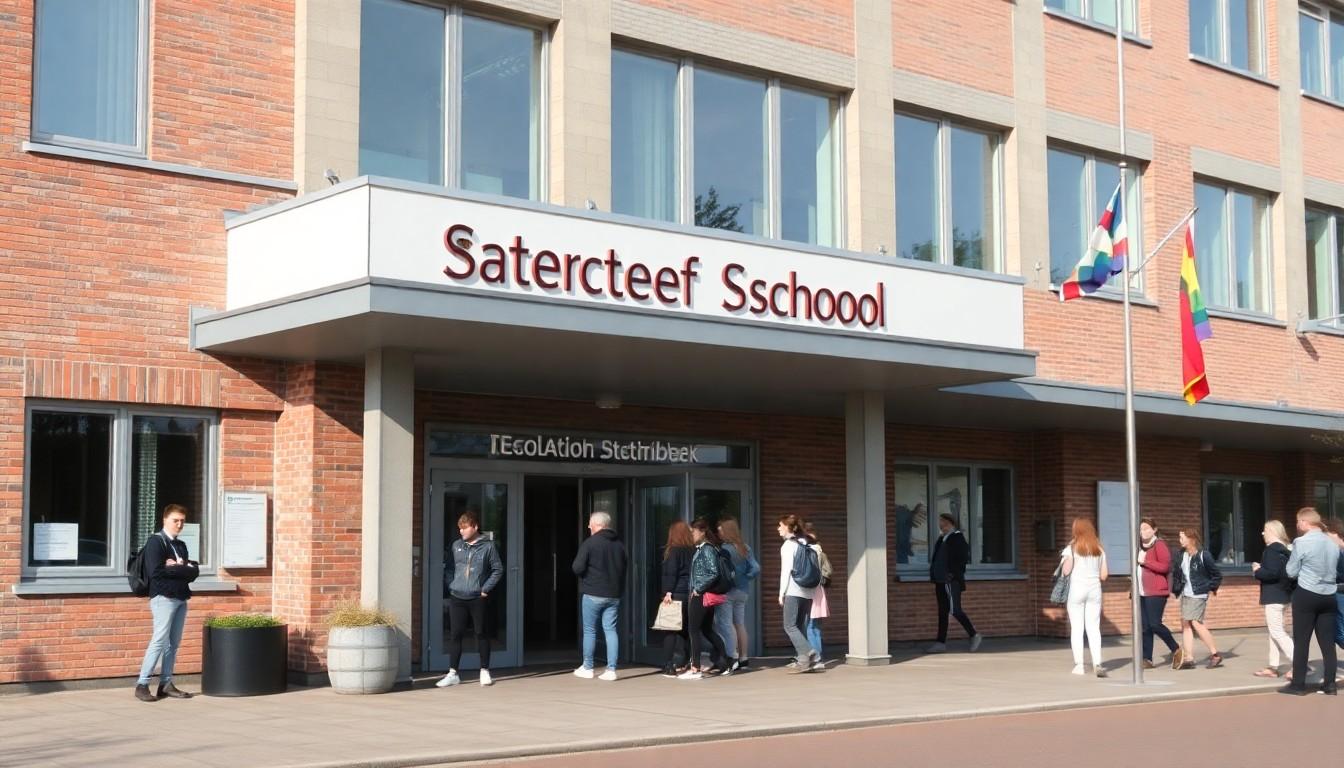
Schools across the Netherlands are using Purple Friday to make LGBTQ+ pupils feel safer, even as acceptance among teenagers appears to be falling. The annual campaign brings colour, conversation and visible support into classrooms, while teachers and pupils reckon with a harder question: can one celebratory day counter the hostility spreading through schools and social media?
Essential takeaways
- Acceptance is slipping: Recent Dutch research found a marked fall in positive attitudes towards homosexuality among 11 to 16-year-olds.
- Visibility can reassure: A rainbow badge, purple shirt or inclusive teacher can help LGBTQ+ pupils feel safer being themselves.
- Schools are joining in: More than 3,000 Dutch schools reportedly took part in Purple Friday in 2026.
- Conversation matters: Teachers say patient questioning and real-world discussion can challenge online myths.
- The problem isn't only youthful: Queerphobia is also repeated by politicians, adults and social-media communities.
A purple shirt can change the mood
The morning began with a homophobic insult in a classroom in Nijmegen. Rather than ending the exchange with a reprimand alone, teacher Silvie Arts used her lilac blouse and rainbow bracelet to explain why Purple Friday exists. The moment opened a difficult but useful conversation about inclusion and why heterosexual people don't need an equivalent day.
That small scene captures the campaign's strength. Purple Friday isn't simply a colourful dress code. It gives teachers a reason to discuss sexual and gender diversity in a setting where pupils might otherwise avoid the subject, according to reporting by taz.
For a young person wondering whether it's safe to mention a partner, correct a pronoun or speak honestly about identity, a visible signal can carry surprising weight. As one non-binary pupil told taz, seeing a rainbow badge on a teacher helped them feel able to speak openly.
Dutch schools are facing a sharp change in attitudes
The backdrop is unsettling. A survey by Utrecht University and the Trimbos Institute found that only 51 per cent of girls and 22 per cent of boys aged 11 to 16 expressed a positive view of homosexuality. In 2021, the figures were 78 and 40 per cent respectively, a substantial decline reported by taz.
The change has shocked a country long associated with liberal social values. The Netherlands became the first country to legalise same-sex marriage in 2001, yet young people are now encountering a more combative online culture, particularly around masculinity, feminism and LGBTQ+ rights.
That doesn't mean every teenager has suddenly become hostile. One student interviewed by taz described a mixture of committed opponents and pupils who simply follow the crowd. Meeting an LGBTQ+ person, he suggested, can sometimes replace abstract online suspicion with a more human understanding.
Why Purple Friday still matters
Purple Friday has been organised in Dutch schools since 2010, with pupils and staff wearing purple to show solidarity and celebrate diversity. COC Nederland, which provides educational resources for the campaign, says participation has now passed 3,000 schools, with primary schools also involved since 2020.
The campaign has evolved from a party-like event into something more deliberate. Teachers use lesson materials to explore identity, respect and the language pupils encounter online, including the familiar claim that LGBTQ+ visibility is being "forced" on society.
One teacher's response is notably practical: ask for three concrete examples from the previous month. When a pupil offers a rainbow-painted bench as evidence, follow-up questions can expose how quickly an internet talking point dissolves under scrutiny. It's not a dramatic takedown, but it encourages young people to check what they think they know.
The right support goes beyond a single day
Symbols help, but they can't carry the whole job. At a vocational school in Nijmegen, a Gender and Sexuality Alliance brings pupils and staff together throughout the year. COC's guidance for such groups is designed to help schools build a safer environment rather than treating inclusion as a once-a-year decoration.
That distinction matters for pupils who already feel watched or exposed. One student told taz that recent research had made them more hesitant about holding hands with a partner in public. A purple wristband may offer reassurance for a day, but consistent staff support, clear anti-bullying policies and trusted adults matter far more over time.
Schools also need to remember that queerphobia isn't created by teenagers alone. Teachers interviewed by taz described hearing hostile ideas repeated from political rhetoric, adult conversations and online communities. Treating the issue purely as a youth problem lets the wider culture off the hook.
A visible flag is a promise, not a solution
The most striking image from the Nijmegen school may be the simplest: a rainbow flag that stays up all year. On Purple Friday, pupils were happy to discuss the day's purpose, but none wanted to take a purple bracelet from a plate. Public enthusiasm has limits, especially among teenagers wary of standing out.
That hesitation doesn't make the campaign pointless. It shows why support must be available without demanding that every pupil publicly identify with it. A quiet sign on a classroom door, an informed teacher or a genuinely safe reporting route may matter more than a noisy celebration.
With COC Nederland continuing to expand lesson resources and school participation, Purple Friday has a useful role to play. It starts conversations, makes allies visible and reminds pupils that acceptance should be ordinary, not controversial. But the lasting work happens on the other 364 days.
Small signs matter most when they lead to everyday safety.
Source Reference Map
Story idea inspired by: [1]
Sources by paragraph: