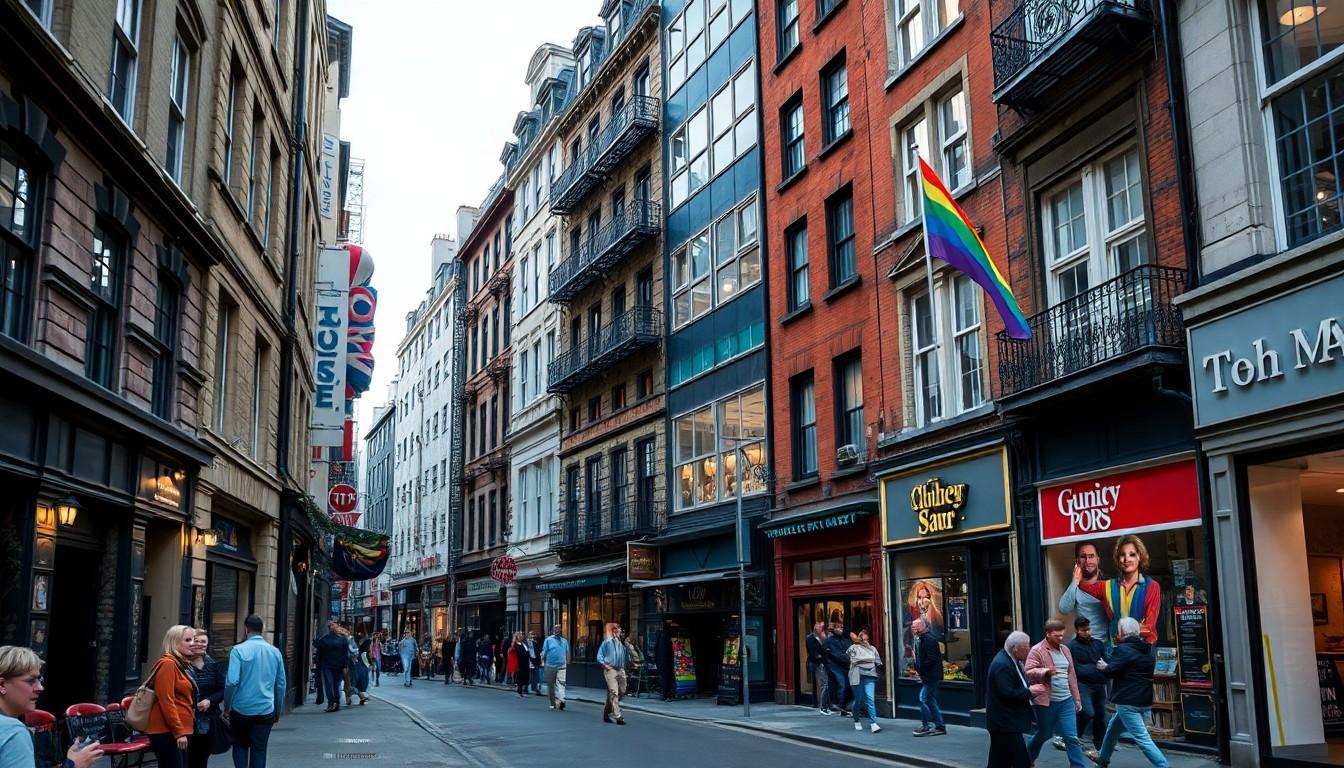
Visitors once knew exactly where to find LGBTQ+ nightlife, from Sydney's Oxford Street to San Francisco's Castro, but those familiar districts are evolving. Social media, dating apps, rising costs and shifting community habits are reshaping gay bars and queer spaces, even as the need for connection remains remarkably strong.
Essential Takeaways
- Gay villages are changing: Established LGBTQ+ districts are becoming less concentrated and more mixed.
- Apps aren't the whole story: Hook-up platforms may alter social habits, but they don't single-handedly explain venue closures.
- History matters: Photographs of earlier nightlife preserve a vivid record of community, style and belonging.
- The need remains: Queer venues still offer safety, recognition and the pleasure of being among people who understand.
- The future is flexible: Pop-ups, events and online networks are adding new ways to find community.
The old gay village is no longer the whole story
There was a time when a single street could act as an LGBTQ+ map, meeting point and unofficial community centre. Sydney's Oxford Street, London's Soho, Paris's Le Marais and San Francisco's Castro each carried that promise, with bright windows, familiar faces and the charged feeling that something might happen after dark.
DNA Magazine's feature, built around Tom Luscombe's photographs from Sydney's early-1990s scene, captures that atmosphere with particular force. The images preserve more than outfits and nightlife: they show how visible, social and deliberately public queer culture could feel.
Today, many of those districts look different. Some venues have closed, others have broadened their audience, and newer queer spaces often appear outside the traditional village. According to Eater, the decline of gay bars has several causes, including property pressures, changing demographics and increased acceptance in mainstream nightlife.
Are dating apps really killing gay bars?
It's an appealing explanation, but it's too neat. Dating and hook-up apps have certainly changed how people meet, particularly for those who no longer need a bar to find other LGBTQ+ people nearby. Queerty has argued that apps are part of a much more complicated shift rather than a complete explanation for disappearing venues.
Rent, licensing costs, redevelopment and changing drinking habits all matter too. A small independent bar can struggle when commercial landlords want higher returns, while younger customers may prefer events, house parties, cafés or alcohol-free gatherings.
That doesn't make technology irrelevant. Apps can reduce the urgency of turning up somewhere unknown, but they can also help people discover parties, fundraisers and community events. The smartphone hasn't erased queer nightlife; it's made the doorway less obvious.
What the photographs reveal about queer nightlife
Luscombe's photographs are valuable because they show nightlife as lived experience rather than nostalgia in the abstract. There are people posing, performing, flirting and simply occupying space, often with the confidence that comes from being surrounded by an audience that understands the codes.
The visual texture matters, too. Glitter, dramatic clothes, crowded rooms and theatrical gestures convey a world that was playful but never entirely carefree. For many people, a gay bar offered a rare chance to relax their guard, even when the wider city remained judgemental or unsafe.
The photographs also complicate the familiar claim that everything was better before. Earlier nightlife could be exciting and liberating, but it wasn't equally welcoming to everyone. Race, class, gender identity, age and disability shaped who felt comfortable inside these supposedly open spaces.
Why queer venues still matter
A bar can't replace every form of community, but it can provide something wonderfully immediate: a room where nobody needs an explanation. That matters to newcomers, older LGBTQ+ people, visitors to a city and anyone tired of translating themselves for the mainstream.
The Gayly Mirror's discussion of whether gay bars are still needed points towards this broader role. These places aren't only about drinking or dating. They can host conversations, celebrations, fundraisers, performances and the small, ordinary encounters that turn isolation into familiarity.
The best modern queer venues are responding to that wider need. Some are becoming more inclusive of trans and non-binary customers, while others are experimenting with daytime programming, sober events and community-led nights. In practical terms, a good venue should feel welcoming before the first drink is ordered.
A more scattered, more inventive future
The next generation of LGBTQ+ nightlife may be less visible from the pavement but more varied in practice. Social media can gather people around a one-night event, while private groups and local organisers can create connections without relying on a permanent venue.
That flexibility has advantages, especially in cities where property prices make a traditional gay village difficult to sustain. But a pop-up can't always provide the continuity, accessibility or safety of a permanent space. Communities need both the spark of new events and the dependable places people can return to.
The most useful question, then, may not be whether gay villages are disappearing. It's whether queer people can still find spaces where they feel recognised, safe and free to be a little theatrical. The answer is changing by city, but the appetite for belonging hasn't gone anywhere.
A changing nightlife isn't the same as a vanished community.
Source Reference Map
Story idea inspired by: [1]
Sources by paragraph: