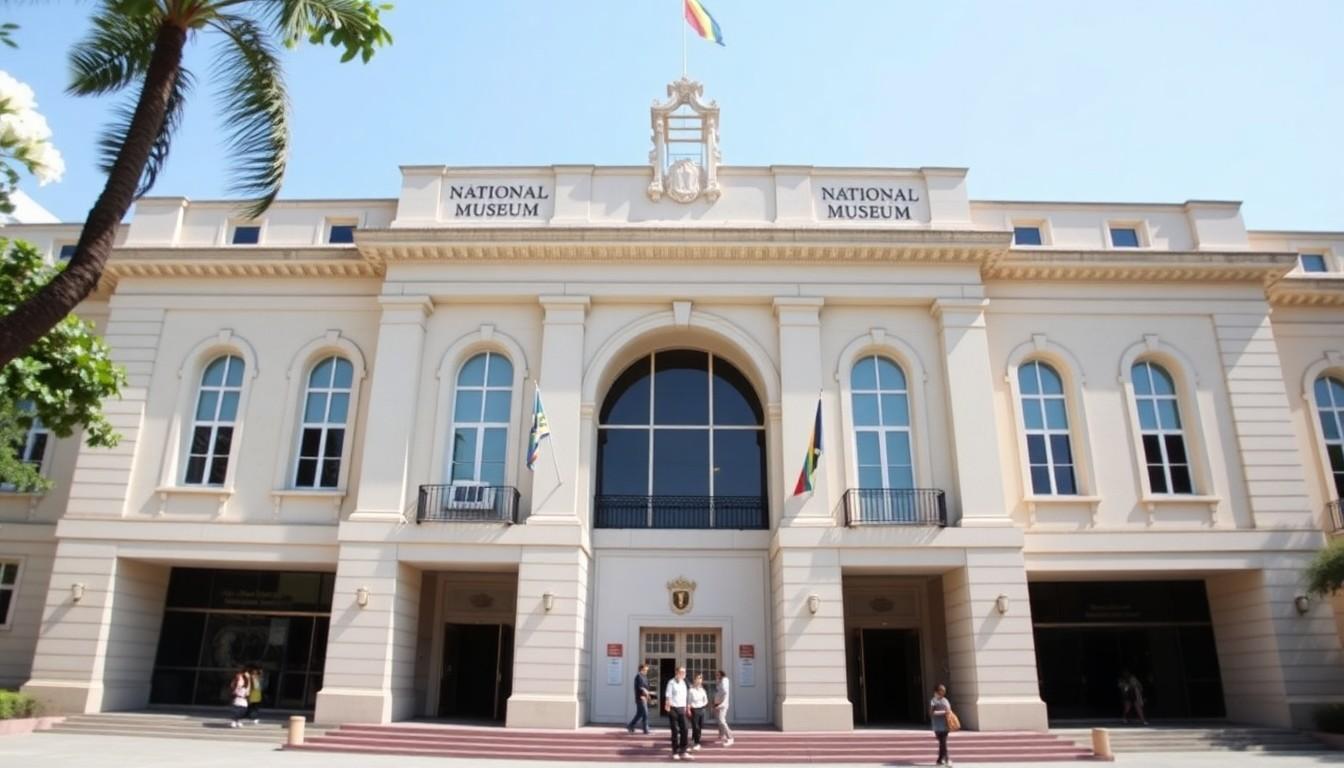
Visitors to Colombia’s National Museum have found gaps where objects documenting LGBTQ+ rights, feminism and peacebuilding once stood. The removal of more than 30 pieces, including a rainbow flag carried through decades of activism, has sparked a national debate about who gets represented in the country’s history and why museum independence matters.
Essential Takeaways
- More than 30 pieces removed: The display included material linked to LGBTQ+ rights, feminism, peacebuilding and political violence.
- A flag with a history: Elizabeth Castillo’s small rainbow flag travelled from New York to Colombia and appeared at landmark rights campaigns.
- The government defended a review: Officials said the museum should avoid political indoctrination and protect children from sensitive material.
- Critics fear a narrower story: Activists argue that removing these objects risks presenting Colombian identity as less diverse than it is.
- The dispute is unresolved: Questions remain over where the objects are being kept and whether they’ll return to public display.
The missing flag carried more than colour
The most poignant object in the dispute is a small rainbow flag donated by lawyer and activist Elizabeth Castillo. It may look modest, but its journey through Colombia’s LGBTQ+ rights movement gives it a striking emotional weight.
Castillo carried it to congressional debates, demonstrations and proceedings before the Constitutional Court. According to El Espectador, it was present when Colombia’s same-sex marriage debate reached a decisive moment in 2016, turning an ordinary souvenir into a witness to national change.
The flag had first arrived from New York more than two decades earlier, at a time when rainbow symbols weren’t easy to obtain in Colombia. Castillo even concealed it during security checks, a detail that makes the object feel less like museum decoration and more like a pocket-sized piece of living history.
Why were more than 30 museum pieces removed?
The rainbow flag was among at least 30 objects taken from the National Museum’s “Hacer sociedad” room. Reports from El Universal and EFE say the removed material related to feminist organising, LGBTQ+ history, the 2016 peace agreement and the assassinations of political figures including Bernardo Jaramillo Ossa and Carlos Pizarro Leongómez.
Visitors and activists reportedly noticed empty spaces, adhesive marks and pale outlines where the pieces had been displayed. Those small physical traces made the change unusually visible. A museum can feel silent when an object disappears, but the blank wall often does the talking.
The controversy intensified after President Abelardo de la Espriella announced an attack on what he called “wokism”. The phrase has become a political shorthand used by several international leaders to criticise social justice movements, including feminism and LGBTQ+ rights.
Government says curatorial spaces need a rethink
Culture Minister Paola Holguín said the museum shouldn’t become a vehicle for political indoctrination and announced a review of its museology and curatorial approach. She also referred to the need to protect children from sensitive material, although the government hasn’t clearly explained which removed objects posed that risk.
Colombia.com and Vanguardia reported that the ministry’s position has fuelled the dispute rather than settled it. The central question isn’t simply whether a museum can change an exhibition. It’s who makes that decision, what evidence supports it and whether political leaders should direct the interpretation of national heritage.
Museums regularly update displays as scholarship develops. That’s healthy. But a review becomes more troubling when it appears connected to a political campaign against the very communities represented in the gallery.
Activists warn of a less truthful national story
For Colombia Diversa director Marcela Sánchez, removing these objects risks creating a single, sanitised version of Colombian identity. Her concern is that LGBTQ+ people, women, peace activists and other communities could be treated as side notes rather than as participants in the country’s civic history.
El Pais described the result as a “mutilated” museum, while Boyaca Digital highlighted the wider debate over historical memory, LGBTQ+ rights and the peace process. The disagreement reaches beyond one room: it asks whether national history should reflect conflict, difference and uncomfortable progress, or only the subjects that feel politically safe.
That matters because representation isn’t abstract. When a public institution removes evidence of a community’s struggles, it can suggest that those struggles were optional, recent or somehow less deserving of remembrance. For people who’ve spent decades fighting to be recognised, an empty display case can feel personal.
What happens to the objects now?
Castillo has said she doesn’t simply want her flag handed back. She wants the museum and the culture ministry to take responsibility for the objects entrusted to them and explain their status. That puts the focus on stewardship, transparency and public accountability.
The practical questions are straightforward. Where are the pieces stored? Who authorised their removal? Will they be conserved, returned to the gallery or placed in another exhibition? And will the museum publish a clear account of the curatorial reasoning?
For now, the dispute remains a test of institutional independence. Colombia’s National Museum isn’t just a building filled with old things; it’s one of the places where the country decides what deserves to be remembered. That decision should leave room for the full, colourful and occasionally uncomfortable truth.
A museum’s empty wall can say a great deal, but it shouldn’t be the final word.
Source Reference Map
Story idea inspired by: [1]
Sources by paragraph:
- Paragraph 1: [2], [3]
- Paragraph 2: [4], [6]
- Paragraph 3: [5], [7]
- Paragraph 4: [2], [5]
- Paragraph 5: [3], [6]
- Paragraph 6: [4], [7]
- Paragraph 7: [5], [6]
- Paragraph 8: [2], [3]
- Paragraph 9: [4], [5]
- Paragraph 10: [6], [7]
- Paragraph 11: [2], [4]
- Paragraph 12: [3], [5]
- Paragraph 13: [6], [7]
- Paragraph 14: [2], [3]
- Paragraph 15: [4], [5]
- Paragraph 16: [6], [7]