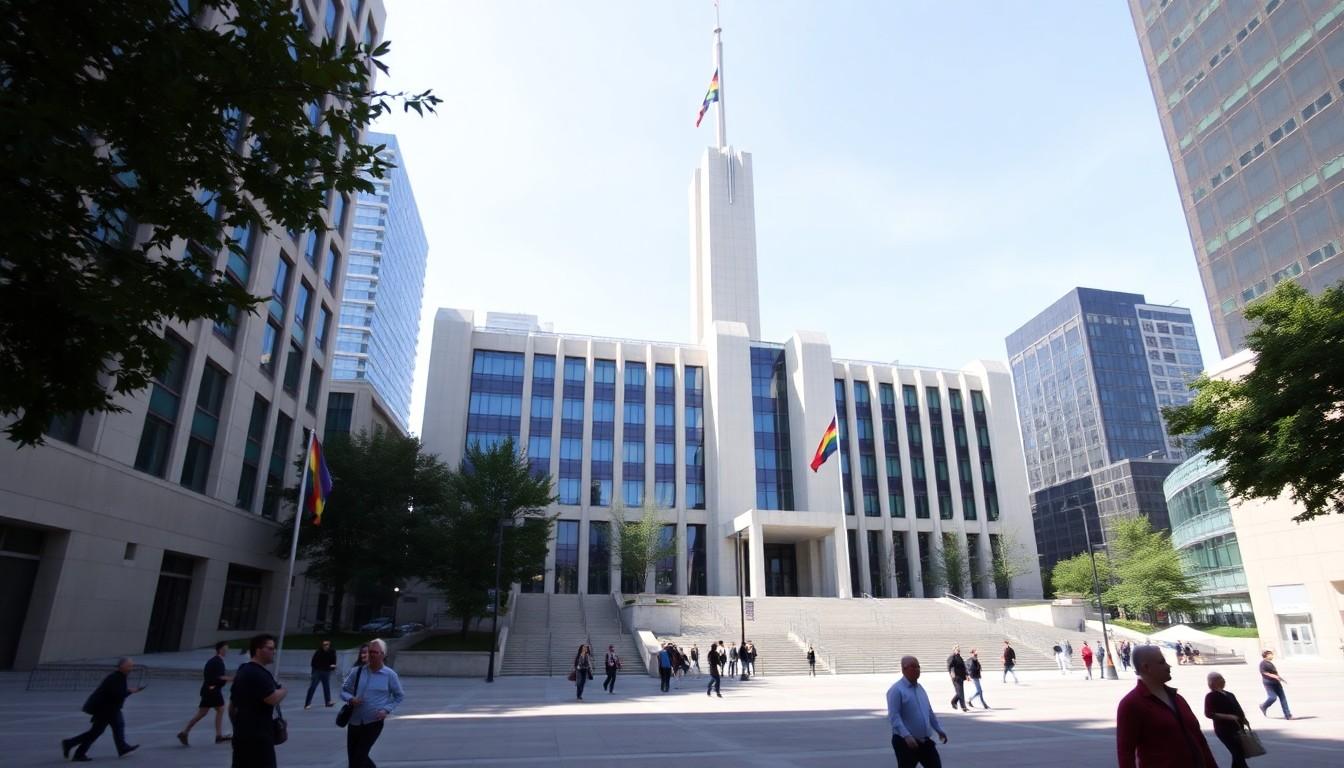
Toronto Mayor Olivia Chow's LGBTQ rights record stretches from school-board advocacy in the 1980s to city funding, public commemorations and support for queer youth today. As she faces another mayoral contest, her four-decade history offers voters a useful way to judge political allyship beyond campaign-season promises.
Essential Takeaways
- A long record: Chow's LGBTQ advocacy began in the Toronto education system during the 1980s.
- Practical support: Her work has included backing LGBTQ students, bathhouse legal defence and gender-identity protections.
- Political consistency: She supported same-sex marriage and later proposed stronger recognition of gay rights in Canada's citizenship guide.
- City Hall action: As mayor, Chow has backed queer youth housing, Pride funding and trans-inclusive civic programmes.
- History matters: Her support for recognising the bathhouse raids reflects Toronto's complicated policing and protest history.
From anti-discrimination work to a political career
Olivia Chow's record began well before she became mayor, when LGBTQ issues were still routinely treated as controversial rather than civic responsibilities. In 1986, as a member of the Toronto Board of Education, she helped advance measures to tackle discrimination against LGBTQ pupils after the killing of teacher and librarian Kenneth Zeller. The work contributed to anti-homophobia teaching in Ontario schools, according to Uncloseted Media.
That early focus on young people became a recurring thread. In 1995, Chow was among the trustees connected with the creation of the Triangle Program, an alternative high school designed for LGBTQ students at risk of leaving mainstream education. The programme, housed initially at the Metropolitan Community Church of Toronto, was built around a simple but important idea: students do better when school feels safe.
It was also a strikingly practical response to a difficult social problem. Rather than treating queer youth as a debate, the programme offered a route back into education, employment and further study. That kind of behind-the-scenes institution-building can be less visible than a Pride speech, but it often lasts longer. (Sources: Uncloseted Media; Wikipedia.)
When policing became a queer-rights issue
Chow's support wasn't limited to education. During her time on the Toronto Police Services Board, she criticised police targeting gay men at the Bijou bathhouse, arguing that officers should concentrate on sexual assault, domestic violence and trafficking instead. Her position challenged a policing culture that many LGBTQ residents experienced as surveillance rather than protection.
After the 2000 raid on the Pussy Palace lesbian bathhouse, Chow helped raise money for the legal defence effort. According to Uncloseted Media, an organising event brought in CA$9,000, a substantial sum for a community campaign led by people who often had limited resources.
Those episodes matter because they connect civil liberties with everyday safety. For many queer Torontonians, the question wasn't simply whether politicians supported equality in principle. It was whether they would speak up when the institution meant to protect them became part of the problem. (Sources: Uncloseted Media; NOW Magazine.)
Parliament brought the fight to Ottawa
Chow entered the House of Commons in 2006, representing Trinity-Spadina, and carried the same concerns into federal politics. She voted against an attempt to reopen the debate over Canada's same-sex marriage law, which had passed the previous year.
She also pressed the government to restore references to gay rights and gay history in Canada's citizenship guide. The material had appeared in earlier drafts but was absent from the first published edition; a later version included recognition of equal rights and civil marriage for gay and lesbian Canadians.
Gender identity protections became another focus. Chow voted for private members' bills in 2011 and 2013 that sought to add gender identity and gender expression to Canada's human-rights and criminal-law protections. Both efforts stalled before equivalent legislation eventually passed in 2017.
That persistence is revealing. The bills didn't deliver immediate results, but they show how political support can involve repeated attempts, amendments and procedural frustration. It isn't glamorous work, but rights are often built through exactly that kind of patient pressure. (Sources: Uncloseted Media; Wikipedia.)
From WorldPride to City Hall
Chow's public support became particularly visible during Toronto's 2014 WorldPride celebrations. While then-mayor Rob Ford chose not to attend, Chow hosted a launch event at Woody's, a well-known venue in Church-Wellesley Village. She also backed Pride funding, LGBTQ sports facilities, trans memorials and supportive housing developed with community organisations.
As mayor, she again placed inclusion alongside housing and public safety. In 2023, she spoke out as protests over gender and sexuality education spread across Toronto and elsewhere in Canada, stressing young people's safety and opposing bigotry.
Her administration later broke ground on an affordable housing project with the YMCA aimed at unhoused and at-risk LGBTQ youth. That is one of the clearest examples of how a broad equality message can become a concrete municipal priority: a building, a partnership and homes for people who need them. (Sources: Uncloseted Media; NOW Magazine; Wikipedia.)
Funding, memory and the test of consistency
More recent decisions have focused on the infrastructure that keeps LGBTQ culture visible. Chow's government announced increased support for cultural festivals, including Pride Toronto, and later proposed making additional festival assistance permanent as insurance, policing and security costs climbed.
She has also backed public memory. Chow supported a plaque commemorating Toronto's 1981 bathhouse raids and the protests that followed, recognising a chapter of anti-gay policing that the city might once have preferred to leave unexamined. In 2026, she raised the intersex-inclusive Pride flag and honoured faith leaders involved in marriage equality and LGBTQ inclusion.
That history gives her record extra texture. Allyship isn't only about celebrating progress; it also means acknowledging who was harmed, who organised and which institutions had to change. Whether voters agree with Chow on transport, affordability or public safety, her LGBTQ record is unusually easy to trace across decades. It has the paperwork, campaigns and community moments to prove it. (Sources: Uncloseted Media; Xtra Magazine; NOW Magazine.)
For Toronto's queer community, the bigger question may be whether future leaders match that continuity rather than simply borrowing the language of inclusion at election time. Bradford has also spoken about tolerance and celebration, but Chow's supporters can point to a much longer trail of involvement.
There is no single checklist for being an ally. Still, history helps separate a polished statement from a sustained habit of showing up. And in politics, showing up is often where the real work begins. (Sources: Uncloseted Media; Xtra Magazine.)
It's a record that shows how LGBTQ inclusion is built through schools, streets, budgets and memory.
Source Reference Map
Story idea inspired by: [1]
Sources by paragraph:
- Paragraph 1: [2], [3]
- Paragraph 2: [2], [4]
- Paragraph 3: [2], [6]
- Paragraph 4: [2], [3]
- Paragraph 5: [2], [7]
- Paragraph 6: [2], [3]
- Paragraph 7: [2], [6]
- Paragraph 8: [2], [3]
- Paragraph 9: [2], [6]
- Paragraph 10: [2], [3]
- Paragraph 11: [2], [7]
- Paragraph 12: [2], [6]
- Paragraph 13: [2], [3]
- Paragraph 14: [2], [7]
- Paragraph 15: [2], [3]
- Paragraph 16: [2], [6]
- Paragraph 17: [2], [7]