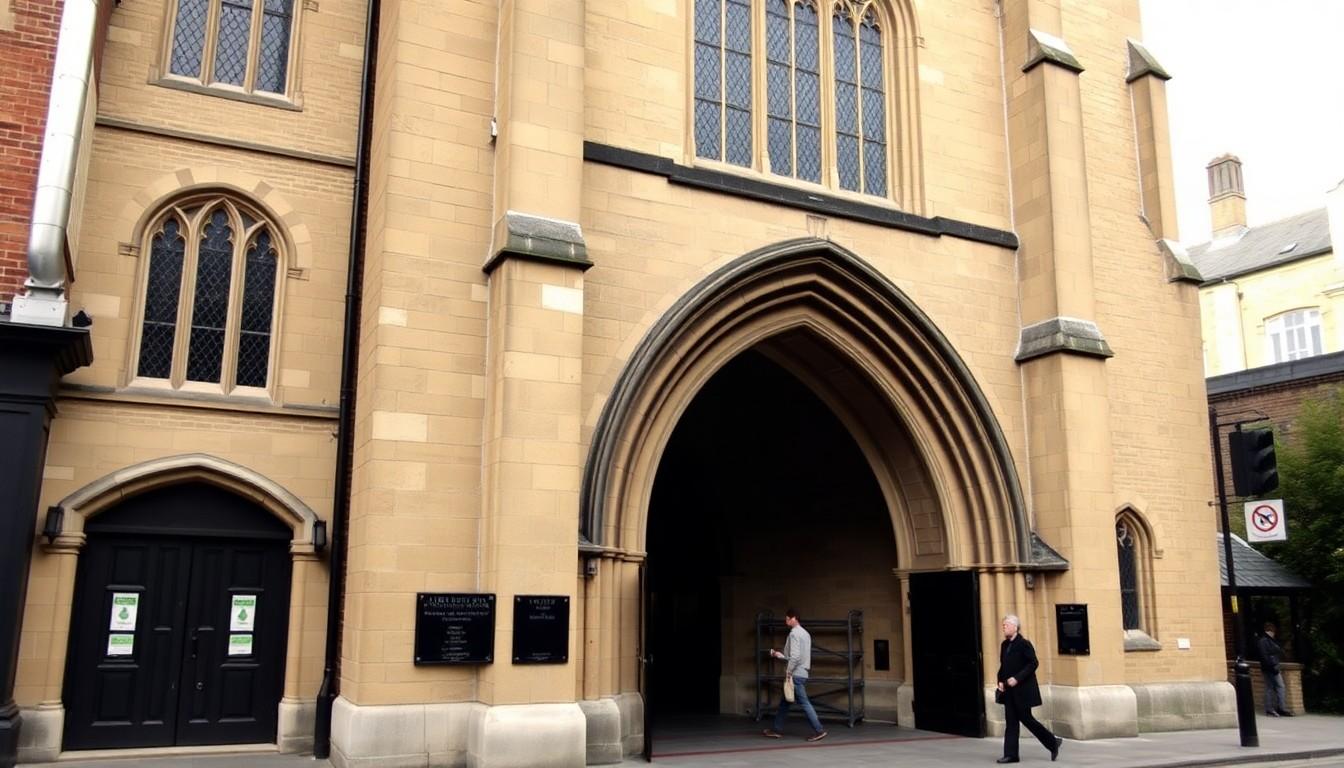
Church life in Southwark is being tested by a wider crisis of trust, belonging and institutional confidence. A personal account of searching for an LGBTQI+ network, alongside the Church of England's continuing Living in Love and Faith process, highlights why visibility and welcome still matter to clergy, worshippers and anyone looking for a safer, more inclusive Christian community.
Essential Takeaways
- A personal search: Finding an LGBTQI+ network in the diocese proved difficult, revealing how discreet some support structures have become.
- A national backdrop: Living in Love and Faith continues to shape debates about identity, relationships, safeguarding and belonging across the Church of England.
- A historic tension: Southwark has a strong tradition of social engagement, but its past openness sits uneasily beside today's more cautious culture.
- Why visibility matters: Private support can help people feel less alone, but public welcome is vital for newcomers and marginalised worshippers.
- The wider question: Churches must decide whether survival means protecting existing structures or becoming more open, trusted and relevant.
A search for welcome becomes a story about trust
The sharpest detail in this account isn't a grand theological argument. It's the small, awkward experience of trying to find a group where LGBTQI+ people and allies can connect, only to discover that access depends on holding the right clerical status.
That moment carries emotional weight because inclusion isn't just about formal policy. It lives in practical things: whether someone knows whom to contact, whether a group is visible, and whether a newcomer feels expected rather than tolerated. Southwark Cathedral's long history gives that question added resonance. Reference material about the cathedral describes a major London church whose story is closely tied to the life of the surrounding community.
The Church of England's own Living in Love and Faith material shows why these questions remain so difficult. It presents the subject as a wide-ranging national conversation about human identity, relationships, sexuality and Christian teaching, rather than a debate with an easy finish.
Southwark's progressive reputation meets a more cautious present
Southwark has often been associated with energetic social ministry and a willingness to engage with difficult public questions. The supplied historical account traces a period when lesbian and gay clergy, campaigners and allies were more visibly connected through diocesan and national networks.
That history matters, but nostalgia can only take the Church so far. The challenge now is not simply to recreate the 1990s. It's to build a form of inclusion that works for today's worshippers, including people who may be wary of institutions, uncomfortable with labels or unsure whether a church will treat them with dignity.
A Church of England history of LGBTQI+ activism also suggests that organised campaigning has played an important role in making questions of equality harder to ignore. When those networks weaken or disappear, the loss is practical as well as symbolic: fewer shared spaces, fewer trusted signposts and less public accountability.
Living in Love and Faith still shapes the conversation
Living in Love and Faith was intended to help the Church listen, learn and reflect on issues that have divided Christians for generations. The Church of England's published updates show a process involving study, consultation and continuing discussion, while a Southwark diocesan letter places that national work within the local life of parishes and clergy.
For many LGBTQI+ Christians, however, the process has also carried a cost. Years of discussion can feel less like patient discernment and more like an endless postponement, particularly when other people's rights and personal lives are treated as subjects for institutional deliberation.
That doesn't mean every question can be settled overnight. It does mean churches should be honest about the human impact of delay. A policy may sound measured from a committee room, but it can feel exhausting and deeply personal in a vestry, a family pew or a clergy support group.
What should an inclusive church look like in practice?
The useful test is everyday experience. Can visitors find clear information about LGBTQI+ inclusion on a parish website? Are clergy and volunteers confident about responding to homophobia? Do safeguarding procedures protect everyone without becoming a tool for silence? And can people participate without having to disclose more about themselves than they wish?
For anyone searching for an affirming church, a few practical checks can help. Look for an explicit inclusion statement, recent community activity and contact details for a named person. Ask how the parish handles same-sex relationships, trans inclusion and complaints. Most importantly, notice the atmosphere when you arrive: a warm welcome, easy conversation and a sense of safety often reveal more than polished language.
Church leaders should make support networks easier to find, while being clear about eligibility rules. Confidentiality may be necessary, but complete invisibility can unintentionally suggest that LGBTQI+ people are a problem to manage rather than part of the church's life.
Survival depends on more than keeping the doors open
The wider concern running through this story is institutional decline. Churches are dealing with financial pressure, ageing congregations, changing patterns of belief and a public mood that is increasingly suspicious of powerful organisations. The Church of England's own statements on Living in Love and Faith show an institution trying to hold together competing convictions while maintaining a national presence.
But survival isn't only about budgets, buildings or attendance figures. It's also about whether people believe a church is truthful, compassionate and capable of learning. Southwark Cathedral's connection with reconciliation and the Community of the Cross of Nails offers a useful reminder that Christian witness is strongest when it addresses real wounds rather than hiding them.
One quiet conversation after a service can open a door, but a healthy institution shouldn't rely on chance encounters to make people feel they belong. The future of an inclusive Church of England will depend on turning welcome from a private kindness into a visible, dependable culture.
A safer church begins with making belonging easy to see.
Source Reference Map
Story idea inspired by: [1]
Sources by paragraph:
- Paragraph 1: [2], [3]
- Paragraph 2: [4], [6]
- Paragraph 3: [5], [7]
- Paragraph 4: [2], [3]
- Paragraph 5: [6], [7]
- Paragraph 6: [5], [7]
- Paragraph 7: [2], [3]
- Paragraph 8: [4], [6]
- Paragraph 9: [2], [5]
- Paragraph 10: [3], [7]
- Paragraph 11: [4], [5]
- Paragraph 12: [2], [3]
- Paragraph 13: [6], [7]
- Paragraph 14: [2], [5]
- Paragraph 15: [3], [4]