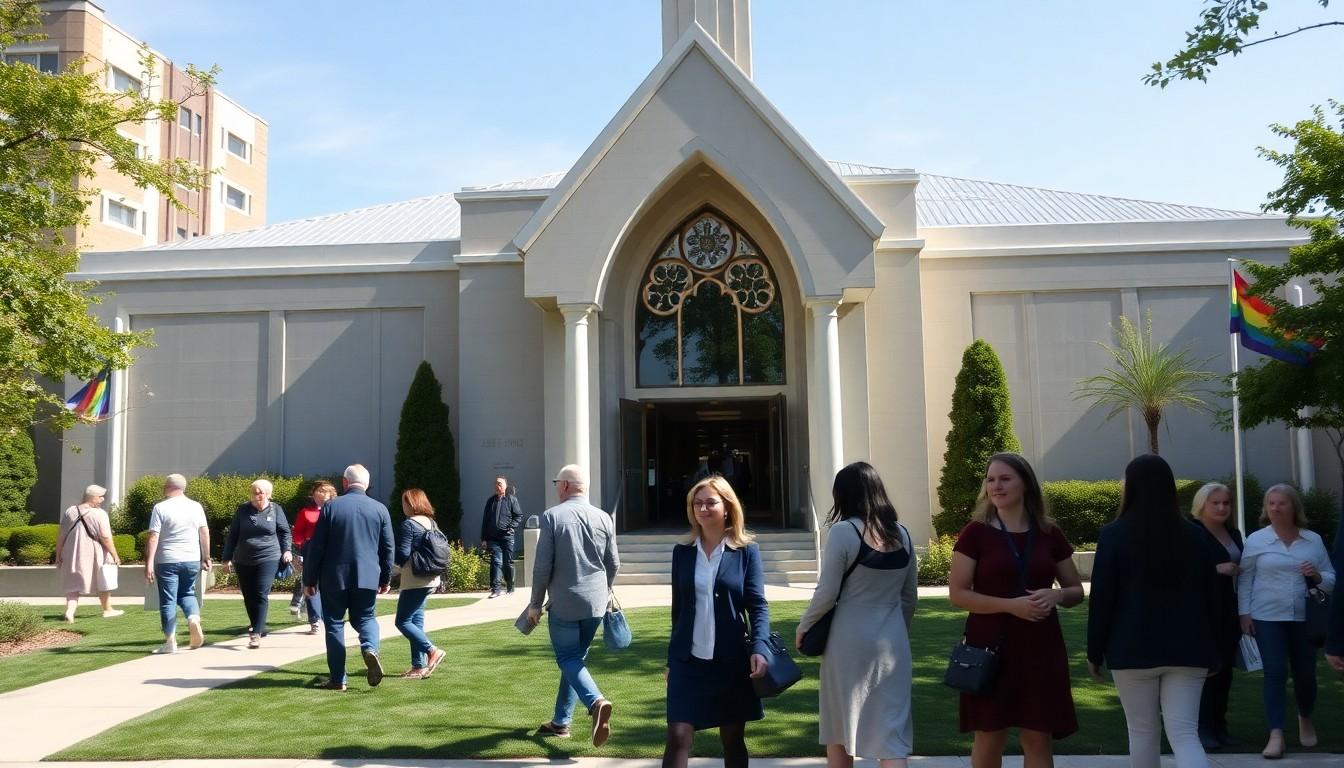
LGBTQ+ Mormons are finding a more accepting community among fellow Latter-day Saints, but official church teaching still draws a firm line around same-sex relationships. Recent survey evidence points to changing attitudes in the pews, raising a difficult question: can queer people remain fully involved without hiding the most important parts of their lives?
Essential Takeaways
- Feelings and relationships are treated differently: Church guidance says same-sex attraction itself isn't sinful, while same-sex sexual relationships remain against official teaching.
- Attitudes are shifting: Pew Research Centre data shows many Latter-day Saints, particularly less observant or culturally Mormon respondents, favour LGBTQ+ acceptance.
- The gap remains painful: Greater social acceptance doesn't automatically change rules around dating, marriage, worship or church participation.
- Personal choices vary: Some queer Mormons stay, some leave and others retain cultural or spiritual connections outside formal church life.
The church's complicated position on being gay
The central tension is remarkably simple to describe and difficult to live with. The Church of Jesus Christ of Latter-day Saints distinguishes between experiencing same-sex attraction and acting on it, allowing the first while prohibiting intimate same-sex relationships under its current doctrine.
Its official guidance says members who experience same-sex attraction aren't condemned merely for having those feelings. But it also teaches that sexual intimacy belongs within marriage between a man and a woman, leaving gay members with a choice that can feel less like freedom than permanent restraint. The distinction may sound tidy on paper, yet real lives rarely fit such neat categories.
That policy has shaped years of debate around whether someone can genuinely be both openly gay and fully included in church life. According to church counselling resources, members are encouraged to seek support without being pushed towards so-called conversion therapy, a significant point given the harm associated with attempts to change sexual orientation.
Why attitudes among Mormons are changing
Inside the wider membership, however, the conversation appears to be moving. Pew Research Centre's work on Latter-day Saints suggests that acceptance of LGBTQ+ people has grown, especially among members who are less observant or identify with Mormon culture more than strict religious practice.
That matters because congregations aren't frozen in time. Younger believers encounter openly queer friends, relatives and colleagues, while social media and popular culture make it harder for institutions to control the language around identity. A doctrine may remain unchanged, but the people interpreting it are increasingly asking whether exclusion is compatible with compassion.
The shift doesn't mean every LDS community is welcoming, nor does it erase the views of highly observant members who continue to oppose wider acceptance. Still, the direction of travel is clear enough to make the old assumptions look increasingly fragile.
Acceptance in society doesn't always mean acceptance at church
Pew's broader research on religion and LGBTQ+ issues shows why the picture needs nuance. Religious identity remains an important predictor of attitudes, but education, age, political outlook and personal contact with LGBTQ+ people also influence how individuals see equality and social acceptance.
For queer Mormons, that can create an awkward mismatch. A family may be loving, a local congregation may be kind and a wider friendship group may be supportive, yet official expectations can still discourage same-sex dating or marriage. The result is a community that may feel emotionally welcoming while remaining institutionally restrictive.
This is also why the phrase "gay Mormon" covers so many different experiences. Some people remain active and celibate, some leave formal membership but retain faith or family traditions, and others reject the church entirely after years of conflict. None of those paths is automatically more authentic than another.
Practical questions for LGBTQ+ members and families
Anyone trying to navigate this territory should start with the local reality, not just the official handbook. Ask how a congregation treats openly LGBTQ+ members, whether leaders respect chosen names and pronouns, and what practical consequences could follow from dating, marriage or coming out.
Families can help by listening before offering advice. Statements such as "we love you, but..." may be intended as reassurance, yet the second half can land like a warning. Supportive relatives should make room for uncertainty and avoid presenting celibacy, secrecy or leaving the church as the only acceptable solutions.
Church resources also advise against coercive efforts to change orientation. That is an important safeguard, but people should still seek independent mental-health support when needed, particularly from professionals familiar with LGBTQ+ identity and religious trauma. A quiet room, a trusted friend and genuinely neutral advice can make a difficult decision feel less lonely.
Could the church change with its members?
The evidence suggests that many Latter-day Saints are already adapting, whether leaders acknowledge it or not. Pew Research Centre's findings show a widening difference between official positions and the views held by members who are less tightly bound to institutional rules.
Institutions can resist social change for years, but they rarely escape demographic reality. If younger members see LGBTQ+ acceptance as a basic question of dignity, a church that refuses to engage may risk losing not only queer people but also their friends, siblings and allies.
That doesn't guarantee a doctrinal reversal. It does, however, make the current compromise harder to sustain indefinitely. For many queer Mormons, the hope isn't special treatment; it's the chance to belong without having to edit their lives first.
A more welcoming future may begin with the members, even if it hasn't yet arrived in the handbook.
Explore the path that protects both your identity and your wellbeing.
Source Reference Map
Story idea inspired by: [1]
Sources by paragraph: