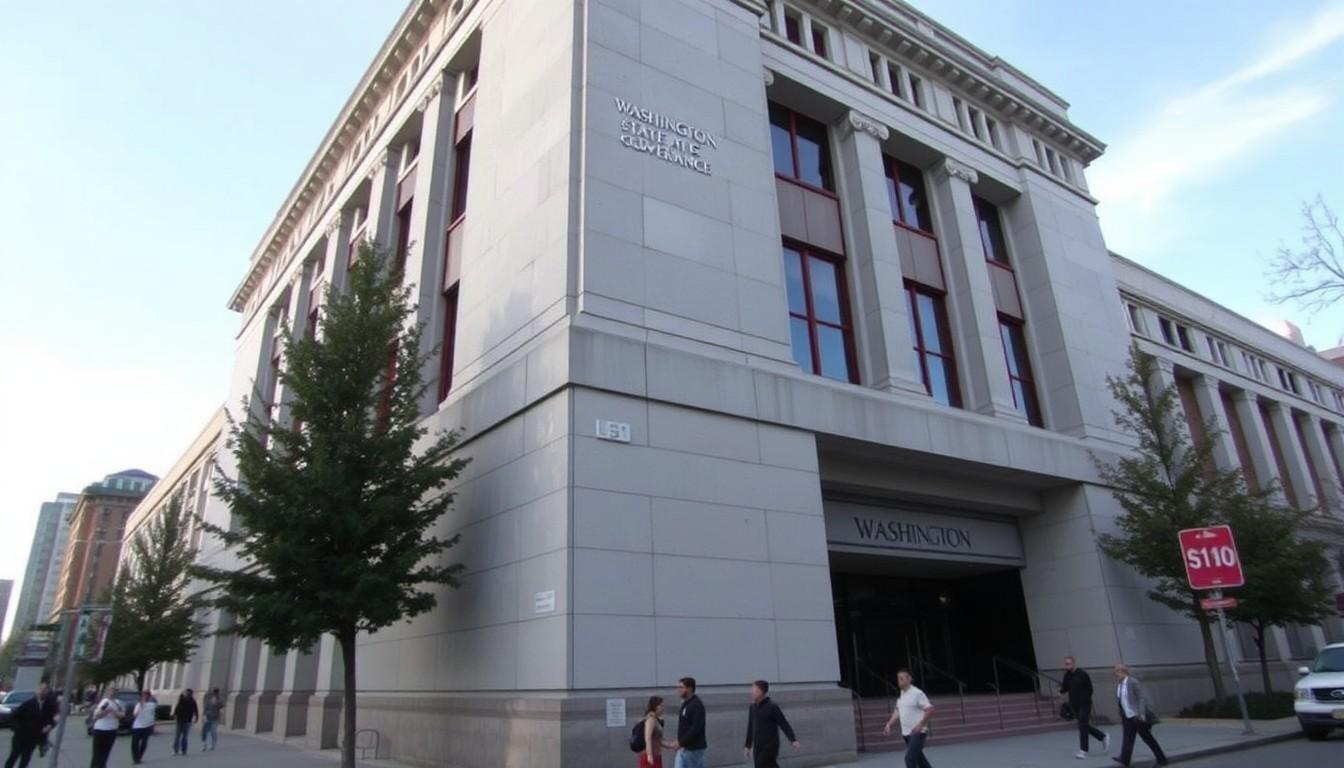
Advocates are warning families across Washington about two proposed ballot measures backed by Let’s Go Washington, saying the plans could expose LGBTQ young people to greater risk while placing new burdens on girls in school sport. The debate matters well beyond the ballot box, touching privacy, safeguarding, healthcare access and who gets to feel safe at school.
Essential takeaways
- Two measures are central: One would expand parental notification around student conversations, while another would introduce sex or anatomy checks for girls in school sport.
- Safeguarding is the flashpoint: Critics say forced disclosure could deter young people facing abuse, bullying or rejection from seeking trusted help.
- Sports rules could affect everyone: Opponents argue that medical examinations or laboratory testing would create intrusive hurdles for girls and their families.
- The campaign has a wider record: Reporting links Let’s Go Washington to earlier initiatives, tax debates and partnerships with socially conservative organisations.
- The argument is highly personal: Supporters frame the measures around parental authority and fairness, while opponents see a serious threat to privacy and inclusion.
Why these Washington ballot measures are drawing attention
The strongest concern is also the most human: a young person quietly asking an adult for help, then wondering whether that conversation will remain private. GLAAD says Let’s Go Washington should be added to its Accountability Project because of its campaigning around two anti-LGBTQ ballot initiatives in Washington. The organisation argues that the proposals could harm LGBTQ pupils and other vulnerable children. According to GLAAD's fact sheet for reporters, the measures have been presented as questions of parental rights and school sport, but their practical effects could be much broader.
One proposal, identified as IL26-001, would require schools to notify parents about certain private conversations between pupils and trusted staff. Critics say that could include disclosures involving gender identity, sexuality, mental health or home life. The fear is that students living with abuse or hostility may simply stop asking for help. That isn't an abstract worry; for some families, a discreet conversation with a counsellor can be the first safe step towards protection. (Sources: GLAAD's fact sheet for reporters; Wrong for Washington.)
The second proposal, IL26-638, would impose eligibility checks on girls taking part in school sport. Opponents say the wording could lead to invasive examinations or costly testing, potentially affecting every girl rather than only the small number of transgender pupils the campaign says it is targeting. Wrong for Washington argues that the approach would create an uncomfortable and administratively heavy process for ordinary school teams. (Sources: GLAAD's fact sheet for reporters; Wrong for Washington.)
Forced outing is at the heart of the privacy debate
Supporters of broader parental notification often say parents deserve transparency about what happens in classrooms and pastoral care. That principle will resonate with many families, particularly when schools make decisions affecting a child's wellbeing. But the difficult question is what happens when home isn't a safe place to disclose personal information.
GLAAD cites abuse survivor Gabriel Neuman, who says the proposal could discourage children facing violence, sexual abuse or bullying from approaching school staff. The organisation's concern is that a rule written in the language of family involvement could operate as forced outing for LGBTQ pupils, with consequences ranging from conflict at home to homelessness. The campaign's critics therefore say the key issue isn't whether parents matter, but whether every child has an equally safe home environment. (Sources: GLAAD's fact sheet for reporters; GLAAD's announcement.)
School safeguarding systems usually rely on trusted adults using judgement rather than following a single automatic disclosure rule. That flexibility matters when a pupil is frightened, isolated or unsure what will happen next. A policy that makes the first conversation feel risky could leave some children silent, which is precisely when adults may have the least chance to intervene. (Sources: GLAAD's fact sheet for reporters; Wrong for Washington.)
Why sports testing could affect every girl
The sports proposal has a particularly awkward practical problem: enforcement. Critics say it could require girls to arrange a medical appointment for an anatomy examination or pay for genetic or hormone testing before taking part in school athletics. Even families who support sex-based categories may balk at turning an after-school fixture into a paperwork and healthcare obstacle course.
Pediatric nurse Kelsey Gellner, quoted by GLAAD, argues that the plan would impose medically unnecessary checks and costs on families. The concern is not only embarrassment, although that would be significant for teenagers. It's also access: families with less time, money or transport could find participation harder, while schools would need systems to handle sensitive medical information. (Sources: GLAAD's fact sheet for reporters; Wrong for Washington.)
The debate also reflects a wider US argument over transgender participation in sport, where proposals are often described as protecting fairness but can create rules that reach far beyond the athletes at the centre of the controversy. For parents comparing the claims, the useful question is simple: who would have to prove eligibility, to whom, and at what cost? (Sources: GLAAD's fact sheet for reporters; Wrong for Washington.)
Let’s Go Washington has a broader political history
The current campaign didn't appear from nowhere. The Spokesman-Review has reported on accusations surrounding the group behind Washington's ballot initiatives, while Northwest Progressive has covered earlier attempts by Let’s Go Washington to qualify a large slate of statewide initiatives. Those episodes help explain why the organisation's latest measures are being viewed as part of a sustained political strategy rather than isolated proposals. (Sources: The Spokesman-Review; Northwest Progressive.)
Public attention has also focused on founder Brian Heywood's involvement in tax and environmental-policy campaigns. Spokane Public Radio reported on further initiatives connected with Heywood, adding to a record that spans public finance, regulation and social policy. Meanwhile, GLAAD says the campaign has promoted claims about transgender young people that it considers false and has appeared alongside organisations criticised for spreading anti-LGBTQ misinformation. (Sources: Spokane Public Radio; GLAAD's announcement.)
That wider context matters because ballot campaigns are rarely just about the wording on a form. They build networks, test messages and shape what voters think is normal or urgent. For families, the immediate task is to read the actual proposals carefully, rather than relying on the warmest slogan or loudest online clip. (Sources: The Spokesman-Review; Spokane Public Radio.)
What Washington voters should look at next
The practical details will matter as the measures move through the political process. Voters should check the official text, look for definitions of terms such as parent, student and eligibility, and ask which agencies or schools would be responsible for enforcement. They should also consider whether the proposals include exceptions for abuse, confidential health support or children whose parents are themselves under investigation. (Sources: GLAAD's fact sheet for reporters; Wrong for Washington.)
It is worth separating two questions that are often bundled together. Parents can reasonably want a meaningful role in their children's education, and schools can reasonably want fair sporting competition. But those goals don't automatically justify rules that disclose a pupil's private life or require broad medical scrutiny. Good policy should protect children in real-world homes and real-world school corridors, not just in campaign literature. (Sources: GLAAD's fact sheet for reporters; Wrong for Washington.)
The next phase is likely to bring sharper campaigning, more legal scrutiny and plenty of emotionally charged messaging. For Washington families, the most revealing test may be whether a proposal makes ordinary school life safer and simpler, or adds fear, cost and paperwork to situations that already feel delicate. (Sources: GLAAD's announcement; Spokane Public Radio.)
It's a debate about rights, but also about whether children can ask for help without fear.
Source Reference Map
Story idea inspired by: [1]
Sources by paragraph:
- Paragraph 1: [2], [3]
- Paragraph 2: [3], [4]
- Paragraph 3: [3], [4]
- Paragraph 4: [3], [2]
- Paragraph 5: [3], [4]
- Paragraph 6: [3], [4]
- Paragraph 7: [3], [4]
- Paragraph 8: [3], [4]
- Paragraph 9: [5], [6]
- Paragraph 10: [7], [2]
- Paragraph 11: [5], [7]
- Paragraph 12: [3], [4]
- Paragraph 13: [3], [4]
- Paragraph 14: [2], [7]