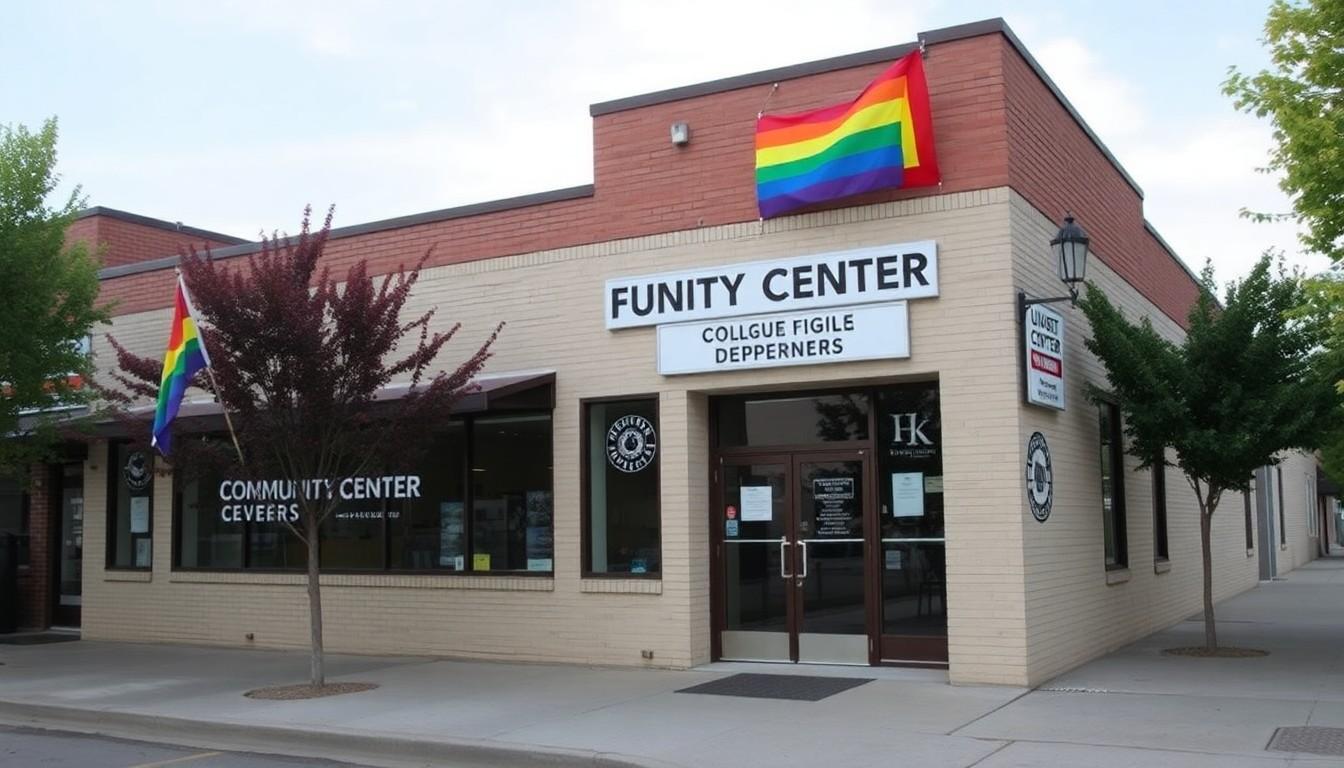
LGBTQ community centres across the US are serving more people while facing tighter budgets, staff shortages and rising hostility. A new national survey finds that these centres remain vital hubs for healthcare, connection and advocacy, but warns that sustained funding will be needed to keep services safe, open and accessible.
Essential Takeaways
- Wide reach: Participating centres serve more than 29,000 people each week, or around 1.5 million annually.
- Essential services: Two-thirds provide physical health, mental health or anti-violence support.
- Growing pressure: Nearly half say they’re thinly staffed, while 76% report anti-LGBTQ threats or harassment.
- Uneven finances: Centres reported combined 2026 budgets exceeding $529 million, but resources are concentrated among larger organisations.
- Volunteers matter: Around 17,500 people contributed more than 409,000 volunteer hours in 2025.
LGBTQ community centres are doing far more than hosting events
A community centre might look, from the outside, like a place for meetings, social groups or a colourful noticeboard. In practice, the latest survey presents something much broader: a local safety net offering healthcare, technology access, advocacy and a sense of belonging.
The 2026 LGBTQ Community Center Survey Report, produced by the Movement Advancement Project and CenterLink, draws on responses from 175 centres. Together, participating organisations serve more than 29,000 people each week, according to the report’s findings published by MAP.
That reach matters particularly in places where affirming services are limited. For some LGBTQ people, the nearest centre may be the most practical route to support, information or community, rather than simply another option on a long list.
Health support remains a central part of the work
Health services are among the clearest examples of how these organisations have expanded beyond traditional community programming. The survey found that 66% of participating centres directly provide physical health, mental health or anti-violence services.
In 2025, 86 centres supplied health services to more than 92,600 people. That figure captures a wide range of needs, from emotional support and prevention work to help for people affected by violence.
Technology access is another quietly important service. Nearly half of centres offer public computer resources, which were used by almost 59,000 people over the year. A reliable computer, internet connection or private place to complete paperwork can make a surprisingly large difference when someone is applying for work, housing or benefits.
Political hostility is changing the day-to-day reality
The report’s most sobering finding is the extent of harassment. Seventy-six per cent of responding centres said they’d experienced anti-LGBTQ threats or harassment online, offline or both, according to MAP’s related analysis.
The pressure has often focused on transgender people and young people, as well as the programmes designed to support them. Centres say hostile rhetoric affects not only public events, but also staff wellbeing, security planning, fundraising and the communities they serve.
That creates an uncomfortable financial loop. Organisations need stronger safety measures, yet many are already operating with limited staff and restricted budgets. The result is that basic protection can compete with the services people are coming through the door to access.
Small centres face the sharpest squeeze
Most participating centres have paid employees, collectively providing more than 3,100 jobs across 37 states, Washington DC and Puerto Rico. Even so, nearly half described themselves as thinly staffed, while volunteers supplied more than 409,000 hours during 2025.
The financial picture is just as uneven. Centres reported a combined 2026 budget of more than $529 million, although that total falls substantially when one unusually large organisation is excluded. The figures show how easily a national headline can obscure the very different realities of small and large centres.
Government grants are an important source of income, with 58% of centres receiving them and reporting more than $124 million in total. But access isn’t straightforward, and limited capacity can make applications difficult. A small organisation may have the expertise to deliver a programme but not enough staff time to complete every funding requirement.
What funders and local communities can do next
MAP and CenterLink are urging individuals, foundations and state and local governments to invest in centres over the long term, rather than relying only on short bursts of crisis funding. The goal is not simply to keep doors open, but to help organisations increase their programmes and narrow the gap between smaller and better-funded centres.
There are practical ways to help. Regular donations can provide flexibility, while volunteering can ease pressure on overstretched teams. Local authorities and foundations can also offer multi-year grants, simplify application processes and fund security, administration and technology, not just frontline activities.
The outlook is demanding, but the survey also shows considerable resilience. Centres continue to provide services, organise volunteers and take part in civic engagement, even as the environment around them becomes more difficult. For many visitors, that steady presence is the point: a welcoming place that remains there when other support feels uncertain.
A stronger funding base could help LGBTQ community centres remain safe, open and ready for the people who rely on them.
Source Reference Map
Story idea inspired by: [1]
Sources by paragraph:
- Paragraph 1: [2], [6]
- Paragraph 2: [3], [4]
- Paragraph 3: [2], [6]
- Paragraph 4: [3], [6]
- Paragraph 5: [2], [6]
- Paragraph 6: [3], [4]
- Paragraph 7: [7], [6]
- Paragraph 8: [7], [2]
- Paragraph 9: [2], [6]
- Paragraph 10: [3], [4]
- Paragraph 11: [2], [6]
- Paragraph 12: [2], [5]
- Paragraph 13: [2], [6]
- Paragraph 14: [2], [5]
- Paragraph 15: [2], [6]
- Paragraph 16: [2], [7]
- Paragraph 17: [2], [6]
- Paragraph 18: [2], [4]