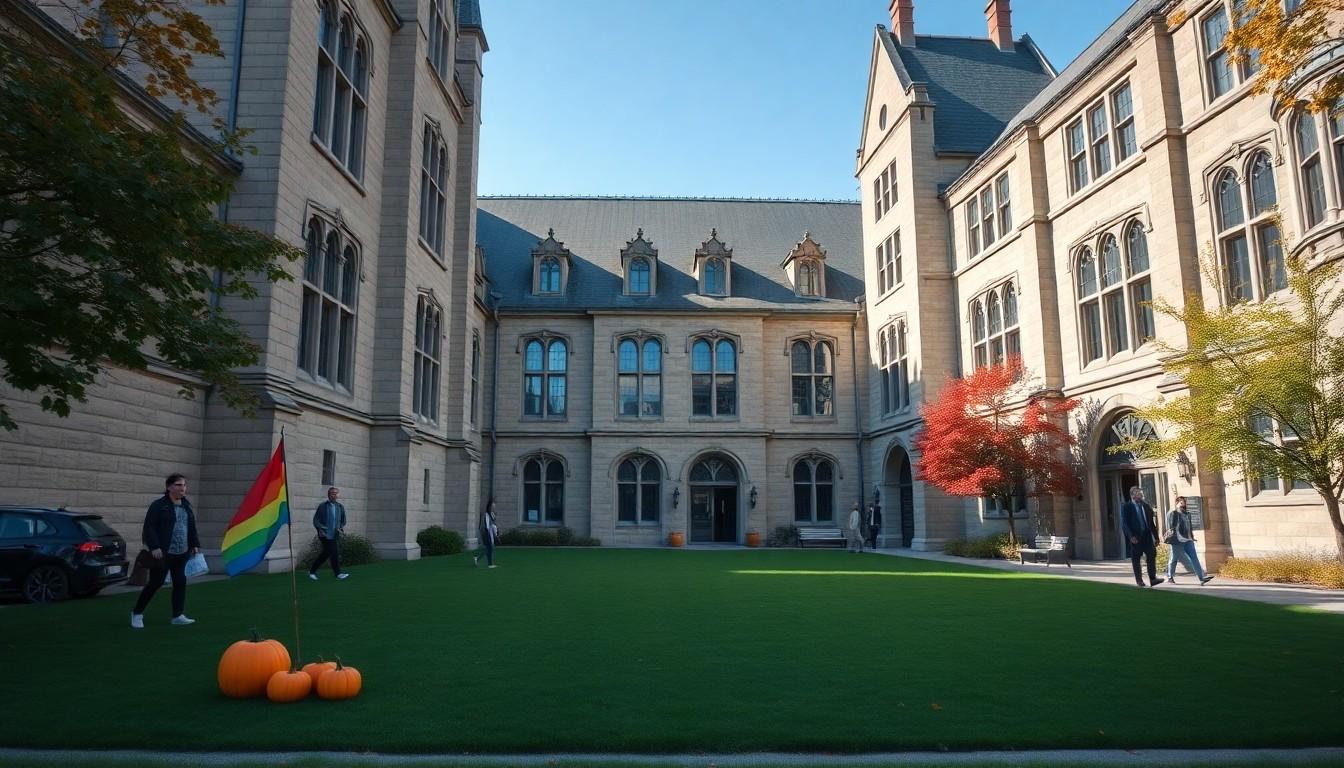
Georgetown University is promoting OUTober, its LGBTQ+ History Month programme, with worship, community and creative events across the Washington, DC campus. The line-up has renewed discussion about how the Jesuit university balances its Catholic heritage with an increasingly visible commitment to LGBTQ+ inclusion.
Essential Takeaways
- A month-long programme: Georgetown describes OUTober as a series of events marking LGBTQ+ history, culture and community.
- Faith meets inclusion: The calendar includes Catholic, Jewish and Protestant gatherings alongside social activities.
- A distinctive campus centre: Georgetown says it established an LGBTQ Resource Center in 2008.
- The debate is wider than one university: The programme reflects a continuing argument over identity, tradition and inclusion in Catholic higher education.
Georgetown’s OUTober calendar puts inclusion centre stage
Georgetown’s autumn calendar is busy, colourful and deliberately broad. Students can expect conversations, worship services, community gatherings and lighter activities such as pumpkin decorating, giving the month a distinctly campus-led feel.
The university’s LGBTQ Resource Center presents OUTober as an opportunity to recognise LGBTQ+ history and the contributions of students, staff and academics. Georgetown’s own programme materials describe the month as part of its wider work on equity and inclusion, according to the university’s LGBTQ Resource Center. [2], [3]
That mix of serious reflection and relaxed social events is familiar on American university campuses. Here, though, the setting adds another layer: Georgetown is one of the country’s best-known Catholic and Jesuit institutions.
Why the Catholic setting matters
The controversy centres less on whether the events exist than on what they say about Georgetown’s public identity. University materials highlight both its Catholic and Jesuit foundations and its support for LGBTQ+ students, creating a conversation that reaches well beyond the event listings.
The programme includes a Catholic “Mass of Belonging”, a Pride Shabbat and an OUTober worship event. Georgetown’s event pages present these gatherings as opportunities for community and reflection, while the university’s broader history-month page places them within a programme spanning faith, culture and student life. [6], [7]
For supporters, that combination can look like pastoral welcome in practice. For critics, it raises questions about whether a Catholic university can promote LGBTQ+ events while remaining faithful to traditional Church teaching. That tension is unlikely to disappear with the last pumpkin decoration.
From resource centre to annual tradition
Georgetown says it became the first Catholic and Jesuit higher-education institution to establish an LGBTQ Resource Center, opening the centre in 2008. Its role now extends beyond support services, with education, outreach and programming forming a visible part of campus life.
The centre’s OUTober page frames the month around history, belonging and participation. Meanwhile, Georgetown’s institutional coverage has described the programme as part of a continuing effort to recognise LGBTQIA+ history and culture within the university community. [2], [4]
That evolution mirrors a broader shift in higher education. Resource centres once associated mainly with advice and pastoral support are increasingly organisers, educators and public-facing voices. In practical terms, that means students encounter inclusion not just in an office, but across the calendar.
What students can actually attend
The schedule includes National Coming Out Day activities, faith-based gatherings and informal events designed to bring students together. The National Coming Out Day listing is presented as an LGBTQ+ community event, while the chaplains’ tea offers a more conversational setting around OUTober. [5], [6]
There’s also a student production of The Rocky Horror Show, plus creative activities such as queer-space pumpkin decorating. The result is a programme that shifts between commemoration, worship, performance and simple social contact.
That variety matters. Not every student wants a formal discussion or a religious service; some may prefer a quiet cup of tea, a craft session or a night at the theatre. Georgetown appears to be betting that a broad menu will make the month feel more accessible.
A revealing test for Catholic higher education
Georgetown’s OUTober programme is a snapshot of a much larger institutional question: how should religious universities handle changing expectations around identity and belonging? The answer depends partly on whether Catholic identity is understood primarily through doctrine, pastoral practice, institutional tradition or some combination of all three.
The university’s approach is clear in one respect. It wants LGBTQ+ students and staff to see themselves reflected in campus life, while continuing to present Georgetown as a Catholic, Jesuit institution. Its official pages repeatedly connect the programme with community, history and equity. [3], [4], [7]
Whether that balance satisfies the university’s critics is another matter. But the attention surrounding OUTober shows why campus calendars can become cultural flashpoints: a small event listing can open a very large conversation about faith, belonging and who gets to define a university’s identity.
Explore the programme in full, and make your own judgement about where tradition and inclusion meet.
Source Reference Map
Story idea inspired by: [1]
Sources by paragraph: