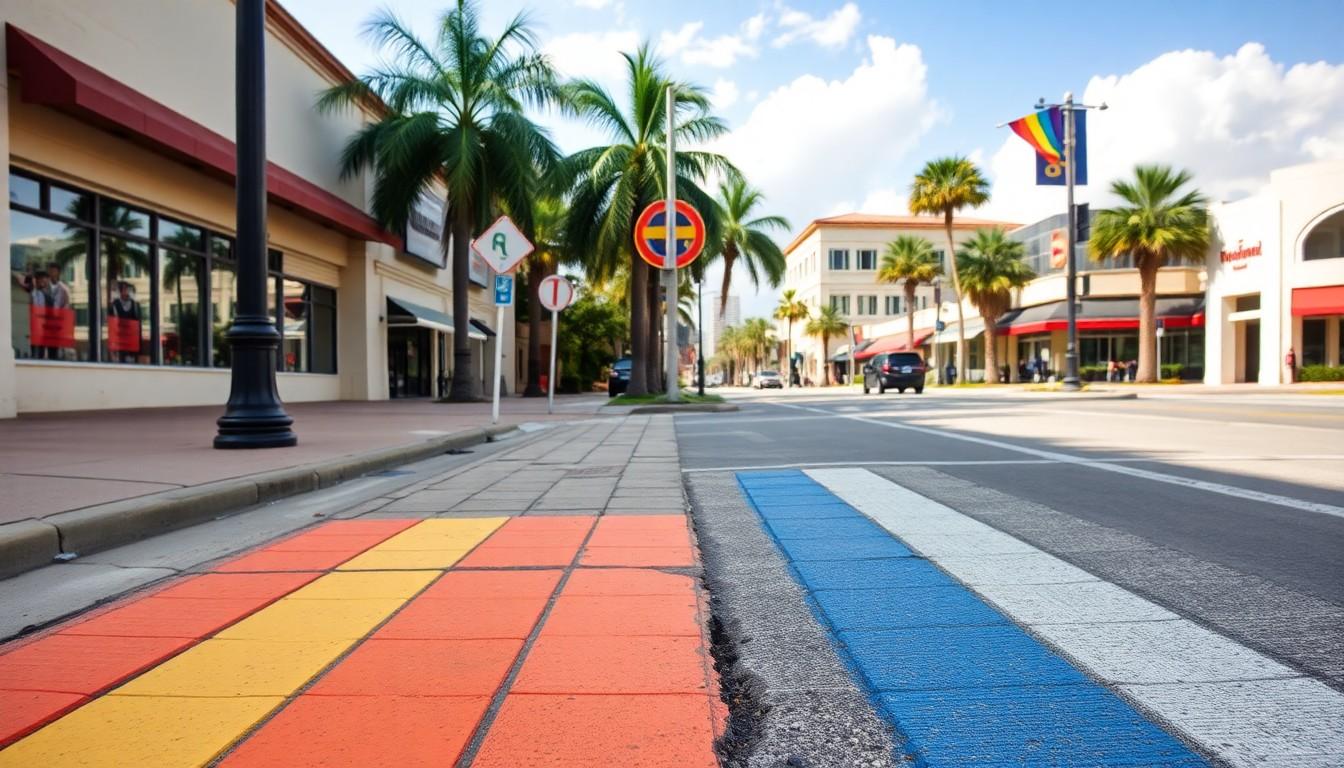
A Florida drag performer is turning pieces of a dismantled Miami Beach rainbow crosswalk into meaningful keepsakes, while raising money for Pride events in Key West and Naples. The unusual fundraiser gives supporters something tangible to hold on to, and offers LGBTQ+ organisations vital help as local funding faces growing pressure.
Essential Takeaways
- A tactile fundraiser: Miss Bouvee is offering 50 reclaimed crosswalk bricks with commemorative plaques.
- A charitable purpose: Donations will support Pride organisations and events in Key West and Naples.
- A $15,000 target: The campaign has already reached roughly half its fundraising goal.
- A piece of local history: Each brick represents a contested symbol of LGBTQ+ visibility in Florida.
- A practical contribution: Money raised will help fund performances, production work and local wages during Pride.
A rainbow crosswalk becomes a keepsake
There’s something striking about holding a fragment of a public artwork in your hands. That’s the appeal behind Miss Bouvee’s campaign, which turns reclaimed pieces of Miami Beach’s former rainbow crosswalk into commemorative objects for supporters.
CBS Miami reported that the Florida drag performer acquired 50 bricks at auction, then added plaques to make them more than colourful bits of paving. They’re being presented as small, tactile reminders of LGBTQ+ history, with donations starting at $250.
The idea has a pleasing bit of symbolism to it. A crosswalk designed to make queer people visible was removed from the street, but its pieces are now travelling into homes, offices and community spaces instead.
Turning a political row into Pride funding
Miss Bouvee, whose name away from the stage is Eric Swanson, hopes the fundraiser will generate $15,000 for Pride groups in Naples and Key West. According to The Advocate, the campaign had reached about half that figure when the initiative was reported.
The money isn't simply for signs or decoration. In Key West, Swanson said it will help pay for the live performance stage, production costs and wages for local performers during Pride. That makes the fundraiser feel less like a novelty sale and more like a direct investment in the people who make celebrations happen.
PinkNews noted that supporters can choose the organisation receiving their donation, while the contribution is made directly to that group. For buyers, that adds a useful layer of transparency to what could otherwise look like a purely commemorative purchase.
Why these bricks carry so much weight
The original Ocean Drive crosswalk became a flashpoint after Gov. Ron DeSantis used a sledgehammer to dismantle it, arguing that the artwork created a safety risk. Miami Beach officials opposed the move, and most of the colourful bricks were later reused in a nearby rainbow-tinted pedestrian plaza.
The remaining pieces were auctioned, creating the opportunity for Miss Bouvee’s campaign. Hoodline described the fundraiser as a way to redirect attention from the destruction towards community support, which is perhaps the most Florida response imaginable: take a political spectacle and turn it into a donation drive.
The objects also connect with a wider instinct among communities under pressure. A digital image can spread quickly, but a physical brick feels different. It has weight, texture and a story, even if your bookshelf probably didn't expect to become a tiny civic archive.
Pride groups face a tougher funding landscape
The fundraiser arrives as Florida LGBTQ+ organisations contend with a new state law affecting local diversity, equity and inclusion programmes. LGBTQ Nation reported that Senate Bill 1143 is set to restrict local ordinances, programmes and official policies linked to DEI, with consequences for arts, social services and community organisations.
The expected impact is already being felt in Broward County, where groups including the Stonewall National Museum, Archives & Library and the South Florida Gay Men’s Chorus have been identified among organisations at risk of losing local support. The issue isn't confined to one crosswalk or one city budget; it reaches into the infrastructure that keeps community spaces open.
That context gives the bricks their deeper meaning. Buyers aren't just acquiring an unusual souvenir. They’re helping replace some of the practical support that public policy may take away.
A small object with a very public message
Key West has also seen its own rainbow Pride display painted over, making the fundraiser part of a broader argument about visibility. Swanson’s message is straightforward: removing symbols doesn't remove the people or the communities they represent.
For anyone considering a brick, the important questions are simple. Check which organisation will receive the donation, understand the minimum contribution, and treat the item as a keepsake rather than a conventional investment. Its real value lies in the cause and the story attached to it.
That may explain why the campaign has struck such a chord. The bricks are sturdy, colourful and a little defiant, but they also offer something gentler: a way for supporters to say that history is still being carried forward.
It's a small piece of paving, but it can help keep Pride moving.
Source Reference Map
Story idea inspired by: [1]
Sources by paragraph: