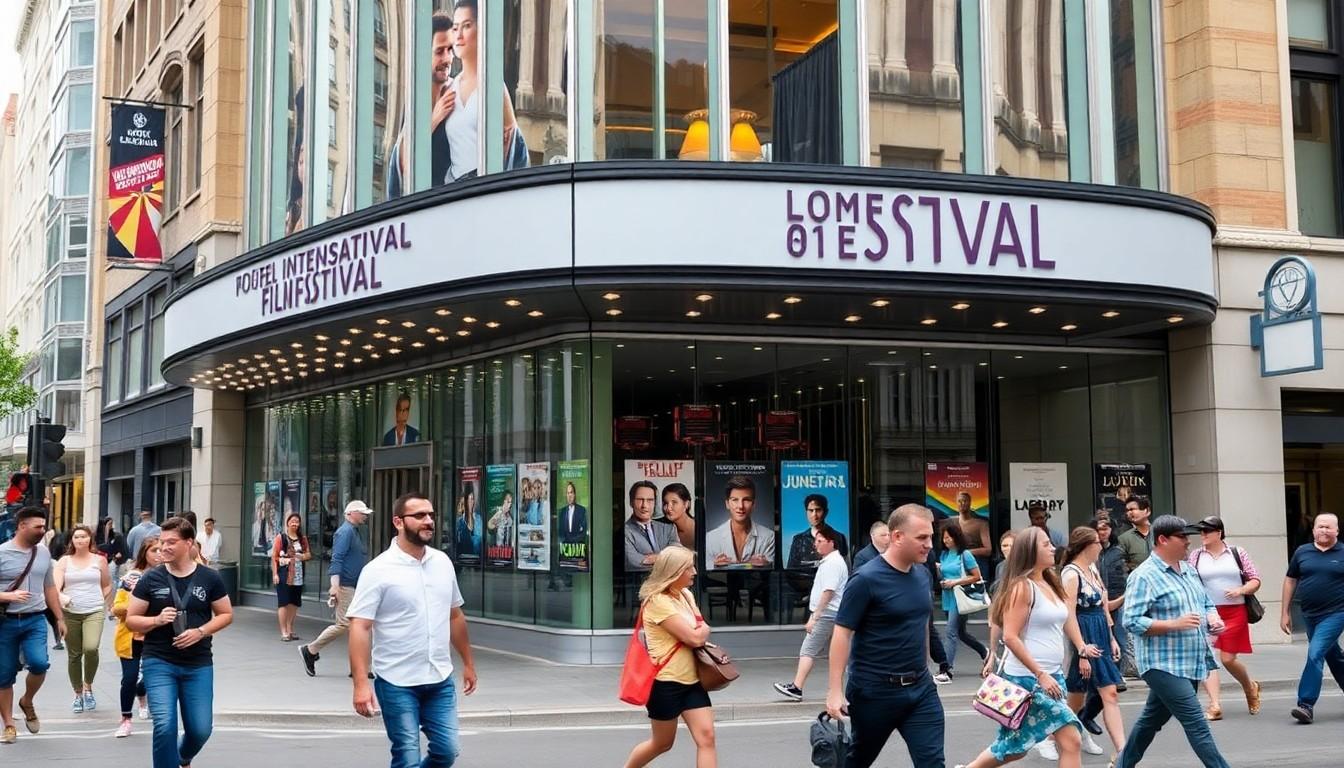
Festival audiences are turning to a striking group of queer films from TIFF 2026, where stories from Mexico, Haiti, Guatemala and Brooklyn explore identity, family, faith and desire. From intimate drama to vibrant animation, these films matter because they offer LGBTQIA+ characters room to be complicated, joyful and unmistakably themselves.
Essential Takeaways
- Four distinctive stories: The selection includes I Am Mario, Julián, Marie Madeleine and Nosotros.
- Animation with cultural texture: Julián brings a genderqueer child’s perspective into a Caribbean Brooklyn community.
- Messy, memorable drama: I Am Mario explores transition, fatherhood, loneliness and love without easy answers.
- Queerness meets faith and freedom: Marie Madeleine examines sexual liberation and religious judgement in Haiti.
- Beauty alongside pain: Nosotros treats queer love as tender and real, even when prejudice threatens it.
TIFF’s queer cinema feels personal, not packaged
The strongest thread across these films is their refusal to make queerness feel like a lesson for straight audiences. Instead, identity sits inside ordinary pressures: family expectations, money worries, religious control, migration and the awkward business of trying to build a life.
That gives the films a lived-in quality. According to Film Threat’s review coverage, I Am Mario works as an intimate character study, while ScreenDaily describes Julián as a vibrant coming-of-age animation rooted in Brooklyn. Together, they suggest a festival programme interested in texture as much as representation.
There’s also a welcome lack of neatness. These aren't polished brand statements about inclusion. They’re films about bodies, households and communities, where tenderness can arrive beside embarrassment, danger or confusion.
I Am Mario finds drama in an impossible choice
I Am Mario centres on a Mexican taxi driver whose carefully established life is thrown into turmoil by an unexpected pregnancy. The premise could easily become sensational, but the film’s power lies in its quieter details: isolation after a long shift, family members who mean well but stumble, and the fragile hope of a new relationship.
Film Threat’s review points to the film’s emotional force, particularly its attention to the pressures facing a trans man without reducing him to a single issue. Mario’s dilemma isn't simply about gender or parenthood. It’s about whether happiness can survive when the future refuses to follow the plan.
That makes the film particularly affecting. It doesn’t offer a tidy definition of a happy ending, which feels honest. Sometimes the most moving films leave you with a question rather than a comforting answer.
Julián makes queer childhood feel wonderfully specific
Louise Bagnall’s Julián follows a child whose imagination is filled with mermaids, marine life and possibility. Set within a Dominican and Caribbean community in Brooklyn, the film connects gender discovery with language, heritage and the small tensions between generations.
ScreenDaily praises the animation’s energy and its coming-of-age focus, while Zippy Frames highlights the film’s distinctive visual world. The result sounds less like a generic story of self-expression and more like a portrait of one child’s particular universe, shaped by family and place.
Reviews collected by Rotten Tomatoes also position Julián as a notable animated release. For parents and families looking for queer children’s films, that specificity matters. A young viewer doesn’t just need a character who is different. They need to see that character surrounded by a culture, a family and a life that feels full.
Marie Madeleine brings faith, sex and resistance into conflict
Set in Jacmel, Haiti, Marie Madeleine places a sex worker and a young man under the shadow of religious condemnation. Its world sounds vivid and theatrical, with bright colour, charged spaces and a sense that desire is pushing against every wall.
The film’s central tension is bigger than a simple clash between good and evil. Faith can offer comfort, but it can also become a weapon when power and shame take over. Meanwhile, pleasure becomes a form of defiance, especially for characters whose choices are constantly judged by other people.
That combination gives Marie Madeleine a volatile energy. It appears less interested in behaving smoothly than in making its contradictions visible. The result may be uneven, but that instability can also feel like the point: a society trying to contain lives that refuse to stay within approved boundaries.
Nosotros asks whether love can survive prejudice
Joaquín Ruano’s Nosotros follows Romero, a Guatemalan man whose difficult rural life changes when he meets Nubia, a trans businesswoman. Their relationship begins not as a political statement, but as an attraction between two people who find a rare sense of peace together.
That simplicity is crucial. Romero isn’t presented as a hero for loving a trans woman, nor is Nubia reduced to an inspirational figure. They’re simply two outsiders finding comfort in one another, which makes the threat around them all the more painful.
The film’s slow pace and restrained style sound deliberately at odds with conventional melodrama. Rather than rushing towards emotional release, Nosotros appears to let silence, routine and physical closeness carry the weight. It’s a reminder that queer cinema doesn't have to turn every relationship into a debate. Sometimes love is the most radical fact in the room.
Which film should you watch first?
Julián looks like the most accessible starting point, especially for viewers drawn to animation, family stories and culturally specific coming-of-age films. ScreenDaily and Zippy Frames both underline its visual appeal, while Rotten Tomatoes provides a useful snapshot of its broader critical reception.
I Am Mario is likely to appeal to audiences who prefer grounded social drama, particularly those interested in trans representation that includes work, family, romance and reproductive choices. Marie Madeleine sounds like the boldest and most visually unruly option, while Nosotros may suit viewers who enjoy slow cinema and quietly devastating love stories.
The wider takeaway is encouraging. These films don't all tell the same story, and they don't need to. Queer representation is most valuable when it expands the map, taking audiences from a taxi in Mexico City to a Brooklyn summer, a Haitian night-time street and a Guatemalan mall.
Explore the films that speak to you, and let their differences be part of the appeal.
Source Reference Map
Story idea inspired by: [1]
Sources by paragraph:
- Paragraph 1: [2], [3]
- Paragraph 2: [3], [5]
- Paragraph 3: [4], [7]
- Paragraph 4: [2], [3]
- Paragraph 5: [5], [6]
- Paragraph 6: [2], [4]
- Paragraph 7: [3], [5]
- Paragraph 8: [4], [6]
- Paragraph 9: [2], [3]
- Paragraph 10: [5], [7]
- Paragraph 11: [3], [4]
- Paragraph 12: [2], [5]
- Paragraph 13: [4], [6]
- Paragraph 14: [2], [3]
- Paragraph 15: [5], [7]