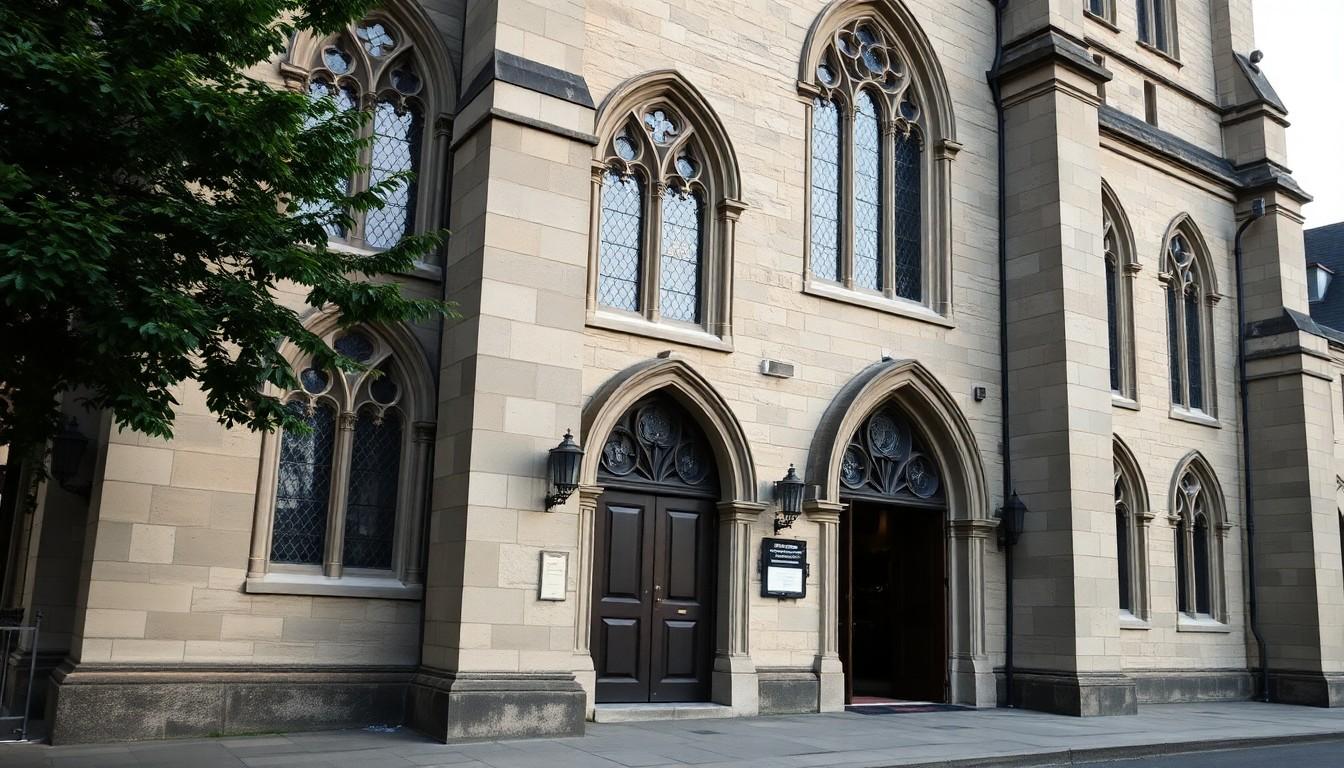
Readers are revisiting St Teresa of Avila as a powerful LGBTQ+ Catholic icon, drawn to her fierce independence, mystical writing and determination to reform the Church from within. Her life offers both comfort and challenge, especially for women and queer believers negotiating faith, identity and belonging today.
Essential Takeaways
- A complicated saint: Teresa was a bold reformer, but her views also reflected the limits of 16th-century Catholic culture.
- Prayer as friendship: Her writing presents prayer as an intimate, honest relationship with God.
- A queer reading: Later writers have explored possible same-sex dimensions in Teresa's emotional and spiritual life.
- Reform from within: Her example suggests that institutional change can begin with persistence, courage and practical organisation.
- Still emotionally vivid: Teresa's humour, frustration and mystical intensity make her feel surprisingly human.
Teresa's mysticism feels remarkably personal
St Teresa of Avila's appeal begins with her directness. Her writing doesn't present holiness as a polished performance, complete with serene expressions and spotless manners. Instead, it is full of doubt, physical difficulty, irritation and flashes of unmistakable humour.
For LGBTQ+ Catholics, that emotional honesty can be especially meaningful. Teresa's spirituality makes room for people who feel conflicted, misunderstood or uncertain about where they belong. Her central image of prayer as friendship with God is intimate rather than abstract, and it leaves space for a relationship shaped by candour.
The essay published by New Ways Ministry describes how Teresa's Interior Castle offered its writer reassurance during her conversion and while she was falling in love with another woman. That personal response captures why Teresa's work continues to travel so effectively across centuries.
Why queer readers see something familiar
Teresa's life doesn't offer a straightforward modern LGBTQ+ biography, and it shouldn't be forced into one. Yet readers have long noticed the intensity of her relationships with women, the emotional language of her spiritual writing and the unusual freedom with which she pursued her vocation.
The British writer Vita Sackville-West examined some of these questions in The Eagle and the Dove, her dual biography of Teresa and St Therese of Lisieux. As the New Ways Ministry essay notes, Sackville-West considered whether Teresa's early experiences might have involved a passionate attachment that the saint later described only indirectly.
That interpretation remains debated, but it has opened a valuable imaginative space. Queer readers don't necessarily need Teresa to fit a contemporary label before finding something recognisable in her story. Sometimes the connection lies in her sense of being set apart, her suspicion of social expectations and her determination to follow an inner truth.
A reformer who knew institutions were difficult
Teresa wasn't simply a mystic lost in private visions. She was also an organiser, negotiator and determined institutional reformer. Establishing the Discalced Carmelite communities demanded persistence, political judgement and an ability to keep moving despite criticism.
That part of her story can resonate with Catholics who want change without abandoning the tradition itself. The New Ways Ministry contributor presents Teresa's reform work as a lesson in joining the difficult conversation rather than standing safely outside it.
There is a striking tension here. Teresa sometimes wrote in ways that diminished women, yet she built communities led by women and carved out authority in a male-dominated Church. Her apparent contradictions aren't a reason to dismiss her. They show how reformers often work with the language of their own age while quietly stretching its boundaries.
Read Teresa with admiration and a little caution
Teresa is compelling, but she isn't always comfortable company. Her writing can be severe, self-denying and shaped by the religious assumptions of 16th-century Spain. Modern readers may also find her references to human beings as weak or lowly difficult to absorb.
That doesn't mean her books should be avoided. It does mean they benefit from context and patience. Start with an accessible edition of The Interior Castle or The Life of Teresa of Jesus, read slowly and allow yourself to question what you encounter.
For LGBTQ+ Catholics, it may help to hold two thoughts together: Teresa can offer genuine spiritual companionship, while her words don't settle every question about gender, sexuality or the Church. A saint can be a source of courage without becoming a perfect mascot.
Her humour may be the most contemporary thing about her
Teresa's famous complaints about muddy roads, difficult circumstances and God's treatment of friends reveal a lively personality beneath the formal religious image. She could be exasperated, witty and blunt, which makes her less like a marble statue and more like the sharp, complicated person behind the portrait.
That matters because queer Catholic readers often need models of faith who aren't reduced to sweetness or obedience. Teresa's spirituality is passionate, argumentative and stubbornly alive. She doesn't wait for perfect conditions before beginning the work.
Her legacy, then, isn't only about mystical ecstasy. It's also about making a life in the middle of conflict, finding language for private experience and insisting that women can lead. For anyone wrestling with faith and sexuality, that combination can feel less like a historical curiosity and more like a hand reaching across the centuries.
St Teresa's example doesn't remove the tension between Catholic teaching and LGBTQ+ identity, but it can make the struggle feel less lonely.
Source Reference Map
Story idea inspired by: [1]
Sources by paragraph:
- Paragraph 1: [2], [3]
- Paragraph 2: [4], [5]
- Paragraph 3: [6], [7]
- Paragraph 4: [2], [4]
- Paragraph 5: [3], [5]
- Paragraph 6: [6], [7]
- Paragraph 7: [2], [3]
- Paragraph 8: [4], [5]
- Paragraph 9: [6], [7]
- Paragraph 10: [2], [4]
- Paragraph 11: [3], [5]
- Paragraph 12: [6], [7]
- Paragraph 13: [2], [3]
- Paragraph 14: [4], [6]
- Paragraph 15: [5], [7]