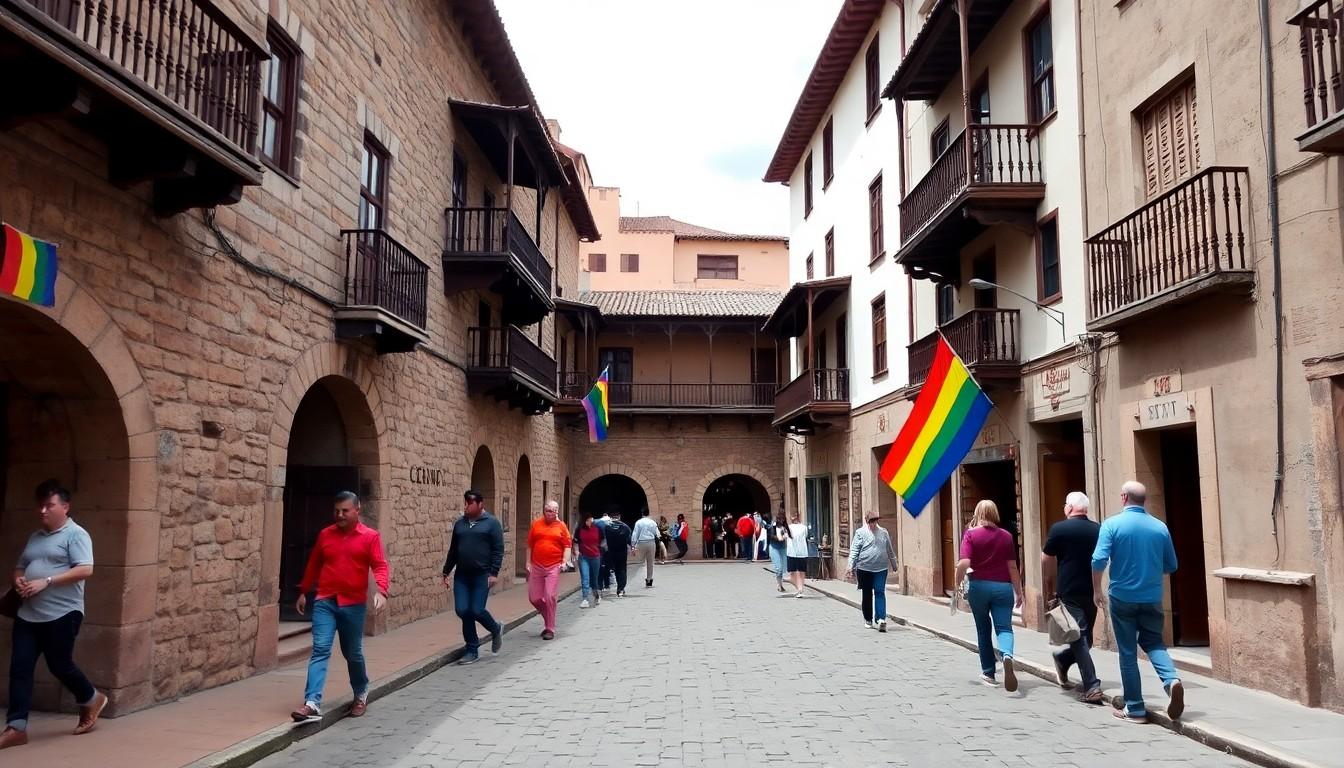
Artists and LGBTQI+ activists in Cusco are facing possible criminal proceedings after taking part in Pride events, raising urgent questions about public morality, cultural identity and freedom of expression. The dispute matters far beyond one parade: it tests whether traditional dress, performance and gender expression can be used to police who belongs in public life.
Essential Takeaways
- Possible prison sentences: Prosecutors are reportedly seeking penalties of up to six years over alleged offences against public decency.
- A wider rights concern: Civil society groups warn that the cases could intimidate LGBTQI+ defenders and artists.
- Culture is contested: Supporters argue that gender play and theatrical inversion have long existed in Andean celebrations.
- Context matters: The dispute centres on drag performances during Cusco’s Pride March, not private clothing choices.
- The legal question: Authorities must balance public-order claims with equality and freedom of expression.
Cusco’s Pride performers are now at the centre of a legal storm
A colourful performance in Cusco has become the unlikely centre of a criminal case. According to La Republica, LGBTQI+ activists and rights defenders who joined the city’s Pride March are facing allegations linked to their costumes, poses and gender-bending performances.
The reported threat of up to six years in prison has understandably alarmed campaigners. ILGA World described the situation as part of a broader concern over the use of criminal law against drag artists and activists, while local reporting has framed the proceedings as possible retaliation after the march. Either way, the stakes are strikingly high for an event built around visibility and public expression.
For the performers, the costumes weren't a disguise or an attempt to provoke for its own sake. They were part of an artistic language: theatrical, exaggerated and deliberately impossible to ignore.
The argument over "public morality" has deep roots
The authorities' case reportedly rests on the idea that the performances offended public decency. That phrase may sound neutral, but history shows that standards of decency are rarely applied evenly. Clothing, dance and bodily expression often attract scrutiny when they challenge accepted ideas about gender.
The debate is especially charged in the Andes, where festivals have long mixed religious symbolism, satire, theatrical role reversal and elaborate costume. That doesn't mean historic traditions can simply be labelled modern LGBTQI+ activism, but it does challenge the claim that gender nonconformity is automatically foreign to local culture.
As El Comercio's opinion coverage argues, Andean societies contained varied ways of representing gender before colonial authorities forced many practices into narrower categories of sin, shame and social order. The past shouldn't be romanticised, but neither should it be edited to suit today's culture-war vocabulary.
Are these cases about culture, or control?
Reporting from Infobae and Cusco Datos suggests that prosecutors' arguments have been interpreted by activists as part of a wider campaign against drag and LGBTQI+ visibility. That interpretation has added a political dimension to what might otherwise look like a straightforward dispute over parade conduct.
The concern is that "tradition" could become a flexible legal weapon. It can be invoked to protect local identity, but also to exclude people whose appearance or relationships unsettle a conservative ideal of community life. That is why the cases have attracted attention from international rights organisations as well as Peruvian campaigners.
There is also a striking contradiction at work. Cusco's public culture is already full of masks, transformed bodies, comic exaggeration and characters that cross ordinary social boundaries. Yet when contemporary performers use similar theatrical tools to speak about sexuality and identity, the same visual language can suddenly be treated as a threat.
What the legal dispute could mean for artists
The immediate question is whether the alleged performances meet the legal threshold for a criminal offence. Legal Clarity notes that cross-dressing itself is not generally illegal, although particular conduct can be regulated under narrowly defined laws. That distinction matters: an arresting costume or gender-nonconforming appearance isn't automatically proof of harm.
Courts should therefore examine the specific acts, the evidence of alleged injury and whether criminal prosecution is proportionate. Freedom of expression covers more than quiet, comfortable speech. Art, protest and performance are often designed to make audiences pause, laugh or feel unsettled.
For performers, the practical lesson is less glamorous but important. Keep records of event permissions, preserve photographs and video, and seek advice from a qualified local lawyer or rights organisation if authorities make contact. Documentation won't settle the cultural argument, but it can help protect people in a fast-moving case.
The bigger fight is over who gets to claim the city
The controversy arrives amid a broader debate about whether LGBTQI+ identity is an imported idea. Activists interviewed by CIVICUS have described the risks of being publicly identifiable as LGBTQI+ in Peru, including harassment, stigma and pressure to remain invisible.
That makes the Cusco cases more than a quarrel over parade etiquette. They ask whether people can participate in the city's cultural life without first making themselves less visible, less expressive or more reassuring to conservative observers. A culture that welcomes only carefully sanitised difference isn't truly preserving tradition; it's narrowing it.
The outlook will depend on how prosecutors and courts handle the claims, and whether public institutions treat drag as protected artistic and political expression rather than evidence of moral wrongdoing. For many in Cusco, the most important point is simple: they aren't outsiders borrowing the city for a performance. They're residents using its streets to tell their own story.
It's a small costume only if you ignore the history stitched into it.
Source Reference Map
Story idea inspired by: [1]
Sources by paragraph: