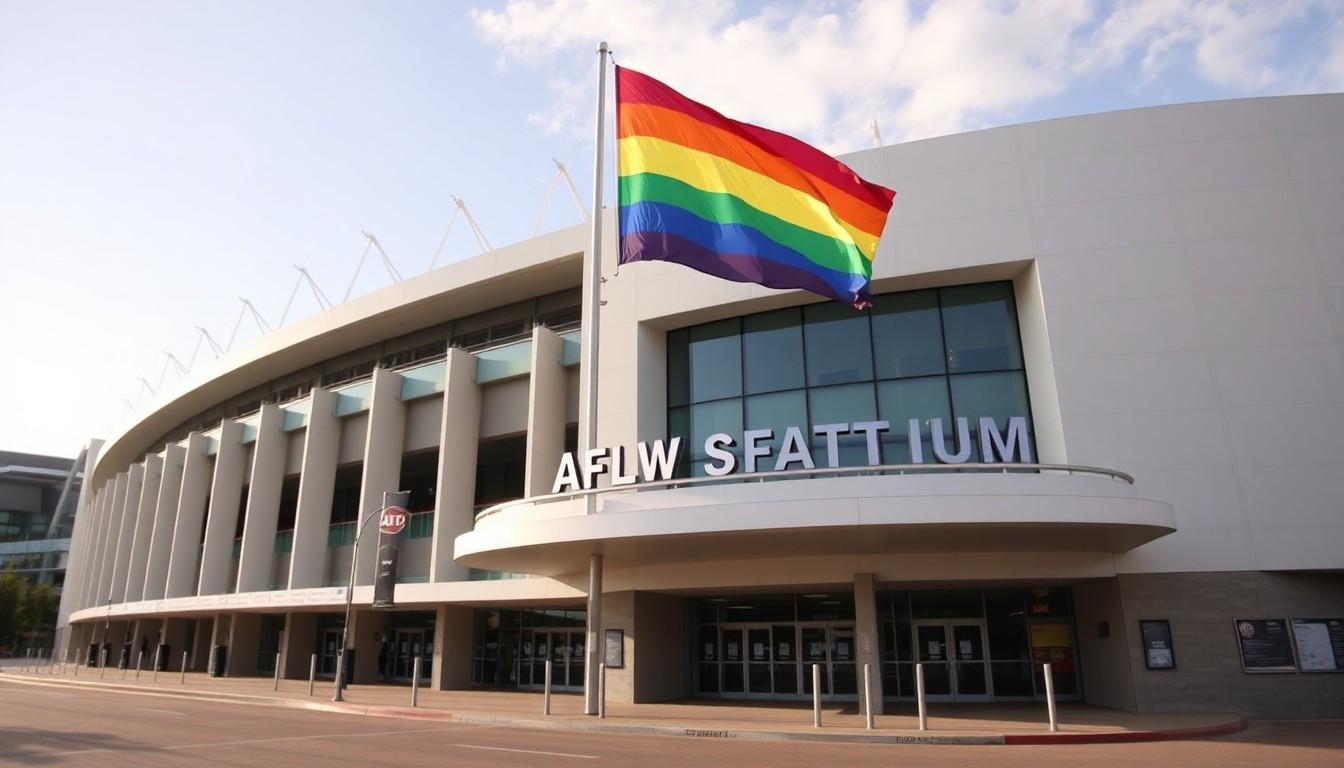
AFLW player Tilly Lucas-Rodd is preparing for a landmark 100th game with GWS, but the milestone carries a deeper meaning during Pride Round. For the non-binary midfielder, visibility, celebration and honest conversations remain vital as queer athletes continue to face discrimination online and in community sport.
Essential Takeaways
- A landmark game: Lucas-Rodd is set to reach 100 AFLW appearances after playing across four clubs.
- Pride with purpose: They see celebration as a way to challenge harmful attitudes, not ignore them.
- Representation matters: Messages from families and young gender-diverse people have shown the real-world value of visibility.
- The conversation continues: Lucas-Rodd says some community sporting environments still aren't safe for queer participants.
- A club-wide moment: GWS is marking Pride Round with a dedicated guernsey, squad activities and public discussion.
A 100th game with extra meaning
Milestone matches are usually about statistics, career highlights and a well-earned lap of honour. For Tilly Lucas-Rodd, the 100th AFLW game is also a reminder of how much both they and the competition have changed.
The GWS player has represented Carlton, St Kilda, Hawthorn and now the Giants across 11 seasons, making the occasion a distinctly personal celebration. According to ABC Sport, Lucas-Rodd joked about the different eras of their appearance and identity, describing a career that has grown alongside them.
The timing makes it even more significant. Their century arrives during AFLW Pride Round, when clubs across the competition are using matches, guernseys and public campaigns to highlight LGBTQ+ inclusion. GWS has included Lucas-Rodd in its Pride Round activity, including a conversation with men's player Tom Green, according to the Giants.
Why joy can be a form of resistance
Lucas-Rodd believes Pride Round needs to be more than a colourful fixture on the calendar. They told ABC Sport that openly discriminatory views, including homophobia and transphobia, remain visible online, sometimes even beneath AFLW content.
That makes celebration feel surprisingly powerful. Rather than allowing hostile commentary to define the conversation, Pride Round gives players and clubs a chance to show queer athletes being supported, applauded and fully part of the sport.
There is room for serious reflection too. Lucas-Rodd has acknowledged that discrimination deserves direct attention, but says joy and pride can also challenge dangerous beliefs. It's a useful distinction: inclusion isn't only about responding to harm, but about showing what belonging looks like.
Representation reaches well beyond the stadium
Lucas-Rodd understands the influence of visibility because they've seen the reaction first-hand. After speaking publicly about their gender-affirming chest surgery, they received messages from people who said the story helped start conversations with relatives or offered a more hopeful picture of life for trans and gender-diverse young people.
One message came from a parent connected with a school where Lucas-Rodd had worked. The parent explained that seeing a successful, publicly celebrated gender-diverse person helped young people imagine a future beyond discrimination, according to ABC Sport.
That kind of response gives Pride Round its practical value. A young athlete may not attend the match, but they might see a player in a Pride guernsey, watch an interview or hear a family member discuss the subject more openly. Sometimes that's enough to make a difficult conversation feel slightly less daunting.
The gap between elite sport and community sport
Professional clubs can create welcoming environments, but Lucas-Rodd is careful not to assume that experience is universal. Through conversations with people involved in community sport, they've heard that some queer and gender-diverse participants still don't feel safe.
That contrast matters. A polished campaign at an AFLW venue can raise awareness, but lasting progress depends on what happens at local training grounds, in changing rooms and in online team groups. Pride Round can start the conversation, but everyday behaviour is what makes inclusion credible.
Other clubs are taking a similar approach. The Western Bulldogs have framed their Pride Round effort around team culture and a more determined attitude, while Adelaide has unveiled a player-designed Pride guernsey, according to club reports. Those gestures are most meaningful when they're linked to policies, education and support rather than treated as one-off decoration.
What the next chapter could look like
Lucas-Rodd has sometimes wondered whether people might be tired of hearing about their LGBTQ+ experience. The messages they continue to receive suggest otherwise. When someone says a video or article helped them speak with their parents, the reason for keeping the conversation alive becomes clear.
Their story also shows how sporting careers can become personal journeys. Across several clubs and changing eras, Lucas-Rodd has found environments that helped shape who they are. Now, they use their platform to advocate for people who may not yet have found that same sense of safety.
The challenge for the AFLW is to keep moving from visibility to meaningful access. Pride Round can fill a stadium with colour and warmth, but its greatest success may be quieter: a player feeling safe enough to stay, return or simply turn up.
It's a milestone worth celebrating, and a reminder that representation can change what people believe is possible.
Source Reference Map
Story idea inspired by: [1]
Sources by paragraph: