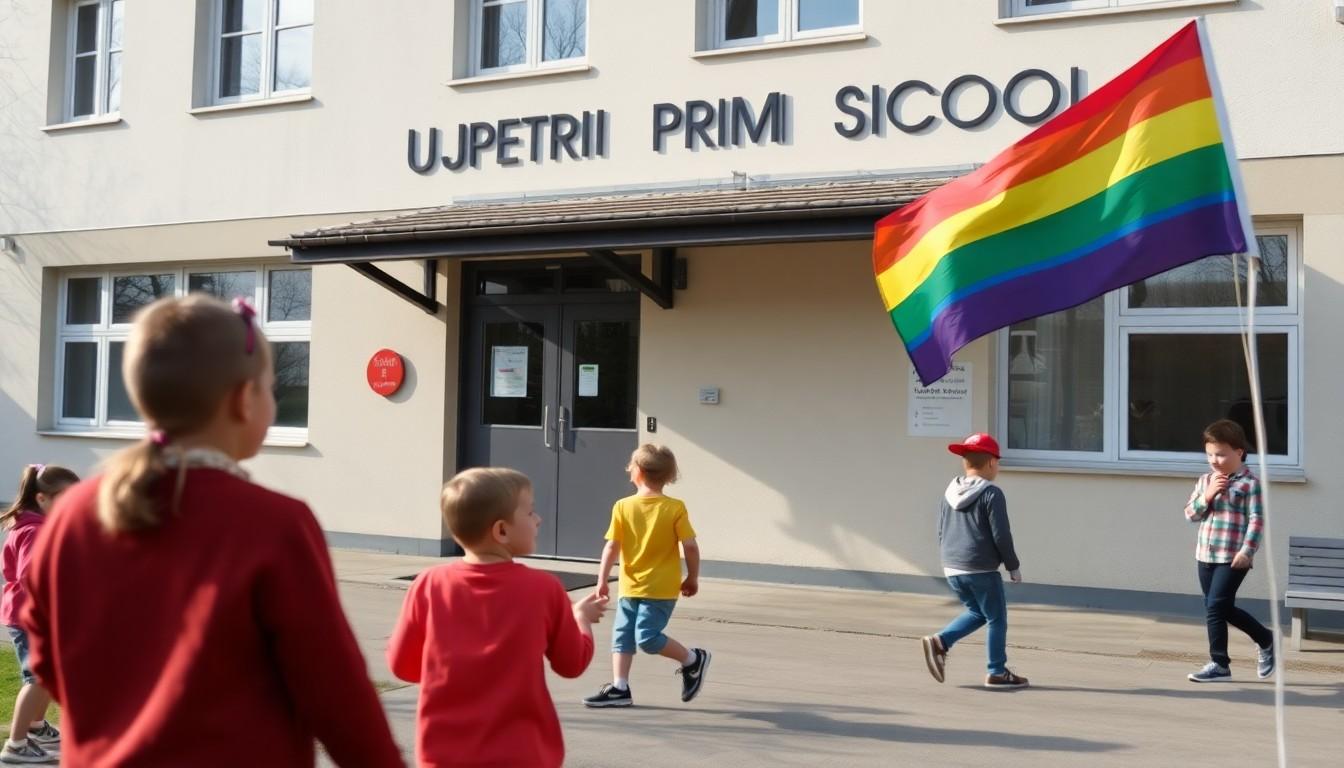
A school workshop in Újpetre has reignited Hungary’s debate over LGBTQ-themed activities, children’s rights and the boundaries of classroom discussion. The session, aimed at younger pupils and linked to career guidance, comes just after parliament approved changes to child-protection rules, prompting fresh questions about consent, transparency and how schools explain sensitive topics.
Essential Takeaways
- A primary-school workshop drew attention: Pupils in Years 2 to 4 reportedly explored jobs, hobbies and gender stereotypes through a human-rights board game.
- The timing has fuelled criticism: The activity took place shortly after parliament approved amendments described by critics as a new gender law.
- The debate centres on boundaries: Supporters emphasise inclusion and free choice, while opponents want tighter limits on LGBTQ-related content in schools.
- Parents need clear information: Advance notice, age-appropriate materials and straightforward consent procedures are central to rebuilding trust.
- The wider argument is political: Hungarian government supporters frame the amendments as child protection, while critics say they restrict discussion and minority rights.
A classroom activity becomes a national flashpoint
The immediate controversy began with a workshop at Újpetre Primary School in southern Hungary. According to reporting by Origo and Magyar Nemzet, pupils in the second, third and fourth years took part in a session organised by Emberség Erejével, a civil organisation associated with LGBTQ and human-rights advocacy.
The activity was presented as part of the school's careers day rather than a dedicated sex-education lesson. Children reportedly used the organisation's board game, which introduces different occupations and adult interests, while discussing questions such as whether firefighting is only for boys or whether men can enjoy the colour pink.
That may sound like a small classroom exchange, but the timing made it politically combustible. The workshop was held immediately after parliament approved amendments to Hungary's child-protection framework, turning an ordinary school event into a symbol in a much bigger culture-war argument.
Why the new Hungarian rules have caused concern
The amendments build on restrictions introduced in 2021, when Hungary limited school activities dealing with sexual culture, gender identity, sexual orientation and development. The earlier rules said such sessions couldn't encourage children to move away from their birth sex identity, change sex or promote homosexuality.
Government politicians and aligned commentators have presented the latest changes as another safeguard for children. Infostart reported criticism from State Secretary Bence Rétvári, who argued that the proposal represented a significant shift in how schools should handle gender-related issues.
Opponents, meanwhile, see the measures as an attempt to narrow what pupils can hear about identity, relationships and diversity. Telex's fact-checking coverage reflects the dispute over how the law should be interpreted in practice, particularly where educational, medical and awareness-raising activities overlap.
The tricky line between careers advice and identity
The Újpetre session highlights a genuine practical problem: not every conversation about stereotypes is automatically sex education, but discussions about what boys, girls, men or women can do may still touch on gender identity and social expectations.
That distinction matters because schools need rules that are clear enough for teachers, parents and outside organisations to understand. A workshop about jobs and hobbies can be perfectly ordinary, yet its framing, materials and discussion prompts may determine whether families see it as careers guidance or ideological instruction.
The simplest protection is transparency. Schools should explain the session's aims, identify the organisation delivering it, share age-appropriate materials and make clear whether parental consent is required. No parent should have to discover the content afterwards through a social-media post or a partisan news report.
Hungary's culture-war language is getting sharper
The political reaction has been emphatic. Government-friendly outlets have described the amendment as a response to Brussels and LGBTQ organisations, while critics have called it a gender law in all but name. Vasárnap.hu quoted Csaba Latorcai arguing that the measure wasn't genuinely a child-protection law, but a broader gender-related intervention.
Other commentary has focused on the international response. Duna Center claimed that Western media welcomed the Tisza-backed legislation, illustrating how the issue has become entangled with Hungary's wider conflict over sovereignty, the European Union and opposition politics.
That language leaves little room for the quieter questions parents actually face. What did the children do? Who approved the session? Were families informed? Was the activity suitable for their age? Those details matter more to everyday school life than the loudest parliamentary label.
What schools and parents should look for next
For schools, the safest approach is neither secrecy nor sweeping bans. External speakers should be vetted, lesson plans should be available in advance and staff should be able to explain how an activity fits the curriculum. Teachers also need guidance on handling children's questions without turning a short workshop into a political battleground.
Parents can ask for the organiser's name, the learning objectives, sample materials and the school's consent policy. It's also worth asking whether children were invited to participate in discussion, simply observe or complete a structured activity, because those formats carry different expectations.
The wider outlook remains unsettled. As the new rules are tested, schools may become more cautious, civil-society groups may challenge exclusions and families may face a patchwork of interpretations. For children, though, the best outcome is refreshingly straightforward: lessons that are age-appropriate, honestly explained and free from political theatre.
Clear communication won't settle Hungary's culture war, but it can make school life calmer for everyone.
Source Reference Map
Story idea inspired by: [1]
Sources by paragraph:
- Paragraph 1: [2], [4]
- Paragraph 2: [2], [6]
- Paragraph 3: [3], [7]
- Paragraph 4: [5], [6]
- Paragraph 5: [3], [4]
- Paragraph 6: [2], [6]
- Paragraph 7: [4], [5]
- Paragraph 8: [7], [5]
- Paragraph 9: [2], [6]
- Paragraph 10: [3], [7]
- Paragraph 11: [2], [6]
- Paragraph 12: [3], [5]
- Paragraph 13: [4], [7]
- Paragraph 14: [2], [6]
- Paragraph 15: [3], [5]
- Paragraph 16: [4], [7]