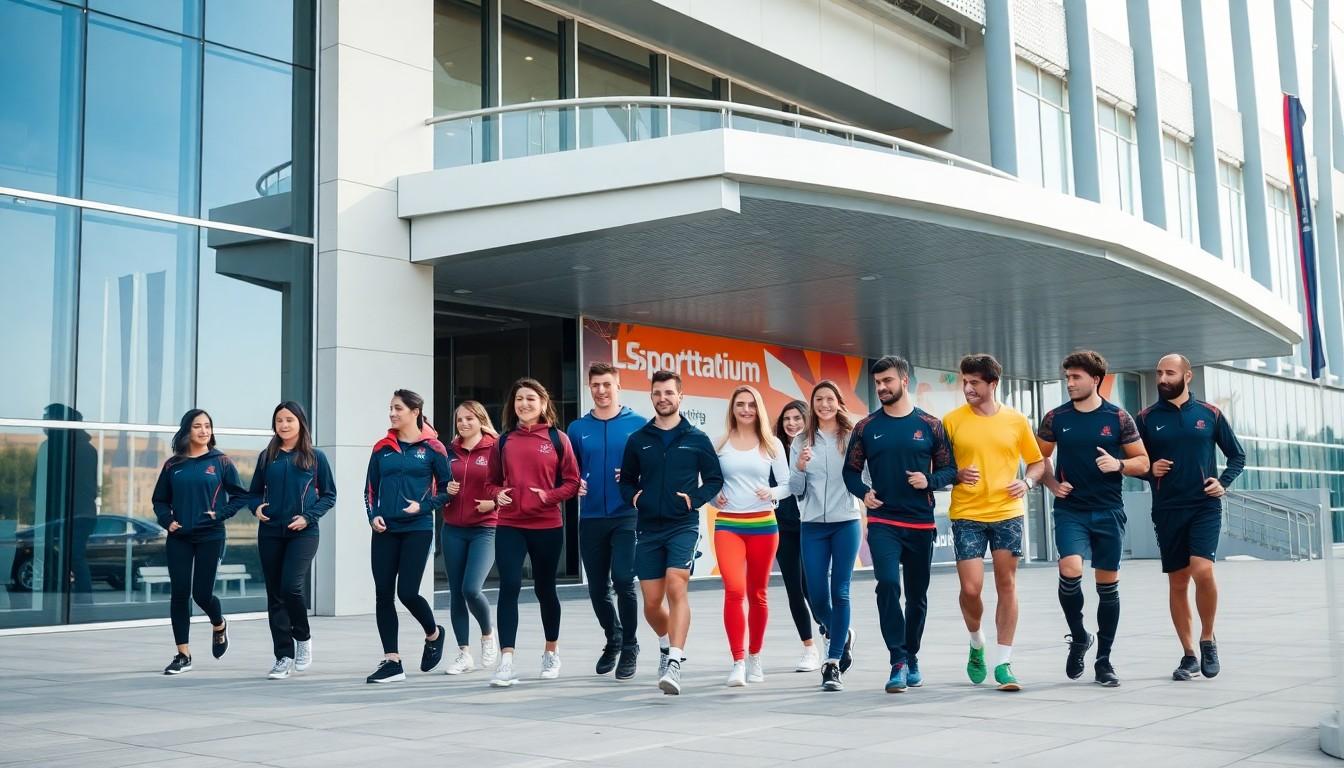
Queer athletes are increasingly treating visibility as ordinary rather than theatrical, from Olympic podiums to university teams. That shift matters because it shows how much sport has changed, while also exposing the gap that remains for gay men in major professional leagues. For many younger athletes, being open now looks less like a public announcement and more like simply living.
Essential Takeaways
- Visibility is growing: Paris 2024 featured a record number of publicly out athletes.
- Coming out looks quieter: Some athletes now share a partner photo rather than make a formal announcement.
- Women’s sport leads the way: Out LGBTQ+ athletes are especially visible across basketball and other women’s competitions.
- Male team sports still lag: Major professional leagues continue to have very few openly gay active players.
- Support makes a difference: Inclusive teammates, families and clubs can make openness feel safer and less intimidating.
The podium has become a place for self-expression
Raven Saunders’ Olympic appearances have never been easy to overlook. At Tokyo 2020, the American shot-putter stood on the podium with vividly coloured hair and an unmistakable sense of defiance. Three years later in Paris, a superhero-style mask became another way to control the image the world saw.
That matters because Saunders’ story isn’t only about performance. It’s about deciding when visibility belongs to the athlete, rather than to broadcasters, sponsors or sporting institutions. According to Queerty, Saunders says it took around a decade to feel comfortable enough to present their full self publicly.
The contrast with younger athletes is striking. Many now appear to reach that point much sooner, helped by teammates, fans and online communities that make queer identity feel less like a dangerous secret. The podium still carries pressure, but it no longer has to be a closet.
A partner photo can say everything
The most revealing change may be how little ceremony some athletes need. Gymnast Jade Carey, distance runner Yared Nuguse and Brazilian tennis player Joao Lucas Reis da Silva have all acknowledged relationships with same-sex partners through straightforward social-media posts.
There was no carefully timed documentary, lengthy essay or formal press conference. Nuguse, an Olympic medallist and world-record holder, introduced his boyfriend in a warm, matter-of-fact post, according to Queerty. It was intimate, casual and instantly recognisable to anyone who has ever shared a photograph of someone they love.
That low-key approach is becoming part of the wider trend. Outsports has followed the growing number of athletes who are open about their identities without making their sexuality the centre of their public profile. In other words, visibility hasn't disappeared; it has become less performative.
Women’s sport is showing what normal can look like
Women’s basketball has offered some of the clearest examples. During March Madness, out players including MiLaysia Fulwiley, Sedona Prince and Shyanne Sellers were competing at the highest level while also living visibly queer lives.
Sellers’ engagement to a former teammate drew attention not because it was treated as a revelation, but because it was part of her life. That distinction is important. As Queerty reports, the next generation of WNBA players is entering professional sport with fewer reasons to disguise who they date or how they identify.
The culture is not perfect, and visibility can still bring unwanted scrutiny. But the presence of established role models makes a difference. Sue Bird’s public coming out in 2017, when she was 36, showed both the power of representation and how slowly the door had opened, even in a league known for its LGBTQ+ community.
Why male team sports remain a stubborn exception
The picture changes sharply in football, American football and other major men’s leagues. Carl Nassib’s public coming out in 2021 was widely celebrated, yet he remained an exception rather than the beginning of a wave.
That doesn't mean gay men aren't playing. It suggests the cost of being first in a high-profile, traditionally macho environment can still feel enormous. A player isn't only weighing family and teammates; they're considering sponsors, online abuse, dressing-room culture and the expectations of millions of supporters.
College football player Kennedy McDowell offers a more hopeful example. He has been open since his teens and has spoken about choosing a university where inclusion was taken seriously. His experience, covered by Queerty, shows how the right environment can make identity feel ordinary rather than burdensome.
Coming out may be less of a single moment
For earlier generations, coming out often required a declaration. Athletes such as Billie Jean King, Martina Navratilova and Greg Louganis faced intense pressure to protect their careers and private lives. Later figures, including Robbie Rogers, Jason Collins and Collin Martin, made public announcements that carried enormous symbolic weight.
Today, the boundaries are blurrier. An athlete may mention a boyfriend in a caption, post a photograph from Pride or thank a team for its support. Outsports’ reporting reflects that gradual movement away from one defining announcement and towards everyday visibility.
But the relaxed approach should not be mistaken for complete equality. There are still remarkably few openly gay men in major professional team sports. The progress is real, yet it remains uneven, which is why each ordinary-looking post can still carry quiet significance.
The next breakthrough could be deliberately unremarkable
The most encouraging future may not involve another headline-making announcement. It could be a young player introducing a partner, answering a question without hesitation or inviting teammates to a wedding, then getting back to training.
That kind of normality is precisely what athletes such as Saunders hope to see more often. Their comments, as reported by Queerty, point to a generation growing up with stronger queer communities and less anxiety around being known.
Sport still has work to do, particularly in men’s elite leagues. Still, when an athlete no longer needs to turn their identity into a media event, that’s a meaningful victory. Sometimes the biggest change is the moment nobody treats love as breaking news.
It's a quieter kind of visibility, but it may be the most powerful one yet.
Source Reference Map
Story idea inspired by: [1]
Sources by paragraph:
- Paragraph 1: [2], [3]
- Paragraph 2: [4], [6]
- Paragraph 3: [5], [7]
- Paragraph 4: [2], [3]
- Paragraph 5: [4], [6]
- Paragraph 6: [2], [5]
- Paragraph 7: [3], [7]
- Paragraph 8: [2], [4]
- Paragraph 9: [5], [6]
- Paragraph 10: [2], [3]
- Paragraph 11: [4], [7]
- Paragraph 12: [2], [5]
- Paragraph 13: [3], [6]
- Paragraph 14: [2], [7]
- Paragraph 15: [3], [5]