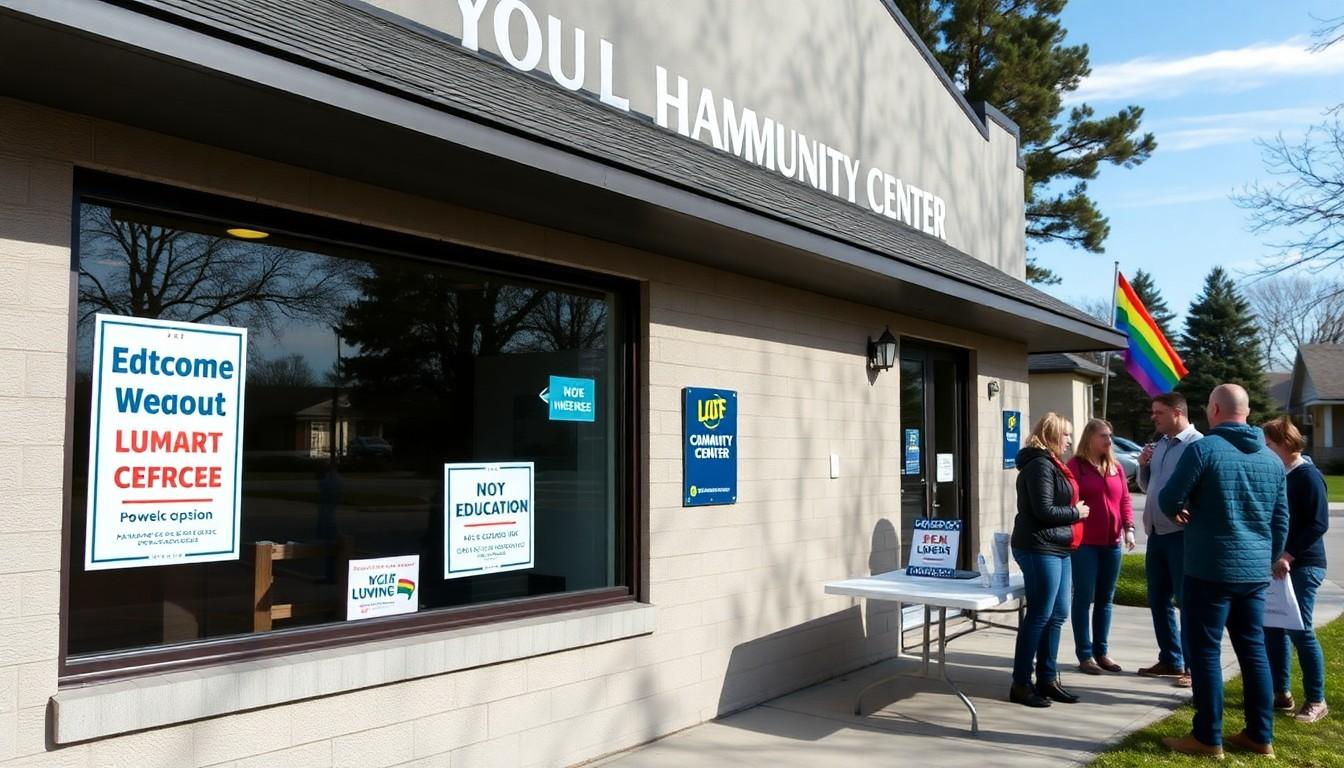
Karlie and Amanda Easley are making political history in Idaho with a joint campaign for state office. Running openly as a married lesbian couple, they’re taking on two powerful Republican incumbents while putting affordability, education and LGBTQ+ rights at the centre of their message.
Essential Takeaways
- A joint challenge: Amanda is running for the state House, while Karlie is seeking a state Senate seat.
- Powerful opponents: Their Republican rivals include legislative majority leaders Jason Monks and Lori Den Hartog.
- A wider fight: The campaign comes amid Idaho’s continuing battles over transgender rights, schools and public funding.
- Doorstep optimism: The couple says voters often prioritise living costs, education and healthcare over culture-war issues.
- A personal message: Simply campaigning openly as a married lesbian couple is part of what they hope to achieve.
Two candidates, one very public campaign
The Easleys’ campaign began with a family conversation rather than a grand political plan. Their 12-year-old son asked whether having both mothers run for office could make the family a target, a question that brought the risks of public life sharply into focus.
Still, the couple decided that staying visible mattered. According to Idaho Education News, their decision followed conversations with Idaho Women Forward, after which both women registered to run. Amanda entered the House race, while Karlie launched a Senate bid. [2]
That makes this more than a standard contest between Democrats and Republicans. It’s also a deliberately visible challenge to the idea that LGBTQ+ families should keep their politics, relationships or ambitions safely out of sight.
Karlie has said that even normalising a lesbian couple for a handful of people would count as a meaningful victory. That’s a modest-sounding aim, but in Idaho’s political climate, it carries real weight.
Why Idaho’s culture-war politics matter
Idaho has become a particularly intense battleground over transgender rights. The American Civil Liberties Union of Idaho has criticised legislation that would criminalise transgender people for using facilities matching their gender identity, warning that it could expose ordinary public activity to harsh penalties. [3]
The state’s bathroom restrictions have also drawn national attention. LGBTQ Nation reported that Idaho’s governor signed one of the country’s most sweeping anti-transgender bathroom laws, despite opposition from police officials. [4]
A judge later blocked the law, according to the ACLU of Idaho, underlining just how quickly these debates can move from legislative headlines into courtrooms. [5] For voters, though, the consequences are less abstract: schools, workplaces, public buildings and family life all become part of the argument.
The Easleys are campaigning against that backdrop, but they say most people they meet aren’t leading with bathroom policy. Instead, conversations tend to begin with prices, schools and healthcare. Their pitch is that politicians may be shouting about identity, while many households are quietly worrying about the weekly shop.
At the door, voters sound less divided
The couple’s most encouraging encounters have happened away from social media and inside living rooms, on driveways and at front doors. Hyperlocal Loop reported that their campaign has built its approach around direct voter contact, giving them a chance to speak with people who might never attend a political event. [6]
That face-to-face work appears to have complicated the easy assumption that Idaho voters are uniformly hostile to them. The Easleys describe meeting Republican voters who appreciated being listened to, even when agreement was nowhere in sight.
There has been hostility, naturally, particularly online. But doorstep politics has offered a softer, more human counterpoint. A voter might begin with a party label and end by talking about school costs, local services or the simple fact that someone bothered to knock.
That’s an important lesson for any candidate running in a strongly partisan area. People can dislike a party and still respect persistence, courtesy and a willingness to hear them out. It’s not glamorous, but a calm conversation on a doorstep can puncture a lot of political theatre.
Education sits alongside equality
Public education is another central theme. Karlie has criticised Idaho’s private-school voucher policy, arguing that public money should strengthen the state’s already stretched public schools rather than subsidise alternatives for families who can afford them.
The issue gives her campaign a practical focus beyond LGBTQ+ rights. School funding affects classrooms, staffing and resources, while disputes over books, displays and inclusion policies can make families feel that their local school is being pulled into national ideological fights.
The couple’s campaign website presents that blend of priorities clearly, pairing concerns about schools and public services with a commitment to LGBTQ+ equality. [7] It’s a strategy that treats identity and everyday economics as connected rather than competing subjects.
For Karlie, her experience as a nurse also shapes that outlook. Healthcare, education and care work all rely on people being supported before problems become crises. That may sound less dramatic than a culture-war slogan, but it’s closer to the daily reality of most families.
Can a shared campaign overcome the odds?
The Easleys are facing a steep financial and political climb. Their opponents are established Republican figures with greater fundraising power and deeper experience, while the couple are making their electoral debuts.
Their answer is efficiency and visibility. They can share signs, campaign materials and canvassing efforts, while presenting voters with a united family story rather than two disconnected campaigns. Idaho Education News described the race as a challenge to two of the state Republican Party’s most influential legislative figures. [2]
Their partnership also removes any ambiguity about who they are. A candidate can be openly supportive of LGBTQ+ rights, but campaigning as a married couple makes the message immediate. Voters see the family, not just a policy position.
That visibility can feel risky, especially when their son is aware of the attention surrounding the race. Yet it’s also where the campaign finds its emotional force. The Easleys aren’t promising that politics will suddenly become kind; they’re showing that families like theirs won’t wait for permission to participate.
A campaign with a bigger measure of success
The Easleys’ effort may ultimately be judged by more than election night totals. Their presence could encourage other LGBTQ+ candidates, give voters a clearer choice and make a visible family feel less unusual in Idaho politics.
Their campaign also reflects a broader tension in American elections: parties often amplify divisive issues, while voters may be more concerned about costs, schools and basic services. The gap between those two conversations is where candidates such as the Easleys hope to make ground.
Running together has given them practical advantages, but it has also made the campaign a shared act of courage. As Hyperlocal Loop reported, their joint candidacies are central to the story they’re telling voters: representation can be both personal and political. [6]
For a family that once hoped for a quiet year, this is certainly not that. But sometimes the most powerful political statement is simply turning up, introducing yourself and refusing to hide.
It's a small campaign with a very visible message: representation begins with showing up.
Source Reference Map
Story idea inspired by: [1]
Sources by paragraph:
- Paragraph 1: [2], [6]
- Paragraph 2: [2], [7]
- Paragraph 3: [3], [4]
- Paragraph 4: [5], [3]
- Paragraph 5: [6], [2]
- Paragraph 6: [6], [7]
- Paragraph 7: [7], [2]
- Paragraph 8: [2], [7]
- Paragraph 9: [7], [6]
- Paragraph 10: [2], [6]
- Paragraph 11: [6], [7]
- Paragraph 12: [2], [5]
- Paragraph 13: [6], [7]
- Paragraph 14: [2], [6]