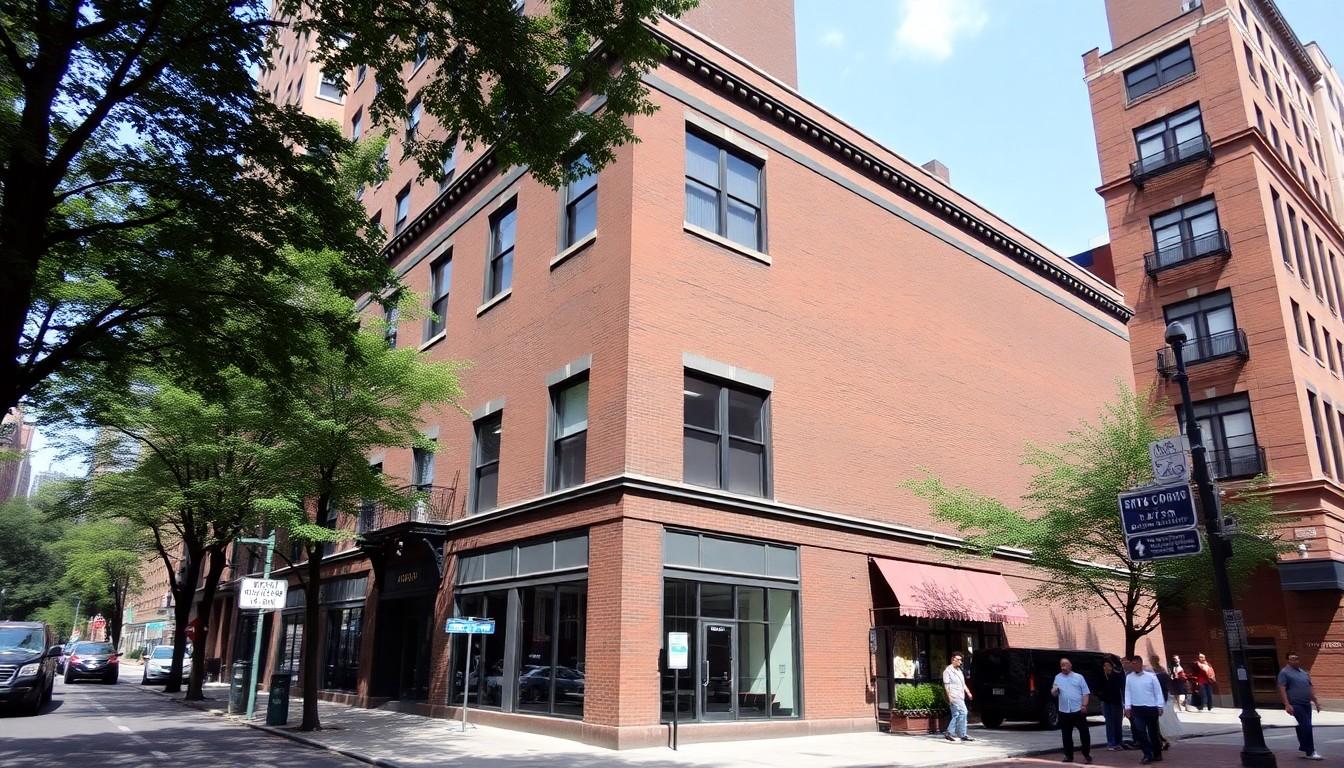
Visitors to South of Union Square can trace the early story of the National LGBTQ Task Force through one unassuming New York address. From its headquarters at 80 Fifth Avenue, the country’s oldest national LGBTQ+ advocacy organisation helped turn local protest into national political pressure, leaving behind a powerful legacy that preservationists say still deserves protection.
Essential Takeaways
- A historic headquarters: The National Gay Task Force worked from the fifth floor of 80 Fifth Avenue from 1973 to 1985.
- A major early victory: The organisation helped secure the American Psychiatric Association’s 1973 decision to remove homosexuality from its list of mental disorders.
- A neighbourhood network: Nearby sites such as Julius’ Bar and the Stonewall Inn helped create the organising culture that shaped the Task Force.
- A building with many stories: 80 Fifth Avenue has also housed shops, offices, schools and labour organisations.
- Preservation remains urgent: Village Preservation is campaigning for landmark protection for the building and other LGBTQ+ historic sites.
A quiet building with a remarkably loud legacy
The most striking thing about 80 Fifth Avenue is how ordinary it can seem at street level. Yet upstairs, in a Renaissance Revival office building completed in 1908, activists developed strategies that would influence American law, medicine and public policy.
According to Village Preservation, the National LGBTQ Task Force occupied the fifth floor from its creation in 1973 until its move to Washington, D.C., in 1985. The building’s sturdy commercial architecture offered something more important than glamour: a practical base from which a young movement could organise, publish and campaign.
The National LGBTQ Task Force’s own history describes the organisation as the first national LGBTQ advocacy group in the United States. Its early work connected the urgency of New York’s streets with institutions far beyond the city.
From Stonewall’s streets to a national campaign
The Task Force emerged just four years after the 1969 Stonewall uprising, when resistance to a police raid at the Stonewall Inn sparked days of protest. Stonewall wasn’t the beginning of LGBTQ activism, but it became a defining moment, helping push a growing movement towards more coordinated political action.
Village Preservation places the Task Force within a wider local ecosystem that included the Gay Liberation Front, the Gay Activists Alliance and community institutions offering social, cultural and religious support. That mix of protest, mutual aid and political experimentation gave the organisation its distinctive momentum.
The result was a new kind of advocacy. Local anger remained central, but campaigners increasingly built national relationships, challenged federal policy and pressed professional bodies to confront discrimination.
The victories that changed the conversation
One of the organisation’s earliest breakthroughs came in December 1973, when the American Psychiatric Association removed homosexuality from its list of mental disorders. It was a landmark decision, challenging a damaging medical classification that had shaped public attitudes and personal lives.
The Task Force also worked against the federal government’s exclusion of gay and lesbian people from federal employment. Later, in 1977, it helped arrange a historic meeting between LGBTQ advocates and representatives of the Carter administration, bringing the movement into direct conversation with the White House.
The Task Force’s official history shows how quickly its ambitions expanded beyond protest. Its campaigns tackled institutions that had the power to define citizenship, employment and legitimacy, while its New York base kept those efforts connected to grassroots organising.
Why the surrounding neighbourhood matters
80 Fifth Avenue didn’t stand alone. South of Union Square and the nearby Village contained a chain of places where LGBTQ people challenged discrimination, found community and tested new forms of protest.
At Julius’ Bar, the 1966 “sip-in” challenged rules that allowed bars to refuse service to gay patrons. Nearby, the Stonewall Inn became associated with a more confrontational response to police harassment. The New York City LGBT Historic Sites Project identifies 80 Fifth Avenue as the former headquarters of the National Gay Task Force, placing it within this larger landscape of organising.
That geography matters because movements aren’t built only in famous locations. They grow across meeting rooms, bars, offices and pavements, often through conversations that leave little physical trace. The preserved building helps make that invisible work easier to imagine.
What could happen to 80 Fifth Avenue next?
Village Preservation is seeking landmark designation for 80 Fifth Avenue, alongside other important LGBTQ+ history sites south of Union Square. Its preservation campaign argues that the building’s significance extends beyond its architecture: it represents a period when community activism began to reshape national institutions.
The building has also hosted a wide range of businesses and organisations, including law firms, retailers, magazine offices, a school and the International Workers Order. That layered history makes it more than a single-purpose monument. It’s a working piece of the city, with LGBTQ+ activism woven into its broader urban story.
For visitors, the site is best understood as part of a walking history trail rather than a standalone attraction. Village Preservation’s Civil Rights and Social Justice Map offers a useful way to connect 80 Fifth Avenue with Julius’ Bar, Stonewall and other nearby locations. The Task Force also encourages supporters to stay involved, a reminder that historic recognition and present-day advocacy often travel together.
The past is still asking for space
The story of 80 Fifth Avenue is a useful corrective to the idea that social change happens only at grand landmarks. Sometimes it begins in a rented office, around a meeting table, with people turning outrage into a plan.
Protecting places like this doesn’t freeze history. It gives future generations somewhere tangible to understand how change was organised, argued for and won.
Explore South of Union Square’s LGBTQ+ history through its streets, buildings and community stories.
Source Reference Map
Story idea inspired by: [1]
Sources by paragraph:
- Paragraph 1: [2], [3]
- Paragraph 2: [4], [5]
- Paragraph 3: [2], [6]
- Paragraph 4: [3], [6]
- Paragraph 5: [2], [7]
- Paragraph 6: [3], [4]
- Paragraph 7: [5], [6]
- Paragraph 8: [2], [3]
- Paragraph 9: [4], [5]
- Paragraph 10: [6], [7]
- Paragraph 11: [4], [5]
- Paragraph 12: [3], [6]
- Paragraph 13: [5], [7]
- Paragraph 14: [2], [4]
- Paragraph 15: [6], [7]