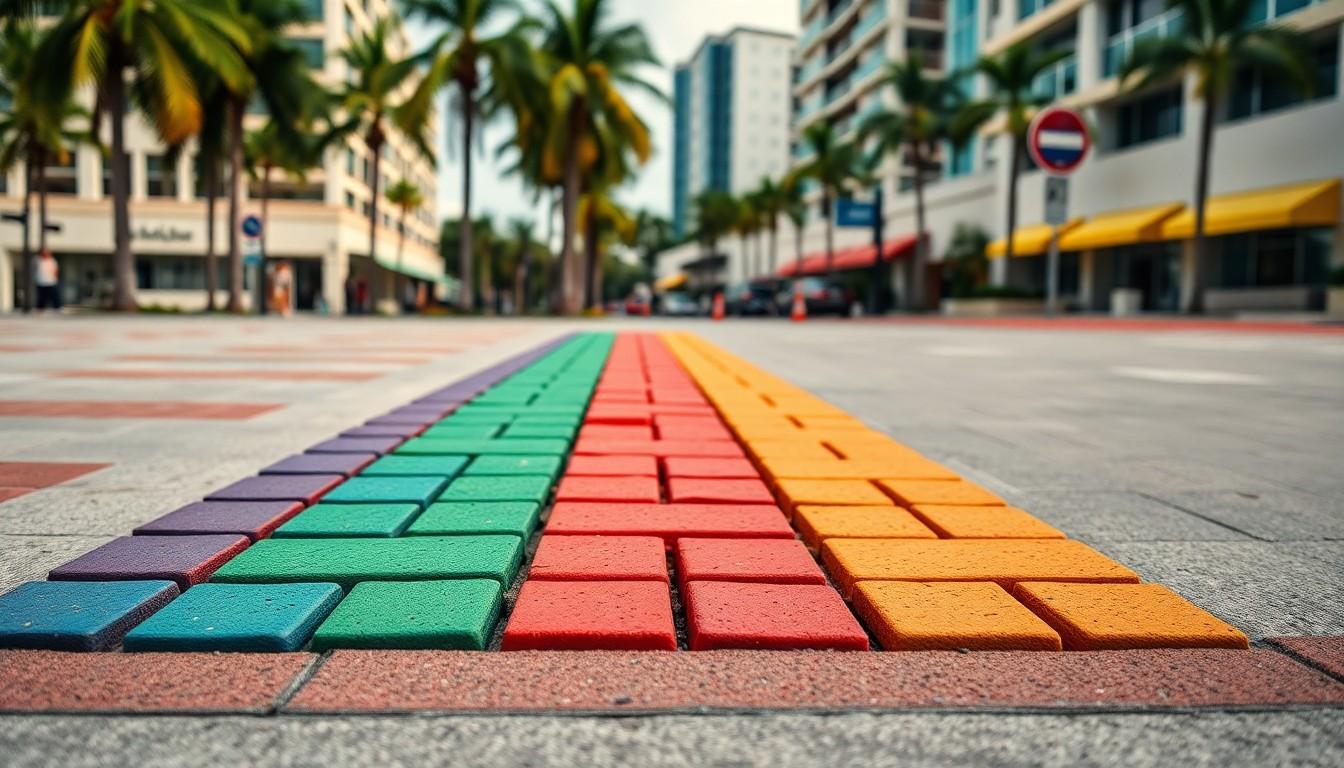
Supporters are turning pieces of a removed Miami Beach rainbow crosswalk into meaningful keepsakes, while helping Pride groups in Naples and Key West keep their events going. The salvaged bricks offer a colourful slice of local LGBTQ+ history, but they also highlight the growing pressure facing Florida’s Pride organisations.
Essential Takeaways
- A piece of history: Fifty bricks from the former Miami Beach crossing are being offered to donors.
- Pride fundraising: Donations support Naples Pride and Key West Pride, with separate fundraising targets.
- Several options: Supporters can request individual bricks, painted bricks or framed six-brick sets.
- A personal touch: Plaques record the crosswalk’s location and the dates it stood.
- Limited supply: Some rainbow colours were scarce, so additional bricks were painted to complete the set.
A dismantled landmark gets a second life
The rainbow crosswalk once added a vivid splash of colour to Miami Beach’s Ocean Drive. Now, its bricks are taking on a quieter but arguably more lasting role, travelling home with supporters and helping fund Pride celebrations elsewhere in Florida.
Drag performer Eric Swanson, known on stage as Miss Bouvèé, bought 50 of the salvaged bricks at a city auction. According to CBS Miami, the fundraising offer starts at $250, giving donors the chance to own a small, tangible reminder of the crossing.
There’s something striking about the idea. A piece of public art that was removed from the street can still remain visible in homes, community spaces and display cabinets. It’s not quite a pavement anymore, but it hasn’t disappeared either.
The colourful fundraiser has two targets
The project is supporting two organisations, with Miss Bouvèé aiming to raise $15,000 for Naples Pride and $7,500 for Key West Pride. The money is being donated directly through the respective Pride groups, rather than passing through the performer.
WLRN reported that Miami Beach’s crossing was removed after Florida authorities ordered municipalities to eliminate street art from public roads. The city challenged the decision but was unsuccessful, leaving the landmark vulnerable to removal.
The fundraiser therefore carries two messages at once. It raises practical support for Pride events, while also preserving a physical link to a place where LGBTQ+ visibility had been made part of everyday city life.
Choose a single brick or a full rainbow
The keepsakes come in a few formats, depending on the donation. Supporters can request an individual brick, a painted and framed brick, or a framed group of six representing the colours of the rainbow.
That six-brick option is especially thoughtful for anyone who wants a complete display rather than a single fragment. Each item comes with a commemorative plaque identifying the crossing’s original location, along with when it was installed and removed.
Some colours were in short supply because many original bricks were reused in a nearby pedestrian route. Miss Bouvèé painted some of the remaining pieces so the full rainbow could still be represented. It’s a practical fix, but also a rather lovely one: the visual story is being carefully rebuilt by hand.
Why Florida Pride groups need support
The fundraiser arrives during a difficult period for LGBTQ+ organisations across Florida. The PinkNews reported that state-level restrictions have created fresh concerns about how local governments support or promote diversity and inclusion initiatives.
That matters because Pride celebrations depend on more than enthusiasm. They need venues, insurance, permits, performers, security and year-round organising, all of which can become harder to fund when public backing is reduced.
Key West and Naples are well-known destinations, but their Pride events still rely heavily on donations and community involvement. A brick donation may look small beside a large annual budget, yet collective fundraising can keep a parade, festival or educational programme on the calendar.
A small keepsake with a bigger meaning
Axios reported that Florida’s restrictions have affected several rainbow crossings and public displays, making the Miami Beach bricks part of a wider debate about who gets to decide what public visibility looks like.
For supporters, the appeal isn’t only decorative. The bricks offer a way to remember the crossing, support Pride directly and keep a piece of LGBTQ+ history from becoming an old photograph. As Miss Bouvèé wrote on Instagram, preserving history also helps create the next chapter.
Requests for bricks, pickup, delivery or shipping can be arranged through the performer’s inquiry form. Availability is likely to be limited, especially for complete framed sets, so interested donors may want to enquire early.
A colourful piece of pavement has become a practical reminder that Pride can travel.
Source Reference Map
Story idea inspired by: [1]
Sources by paragraph: