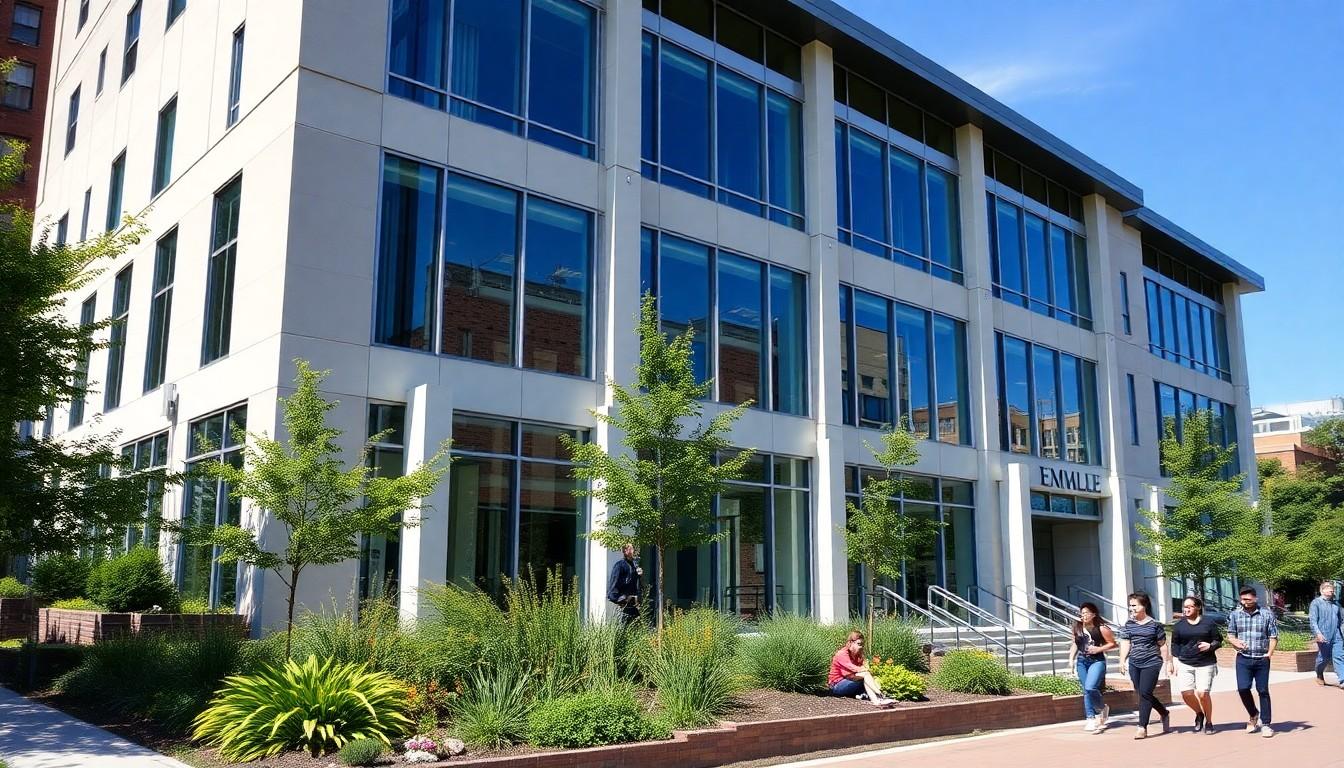
Emerson College is preparing to launch a Queer Media and Arts Centre in Boston, creating a new academic home for LGBTQ+ research, creative work and community projects. The initiative matters because it connects students, staff and faculty around stories that have often existed in separate corners of campus life.
Essential Takeaways
- A new academic centre: The Queer Media and Arts Centre will support research, creative practice, fellowships and community engagement.
- A planned 2026-27 launch: The project forms part of Emerson’s wider Extraordinary Emerson 2030 strategy.
- Faculty and students together: New fellowships will connect students with faculty working on queer media and history.
- A stronger institutional link: The centre builds on Emerson’s long-standing LGBTQ+ inclusion work and student-led activism.
- History is central: Early projects will explore queer stories from Emerson’s past and present, with an eye on alumni voices too.
A new space for queer media and arts
The most striking part of Emerson College’s new Queer Media and Arts Centre is its ambition. This isn't simply another campus organisation or social gathering point. It's designed as a bridge between scholarship, storytelling and everyday community life.
According to Emerson’s official project information, QMAC will support faculty research, student opportunities, creative work and public-facing engagement. That combination gives the centre a broad brief, but it also reflects how queer studies often move between classrooms, archives, performance spaces and real-world conversations.
Emerson has already built a strong reputation for LGBTQ+ inclusion. The college says its commitment to diversity and inclusion is woven through its institutional culture, while QMAC adds a more formal academic structure to that work.
Why Emerson is making the move now
For years, LGBTQ+ students at Emerson have created their own networks and advocacy groups, including The Pride Coalition. Those organisations have helped shape campus life, but the new centre offers something different: a permanent link between student activity and faculty research.
The initiative sits within the college’s Extraordinary Emerson 2030 plan, which focuses on innovation, collaboration and interdisciplinary learning. In practical terms, that means queer media could become a meeting point for students studying communication, film, politics, performance, journalism and the arts.
That matters because identity-led work can sometimes be visible in student life without being equally visible in academic life. QMAC aims to close that gap, giving students a clearer view of the research and creative projects already taking place around them.
Fellowships will uncover stories hidden in the archive
One of the centre’s first priorities is expected to be a queer historiography project. Student fellows will work with faculty and an on-campus archivist to investigate LGBTQ+ stories connected to Emerson, bringing overlooked people, projects and experiences into view.
The college’s QMAC materials highlight the centre’s focus on queer media and arts as both a creative and scholarly field. That could make the fellowship especially valuable for students who want hands-on experience with interviews, archival research, digital storytelling or exhibition work.
There’s also a welcome emphasis on alumni. Some former students may have created queer work that wasn't easy to share during their time at college. Revisiting those contributions could produce a richer, more complicated history of Emerson than an official timeline alone would offer.
What students and staff can expect
The first year is likely to be about gathering people as much as producing polished projects. Emerson has indicated that the centre will create spaces where students, faculty and staff can meet, exchange ideas and collaborate.
That could mean talks, workshops, showcases, research presentations and informal events. The important point is accessibility: students shouldn't need to already know which lecturer is researching queer politics, media representation or LGBTQ+ history before they can get involved.
The planned fellowships offer a more direct route in. Students will be able to contribute to projects rather than simply attend them, gaining experience while helping shape the centre’s early identity.
A timely investment in visibility
The centre arrives at a moment when LGBTQ+ issues, particularly trans rights and representation, are under intense public scrutiny. Emerson’s official inclusion work presents the college as a place committed to belonging, while QMAC gives that promise a research and creative platform.
Its planned leadership under Dr Mary Anne Taylor also brings a strong connection between queer perspectives, public life and communication. That background could help the centre explore how LGBTQ+ stories are represented in politics, sport, health, media and popular culture.
No single centre can solve every challenge facing queer communities on campus or beyond it. But a visible, sustained programme can send a reassuring message: this work belongs in the institution, not at its margins. For students looking for queer media and arts opportunities, that sense of welcome may be just as important as the events themselves.
It’s a small but meaningful shift from inclusion as a slogan to inclusion as shared work.
Source Reference Map
Story idea inspired by: [1]
Sources by paragraph:
- Paragraph 1: [2], [3]
- Paragraph 2: [3], [4]
- Paragraph 3: [2], [5]
- Paragraph 4: [4], [6]
- Paragraph 5: [3], [7]
- Paragraph 6: [4], [6]
- Paragraph 7: [3], [7]
- Paragraph 8: [2], [5]
- Paragraph 9: [3], [4]
- Paragraph 10: [4], [7]
- Paragraph 11: [2], [3]
- Paragraph 12: [3], [6]
- Paragraph 13: [4], [7]
- Paragraph 14: [2], [5]
- Paragraph 15: [3], [4]
- Paragraph 16: [2], [6]
- Paragraph 17: [3], [7]