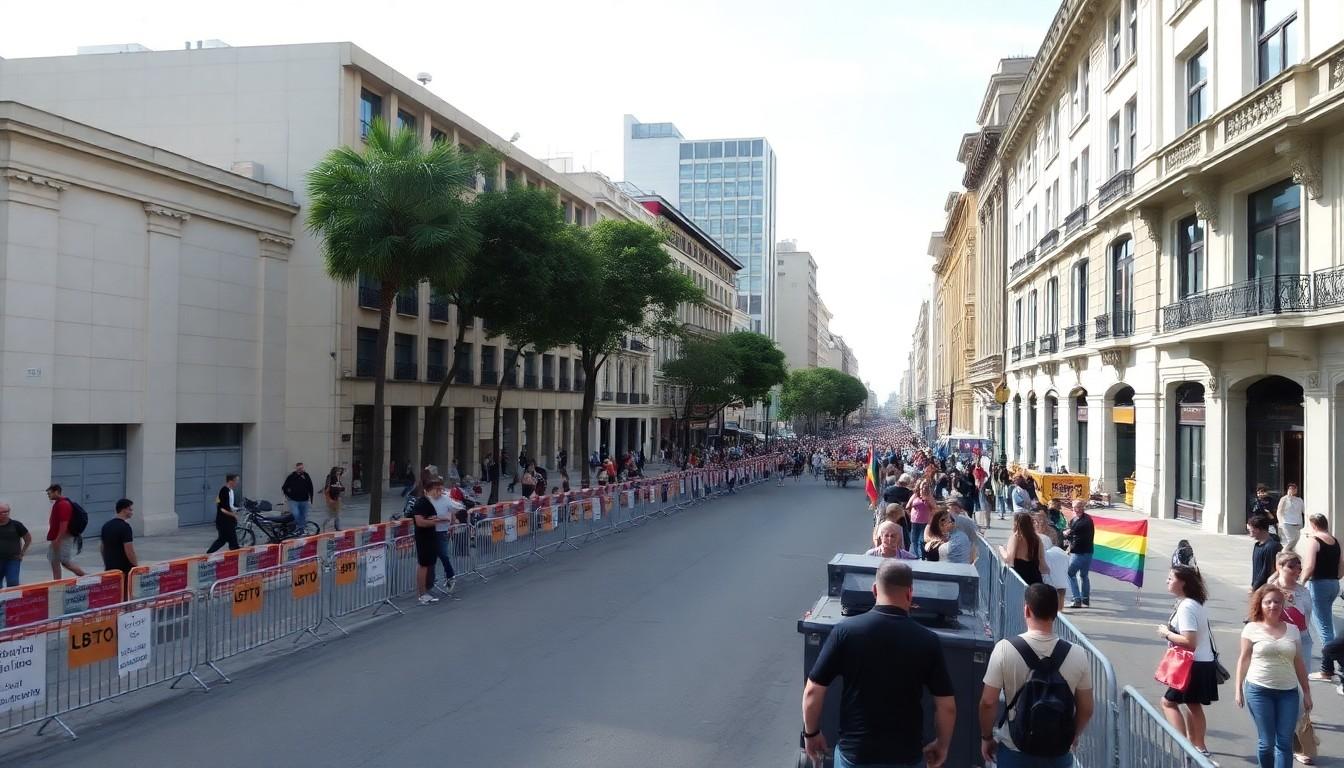
Organisers and Buenos Aires officials have reached an agreement allowing the city’s Pride march to go ahead shortly before Pope Leo XIV arrives in Argentina. The compromise matters because it protects a major LGBTQ+ public celebration while easing security and logistical concerns around the papal visit, bringing a tense scheduling dispute to a calmer close.
Essential Takeaways
- The march will proceed: Buenos Aires Pride organisers and city authorities agreed on arrangements for the event.
- Timing is central: The demonstration is planned for the eve of Pope Leo XIV’s arrival.
- Security shaped the talks: Officials had raised practical concerns around crowds, traffic and preparations for the visit.
- The dispute drew attention: LGBTQ+ groups resisted any move that could have sidelined or cancelled the march.
- A symbolic moment: The agreement places visibility, faith and public space in unusually close proximity.
A tense calendar clash reaches a compromise
The heart of the dispute was simple but politically charged: Buenos Aires Pride was due to take place just before Pope Leo XIV’s visit, creating a crowded timetable for the capital. Rather than allowing the clash to become a full confrontation, organisers and officials settled on an arrangement that lets the march continue. Reports from EFE and the Reading Eagle describe the agreement as a way to preserve the event while addressing the city’s concerns. [2], [7]
That outcome will be welcomed by many participants, particularly after fears that security planning might push the LGBTQ+ gathering aside. Pride marches are not just colourful parades. They’re public statements about equality, memory and belonging, so even a change to their date or route can carry real emotional weight. [3], [4]
Why the pope’s visit changed the stakes
A papal visit brings more than ceremony. It can involve motorcade routes, restricted areas, large gatherings and a heightened security presence, all of which put pressure on city planners. In this case, the proximity of the Pride march to Pope Leo XIV’s arrival made an ordinary event-planning question feel much more consequential. [5], [7]
The timing also created an unavoidable symbolic contrast. A major LGBTQ+ celebration and a high-profile Catholic visit occupy the same civic stage, even though they speak to different communities and traditions. That doesn’t automatically make conflict inevitable, but it does mean officials have to handle the details carefully and avoid suggesting that one group’s presence matters less than another’s. [2], [6]
Organisers pushed back against any veto
LGBTQ+ groups reportedly opposed attempts to prevent the march from taking place, arguing that the event should not be sacrificed because of the papal itinerary. Rainbow and Gay.it coverage framed the disagreement as a question of visibility and rights, rather than merely a clash over traffic management. [3], [6]
That distinction matters. Large public demonstrations need sensible crowd-control plans, but safety concerns can sometimes become a convenient reason to dilute or postpone politically sensitive gatherings. The eventual agreement appears to recognise both sides: the city can prepare for an unusually busy weekend, while Pride retains its place on the calendar. [4], [5]
What the agreement means for visitors and residents
For anyone attending, the practical message is to check the confirmed route, meeting points and transport advice close to the date. Routes can change when security arrangements are updated, and a nearby papal visit may mean road closures, diverted buses or longer journey times. A little planning could save a lot of standing around in a noisy crowd with a dead phone battery. [2], [7]
Residents should also expect the city to feel busier than usual, particularly around central gathering points and major avenues. Organisers, meanwhile, will need clear communication about access, accessibility and any boundaries imposed by security teams. The smoother those details are, the easier it will be for the march to feel like a celebration rather than a logistical test. [4], [6]
A small agreement with wider significance
The compromise won’t erase the differences between LGBTQ+ activists and the Catholic hierarchy, nor is it meant to. What it does show is that public space can be negotiated without forcing one community out of view. That’s a modest but meaningful result, especially in a moment when cultural and political disagreements can quickly become headline battles. [3], [5]
For Buenos Aires, the immediate challenge is making the arrangement work on the ground. If the march proceeds safely and the papal visit is handled smoothly, the city may offer a useful example of coexistence in practice. Sometimes the most revealing civic victories are the ones that look, at first glance, like a well-managed Saturday. [2], [7]
Pride will go ahead, and careful planning should help Buenos Aires make room for everyone.
Source Reference Map
Story idea inspired by: [1]
Sources by paragraph: