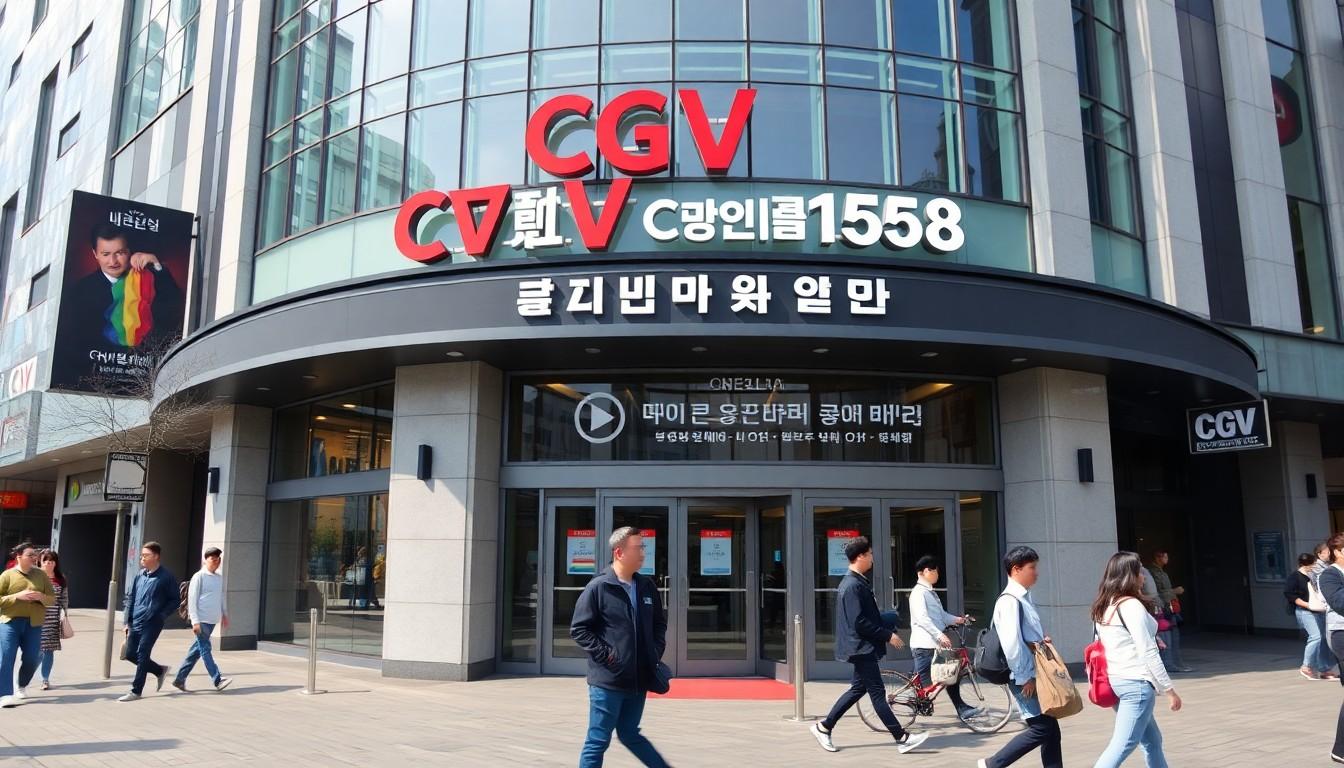
Film fans are heading to Seoul’s CGV Piccadilly1958 from 5 to 11 November for the 16th Seoul International Pride Film Festival, where 116 films from 34 countries spotlight emerging voices, global queer stories and discoveries that deserve a place on your watchlist.
Essential Takeaways
- A week of queer cinema: The festival runs from 5 to 11 November at CGV Piccadilly1958 in Seoul.
- 116 films, 34 countries: The programme brings together features and shorts from across the world.
- New directors in focus: The New Pride strand highlights first and second features by emerging filmmakers.
- Stories with wide reach: Themes include migration, class, identity, love, family and late-in-life self-discovery.
- Eight recommendations: The programmers have selected films ranging from award-winning dramas to bold animation.
Seoul’s pride film festival expands its horizons
The Seoul International Pride Film Festival is returning with a broad, international programme that feels designed for both committed cinephiles and curious newcomers. According to the festival announcement reported by eToday, this year’s edition will screen 116 films from 34 countries over seven days.
That scale matters. Rather than treating queer cinema as a narrow category, the festival’s selection moves between intimate family drama, workplace romance, animation and stories of displacement. The result is a programme with plenty of texture, from quiet personal revelations to films that tackle political realities head-on.
The central venue, CGV Piccadilly1958, also gives the event a concentrated feel. Audiences can move between screenings without losing the sense of a shared festival atmosphere, which is often where the best conversations begin.
New Pride puts first and second films in the spotlight
The New Pride section is built around debut and sophomore features, offering a useful glimpse at directors who may soon become familiar names. One of the headline picks is The Elephant in the Fog, directed by Avinash Vikram Shah, which received a jury prize in the Un Certain Regard section at this year’s Cannes Film Festival.
The film follows Pirati, the head of a Kinnar family in Nepal, as she searches for her missing daughter Apsara. It sounds like a journey story, but the emotional pull comes from the combination of family loyalty, community and uncertainty. There’s a sense of a vast landscape pressing in around a deeply personal search.
Ivan and Hadum, the feature debut from Ian de la Rosa, arrives with the Teddy Award for best feature from the Berlin International Film Festival. Set among workers at a Spanish agricultural distribution centre, it connects romance with labour, class and migration. De la Rosa is also expected to attend, giving audiences the chance to discuss the film directly with its director.
Four standout recommendations, from Welsh waters to animated satire
Helen Walsh’s On the Sea turns to a middle-aged man who has spent his life working on a mussel farm in north Wales. Its premise suggests a restrained, character-led story about discovering oneself later than expected, a theme that can feel especially affecting when set against the rhythms of coastal work.
Then there’s Jim Quinn, an animation from directors Marco Nguyen and Nicola Atane. Its protagonist is an influencer infected by a virus that turns gay people heterosexual, sending him in search of a cure. The deliberately strange setup creates room for satire, discomfort and a pointed look at the language of “fixing” identity.
These two films sit at opposite ends of the tonal spectrum, which is part of the appeal. One appears contemplative and grounded, while the other uses an absurd premise to make its argument. Together, they show why the best queer film festivals rarely stick to one emotional register.
World Pride brings international stories to Seoul
The World Pride section gathers nine features and 11 shorts from outside Asia. Among the featured films is Paloma Schneidermann’s Big Girls Don’t Cry, set during the summer of 2006 and centred on a 14-year-old girl living in rural New Zealand. The film was selected for the World Cinema Dramatic Competition at this year’s Sundance Film Festival.
Lea Pool’s Searching for Happiness takes a more urgent route, following an undocumented immigrant in Canada who tries to prevent her partner’s deportation. It’s a story where intimacy and immigration policy collide, making the personal consequences of official decisions impossible to ignore.
The shorts programme adds two particularly intriguing titles. A.P. Popjoy’s Billy and Jesse explores how a couple’s relationship changes after one partner transitions, while Michael Bruce’s Kilcolgan Bay follows a man confronting a past he has avoided for years. Both suggest that powerful festival films don’t need a long running time to leave a lasting mark.
How to choose what to watch
With 116 films on offer, the easiest approach is to start with the strands rather than trying to read every synopsis. New Pride should suit viewers who enjoy discovering new directors, while World Pride offers a chance to compare queer storytelling across countries and cultures.
Award recognition can be a helpful shortcut, but it shouldn't be the only guide. If you prefer social realism, Ivan and Hadum and Searching for Happiness look like natural choices. For something more reflective, On the Sea may fit, while Jim Quinn promises a sharper, more surreal experience.
It’s also worth leaving room for a short film or two. A compact story can sometimes deliver the festival’s biggest emotional surprise, especially when it takes a familiar subject and approaches it from an unexpected angle.
A festival built for discovery
The Seoul International Pride Film Festival’s programme suggests a confident balance between established festival recognition and emerging talent. Films from Cannes, Berlin and Sundance sit alongside debut works and shorts, creating a lineup that feels international without becoming impersonal.
There’s a welcome breadth here, too. The stories move from Nepal and Spain to Wales, New Zealand and Canada, but their concerns remain recognisable: who gets to belong, how relationships change and what it takes to live honestly. For audiences, that combination of distance and familiarity is often the real pleasure of a festival week.
A good festival film doesn’t simply end when the credits roll. It follows you out into the Seoul evening, quietly asking what you might have overlooked before.
Explore the programme and choose a few films that promise more than a predictable night at the cinema.
Source Reference Map
Story idea inspired by: [1]
Sources by paragraph:
- Paragraph 1: [2], [4]
- Paragraph 2: [3], [6]
- Paragraph 3: [5], [7]
- Paragraph 4: [2], [3]
- Paragraph 5: [4], [6]
- Paragraph 6: [5], [7]
- Paragraph 7: [2], [4]
- Paragraph 8: [3], [6]
- Paragraph 9: [5], [7]
- Paragraph 10: [2], [3]
- Paragraph 11: [4], [6]
- Paragraph 12: [5], [7]
- Paragraph 13: [2], [4]
- Paragraph 14: [3], [6]
- Paragraph 15: [5], [7]
- Paragraph 16: [2], [3]