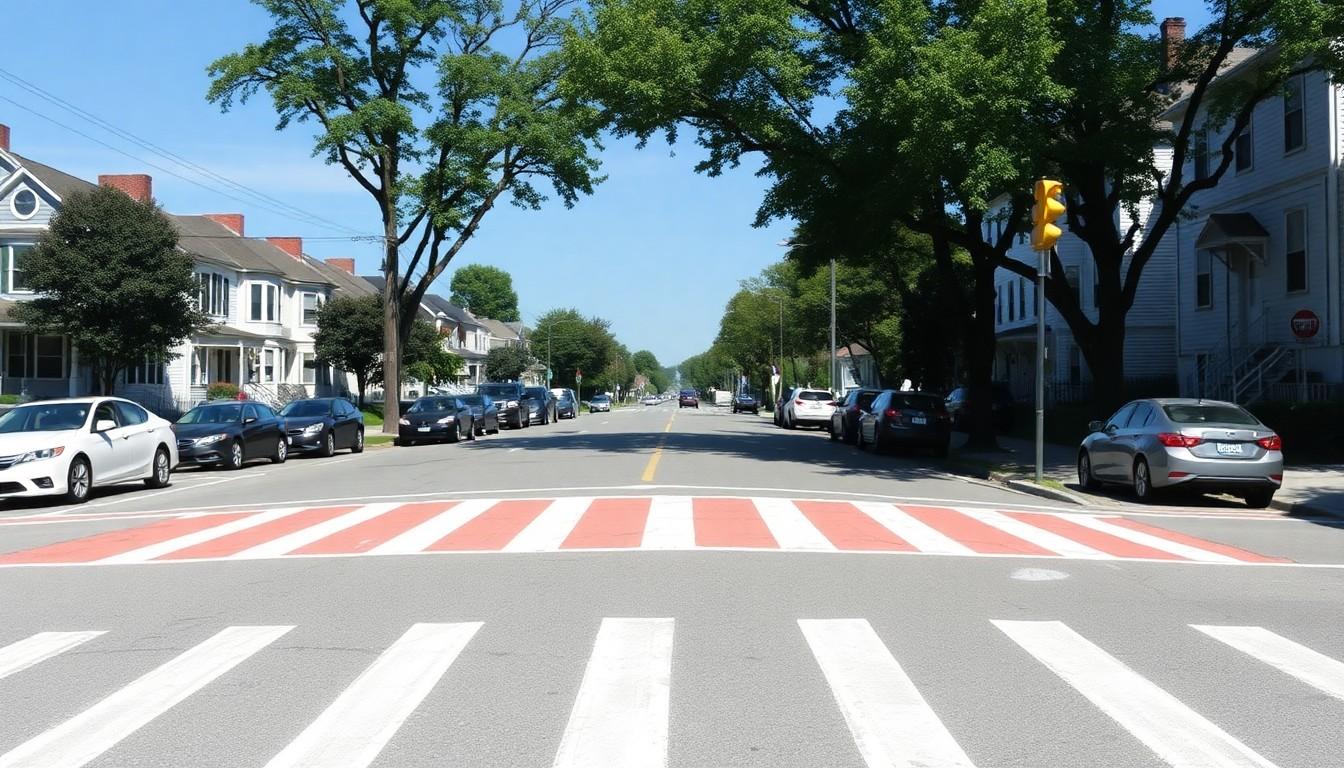
Residents in Swampscott, Massachusetts, are questioning why two rainbow crosswalks on Monument Avenue were replaced with plain white markings. Town officials say the work was routine road maintenance, but the sudden change has unsettled LGBTQIA+ residents and supporters who saw the colourful crossings as a visible, welcoming sign of inclusion.
Essential Takeaways
- Two crossings changed: Rainbow markings on Monument Avenue were replaced with standard white lines.
- Officials cite maintenance: The town says the repainting wasn't connected to any shift in its support for LGBTQIA+ people.
- Residents remain unconvinced: Some locals described the change as sudden, deliberate and emotionally disappointing.
- A policy review is under way: Swampscott is examining rules for road markings, including projects paid for privately.
- Public input is expected: Residents have been invited to discuss the issue at a select board meeting.
A colourful symbol vanished overnight
The strongest reaction has centred on the speed and surprise of the change. Residents noticed that the bright rainbow stripes had disappeared from Monument Avenue, leaving behind familiar white road markings and an uneasy sense that something meaningful had been quietly removed.
The crossings had been repainted in rainbow colours only last year after a private donation. Boston.com reported that their purpose was not simply decorative. For many people, they represented a small but visible declaration that LGBTQIA+ residents, families and visitors were welcome in the coastal town.
That helps explain why the repainting landed differently from ordinary roadworks. A faded line is one thing. A symbol of belonging disappearing without much warning is quite another.
Officials say it was routine road work
Swampscott officials have pushed back against the suggestion that the work was discriminatory. In a statement reported by NBC Boston, the town said the maintenance didn't represent any change in its commitment to welcoming LGBTQIA+ people.
The explanation hasn't settled the matter for everyone. New Boston Post reported that residents questioned why the crossings were removed and whether the town had communicated clearly enough before the work took place.
Therein lies the awkward bit. Even when a decision has a practical explanation, the way it's handled can shape how it's received. For a town already using public artwork to signal inclusion, a little advance notice might have prevented a great deal of suspicion.
Why the crosswalks mattered beyond the paint
Rainbow crosswalks have become a familiar form of civic expression, particularly during Pride season and in communities keen to make inclusion visible in everyday spaces. They're practical bits of infrastructure, but they also carry a message that residents and visitors encounter while walking, cycling or driving through town.
Mass Daily News reported that the Swampscott crossings were linked to a private contribution, making questions about ownership, upkeep and approval especially relevant. If a public road feature is funded by donors, who decides when it changes, and what consultation should follow?
Those questions may sound procedural, but they're not emotion-free. Residents often form strong attachments to local symbols because they make broad values feel tangible. A splash of colour at a junction can say more, in a glance, than a carefully worded statement on a council website.
The town is reviewing its markings policy
Officials have said they're now reviewing policies covering roadway markings, including those supported by private donations. According to Boston 25 News, the review is part of the town's response to residents' concerns after the repainting.
That process could clarify several practical points: how long decorative markings are expected to last, who pays for maintenance, whether they need specialist treatment and how residents are notified when they're removed. Those details matter, especially when a project has both a safety function and a cultural one.
For residents, the useful question isn't only whether the work was technically routine. It's also whether future decisions will be transparent, consistent and sensitive to the meaning attached to community-funded projects.
A public meeting could shape what happens next
Residents have been invited to share their views at a Swampscott select board meeting on 21 October. WCVB reported that the meeting is expected to give locals a chance to raise concerns and ask officials for more detail about the decision.
The discussion may ultimately move beyond these two crossings. It could influence how Swampscott approaches Pride displays, donated public art and other visible signs of community identity in future.
For now, the town is asking people to accept a maintenance explanation, while some residents are asking for something more personal: acknowledgement that the rainbow markings mattered. That gap between official intent and public feeling is where this story remains unresolved.
A clearer policy and more open communication could help restore trust, whatever colour the next markings are.
Source Reference Map
Story idea inspired by: [1]
Sources by paragraph: