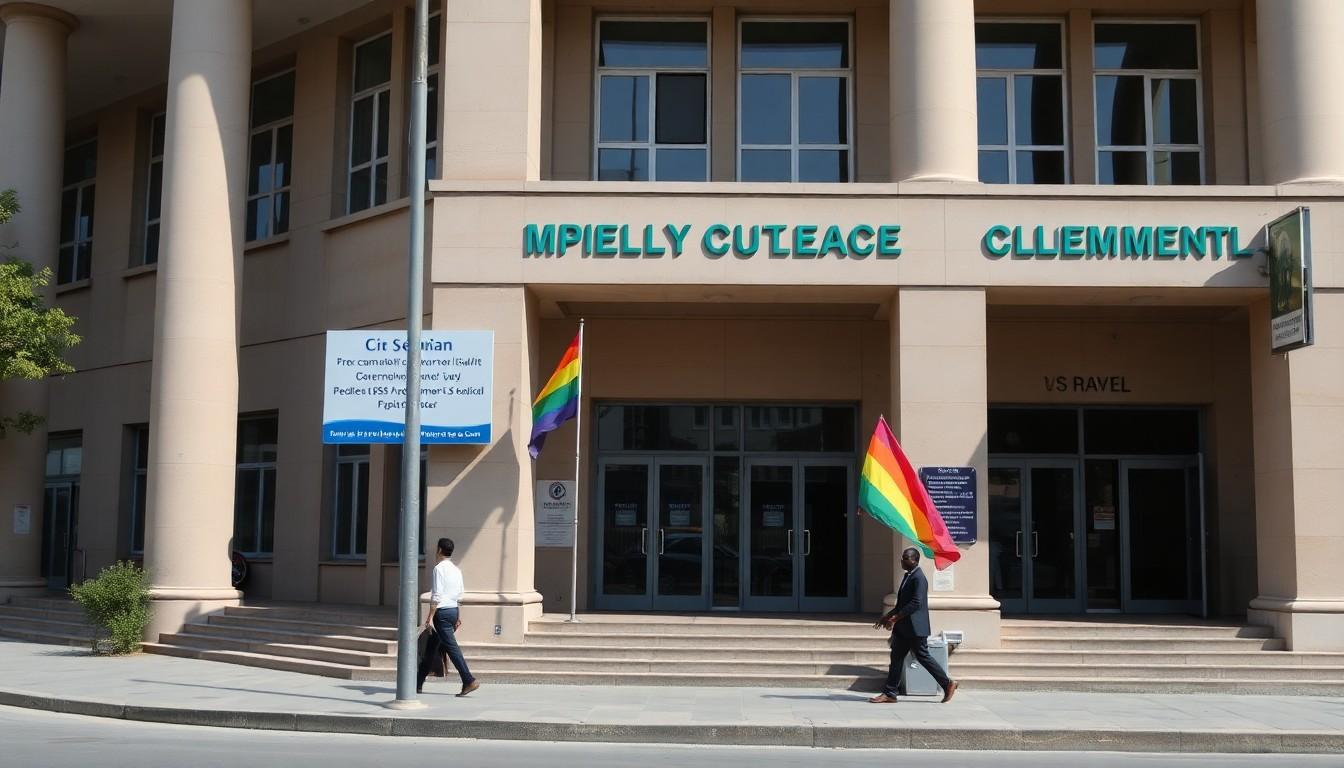
A widening crackdown in Senegal is driving LGBTQIA+ people into hiding, disrupting HIV treatment and casting a difficult shadow over Dakar's upcoming Youth Olympic Games. Human Rights Watch says arrests and harsher penalties are creating fear far beyond the courtroom, with lawyers, doctors and community groups also feeling the pressure.
Essential Takeaways
- Harsher penalties: Senegal's amended law allows prison terms of up to 10 years for consensual same-sex conduct, alongside steep fines.
- New offences: Alleged promotion, praise or financial support of LGBTQIA+ people can also lead to prosecution.
- Rising arrests: Local and international organisations have reported hundreds of arrests since February, although the precise total remains unverified.
- HIV care disrupted: Fear of testing, arrest and additional charges is keeping some people away from appointments and treatment.
- Olympic scrutiny: The crackdown has raised questions about Senegal's commitment to the Olympic Charter's anti-discrimination principles.
A tougher law has changed the atmosphere
The most alarming detail isn't only the length of the prison sentence. It's the chilling effect spreading through everyday life, from clinics and legal offices to private homes. Human Rights Watch says Senegal's revised Article 319 has intensified an already hostile environment for LGBTQIA+ people.
The National Assembly approved the changes in March without a single opposing vote. The revised law reportedly doubled the maximum sentence for consensual same-sex conduct to 10 years and introduced fines of up to 10 million CFA francs, roughly US$17,000, according to Human Rights Watch and the Human Dignity Trust.
It also created offences linked to the alleged promotion or glorification of homosexuality, as well as financial or practical support for LGBTQIA+ people and organisations. That breadth matters because it may place health workers, advocates and lawyers under suspicion simply for doing their jobs.
Arrest figures are climbing, but the full picture remains unclear
Reports of mass arrests have added urgency to the debate. Dakar-based rights group RADDHO recorded at least 212 arrests between February and July, while the HIV Justice Network reported more than 300. Human Rights Watch said it couldn't independently confirm the overall number.
Africanews reported that some detainees faced accusations connected to HIV transmission, although a court dismissed those charges in August. In a separate case highlighted by rights groups, a 24-year-old man without legal representation received a six-year prison sentence in April.
Those details paint a picture of a system where due process and access to advice can become fragile. They also help explain why people are disappearing from public spaces and community networks. When a casual conversation, a clinic visit or an offer of legal help can feel risky, silence starts to look like self-protection.
Why HIV treatment is now at risk
Healthcare is one of the clearest casualties. Human Rights Watch interviewed 39 people in May and reported that many detainees were subjected to HIV tests without consent. Positive results were then allegedly used to support additional accusations.
A Dakar doctor told the organisation that about one in three patients had stopped attending appointments for HIV care. That isn't a small administrative setback. Missing medication and monitoring can affect a person's health, while fear can also undermine prevention work for the wider community.
The consequences reach beyond LGBTQIA+ people. Public health programmes rely on trust, confidentiality and regular contact. Remove those foundations and people are less likely to test, seek advice or start treatment early. As the Huffington Post reported, the expanded criminal penalties have made an already sensitive health issue even more dangerous.
The crackdown arrives before a landmark Games
The timing has made Senegal's policies harder to ignore. Dakar is due to host the Youth Olympic Games from 31 October to 13 November, the first Olympic event held on African soil.
Human Rights Watch says the crackdown raises questions about Senegal's obligations under the Olympic Charter, which includes a commitment to oppose discrimination. The Games are meant to project youth, openness and international connection. That message sits uneasily alongside laws that can punish identity, advocacy and support.
The international attention may bring scrutiny, but it also risks reducing a serious human rights crisis to an Olympic talking point. For people affected inside Senegal, the stakes are far more immediate: staying safe, finding medical care and securing legal representation.
Senegal is part of a wider regional struggle
Senegal's law reflects a broader pattern across Africa, where more than 30 of the continent's 54 countries criminalise same-sex relationships. Human Dignity Trust's legal analysis shows how amendments can expand not only direct criminal penalties but also the risks surrounding speech, funding and support.
That wider context doesn't make Senegal's actions any less significant. The country has often been viewed internationally through the lens of stability and democratic institutions, so a sharper legal crackdown is likely to attract particular concern.
Human Rights Watch said it wrote to Senegalese authorities on 29 September but had received no response when its report was published. For now, the clearest signal is coming from those who have stopped going to appointments, avoided public life or hesitated before asking for help. That quiet retreat is often what repression looks like before the statistics catch up.
The immediate test is whether Senegal's authorities reverse course and protect access to healthcare, fair trials and basic human dignity.
It's a small sentence on paper, but a life-changing fear in practice.
Source Reference Map
Story idea inspired by: [1]
Sources by paragraph:
- Paragraph 1: [2], [5]
- Paragraph 2: [4], [6]
- Paragraph 3: [2], [3]
- Paragraph 4: [5], [6]
- Paragraph 5: [2], [3]
- Paragraph 6: [2], [5]
- Paragraph 7: [2], [3]
- Paragraph 8: [2], [6]
- Paragraph 9: [2], [4]
- Paragraph 10: [5], [6]
- Paragraph 11: [2], [3]
- Paragraph 12: [2], [4]
- Paragraph 13: [2], [5]
- Paragraph 14: [2], [3]