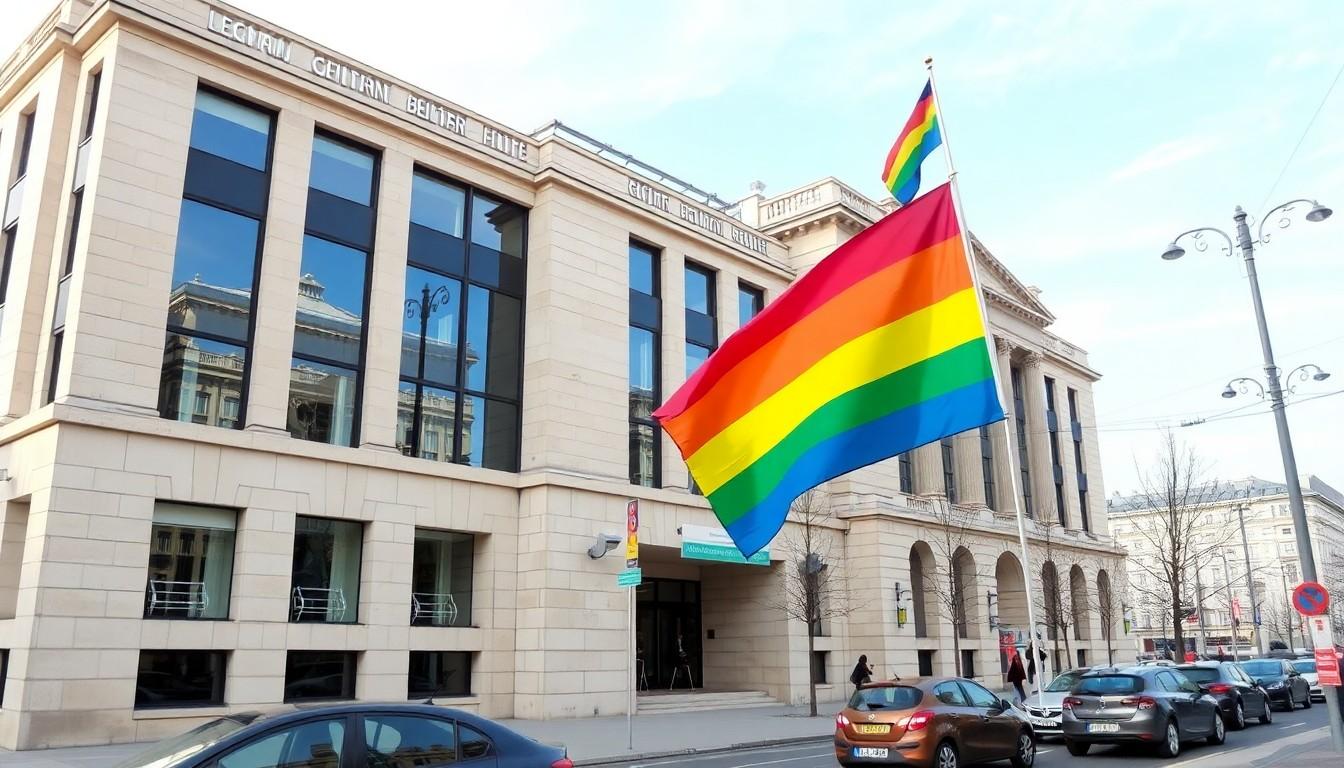
Hungary’s TISZA-led government has approved controversial changes to the country’s child protection rules, removing several restrictions on LGBTQ-related content for minors. Critics say the move, linked to EU legal pressure, could reduce parental control and reopen schools to activist groups, while supporters frame it as compliance with European law.
Essential Takeaways
- Restrictions removed: The amendment reportedly drops bans covering positive portrayals of homosexual relationships and gender reassignment.
- EU pressure at the centre: The government says the changes follow a ruling by the Court of Justice of the European Union.
- Parents’ rights disputed: Opponents argue the reform weakens families’ say over children’s education and upbringing.
- Schools are the flashpoint: Critics fear LGBTQ advocacy organisations could regain access to educational settings.
- Sexual abuse rules remain: Provisions targeting exploitation and violence are still included in the revised framework.
Hungary’s child protection law enters a new phase
Hungary’s latest culture-war battle is being fought through legal wording, but its consequences could be felt in classrooms, media regulation and family life. The TISZA government has backed amendments that remove several restrictions on LGBTQ-related material involving minors, prompting an immediate backlash from conservative parties.
The dispute is particularly sharp because the previous rules were introduced as part of a wider child protection package. As Reuters reported in coverage of the legal controversy, the changes follow pressure created by European judicial decisions, turning what might otherwise be a domestic policy question into a test of national authority.
For parents, the practical concern is simple enough: who decides what children see and hear at school? Supporters of the amendment say existing safeguards went too far, while opponents believe the new wording leaves the door ajar to content they consider inappropriate for under-18s.
Why Brussels is part of the argument
The government has presented the reform as a response to obligations under EU law. A ruling by the Court of Justice of the European Union found Hungary’s earlier approach incompatible with EU rules, leaving ministers to choose between changing the legislation or risking a deeper confrontation with Brussels.
That legal pressure has given the opposition a powerful political message. According to The Budapest Times, critics accuse TISZA of pushing through a measure that voters were never clearly asked to endorse, particularly after the country’s earlier referendum on child protection and LGBTQ-related content.
This is where the argument becomes bigger than one statute. Hungary’s constitutional framework gives parents a prominent role in raising children, while EU membership places limits on how national governments regulate areas covered by European law. Legal analysts, including LegalClarity, describe Hungary’s political system as one in which these disputes can quickly become entangled with party competition and institutional power.
What has changed for schools and families?
The revised law continues to target sexual violence and exploitation, but it reportedly removes specific prohibitions on portraying homosexual relationships and gender reassignment. That distinction matters: the amendment doesn't erase child protection rules altogether, but it changes the boundary between preventing abuse and restricting representation.
Opposition parties, including FIDESZ and Mi Hazánk, say the adjustment could allow organisations promoting LGBTQ causes to return to schools. Brussels Signal reported that the removal of the anti-LGBTQ provisions has become a major point of contention, with critics warning that educational institutions may face greater pressure from campaign groups.
The government's opponents also argue that parents could have less control over the material presented to their children. Whether that concern becomes reality will depend on how schools, broadcasters and regulators interpret the new rules. In practice, the fine print may matter as much as the political slogans.
A familiar battle over voters and values
The backlash has been fierce because Hungary's child protection policy has become a marker of national identity. FIDESZ argues that a large number of voters rejected LGBTQ-related messaging aimed at children in the 2022 referendum, while TISZA's critics say the new government is setting that public mandate aside to secure Brussels' approval.
The political messaging is deliberately blunt. Government opponents describe the change as a betrayal of families, while supporters and sympathetic commentators see it as the removal of discriminatory restrictions. Duna Center noted the sharply divided media reaction, reflecting how little common ground exists between Hungary's governing camp and its conservative critics.
There is also a strategic calculation at work. TISZA is positioning itself as a government capable of complying with EU law, but that stance risks alienating voters who regard Brussels as an unwelcome influence over domestic family policy. In Hungary, that is a difficult balancing act, and the argument is unlikely to fade with the parliamentary vote.
What happens next?
The immediate question is how the new rules will be applied. Schools may need clearer guidance on outside organisations, teaching materials and age-appropriate content, while parents will want to know whether they can object to particular lessons or presentations.
The reform could also face further legal and political scrutiny. Axioma Center has argued that the previous restrictions were connected to parents' constitutional rights and the protection of minors' moral and psychological development. Its position shows that the controversy is not limited to party politics; it also involves competing interpretations of constitutional identity and children's rights.
For families, the best response is to look beyond dramatic claims from either side. Check how a school communicates its policies, ask who delivers external sessions and find out what consent or notification procedures apply. Whatever one's view of the law, clear information is more useful than another round of political shouting.
The coming months will show whether the amendment settles Hungary's dispute with Brussels or simply moves the conflict from parliament into schools and homes.
It's a legal change with very human consequences, especially for parents trying to understand who sets the boundaries for their children.
Source Reference Map
Story idea inspired by: [1]
Sources by paragraph:
- Paragraph 1: [2], [5]
- Paragraph 2: [3], [5]
- Paragraph 3: [6], [7]
- Paragraph 4: [4], [5]
- Paragraph 5: [3], [6]
- Paragraph 6: [5], [7]
- Paragraph 7: [2], [3]
- Paragraph 8: [6], [7]
- Paragraph 9: [4], [5]
- Paragraph 10: [3], [5]
- Paragraph 11: [6], [7]
- Paragraph 12: [2], [5]
- Paragraph 13: [4], [6]
- Paragraph 14: [5], [7]
- Paragraph 15: [2], [3]