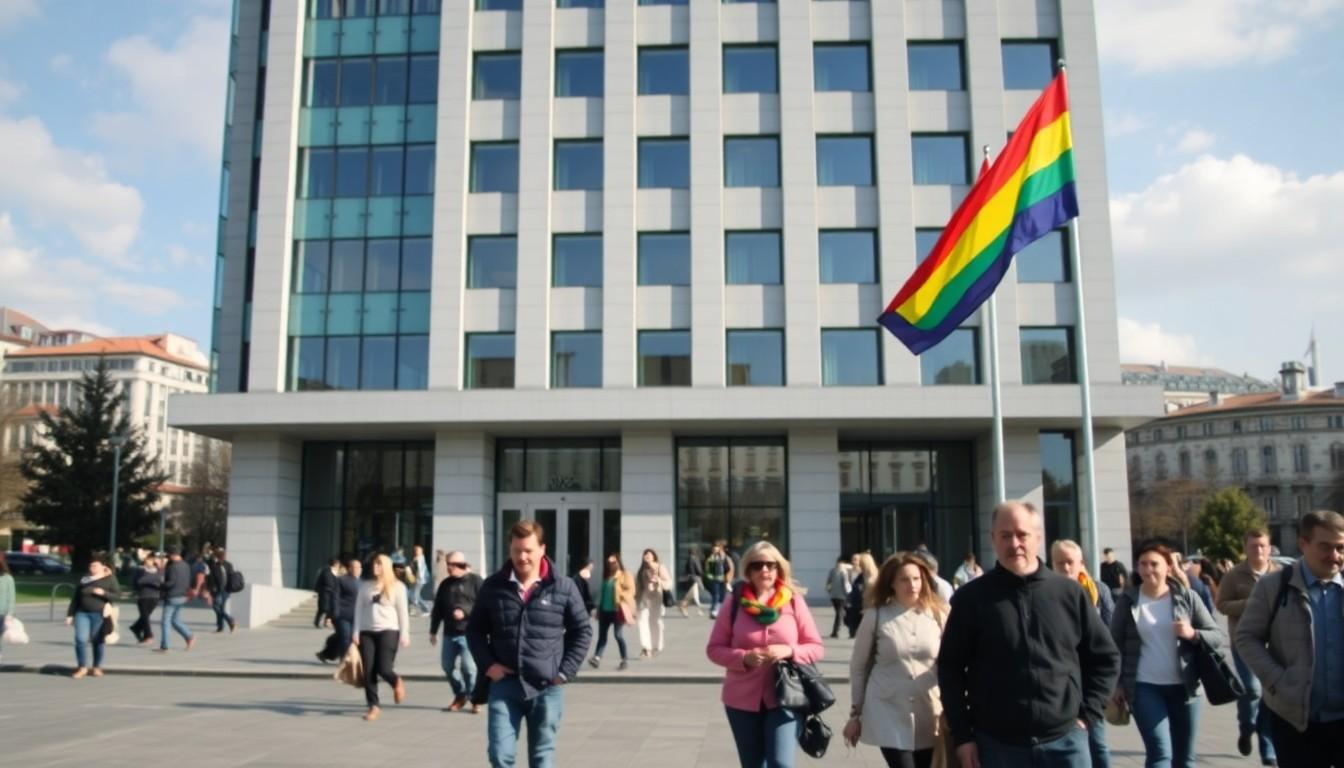
Hungary’s decision to roll back its blanket restrictions on LGBTQ+ content marks a significant change, but campaigners and European observers say it doesn’t go far enough. The reform follows a European Union court ruling that found the country’s anti-LGBTQ+ law breached fundamental rights, leaving Budapest under pressure to turn a legal concession into lasting protection.
Essential Takeaways
- A major legal retreat: Hungary has moved away from broad censorship rules targeting LGBTQ+ content.
- Court pressure mattered: The change follows a European Union court ruling that found the legislation unlawful.
- Stigma remains a concern: Critics say the original law marginalised LGBTQ+ people and encouraged discrimination.
- Equality is unfinished: Marriage rights, gender recognition and adoption access remain unresolved.
- The next test is implementation: Hungary’s government must show the reform changes everyday life, not just the wording of the law.
Hungary has pulled back from its sweeping censorship rules
The most immediate change is simple but important: Hungary is ending its blanket ban on content associated with LGBTQ+ people. For a community that has spent years being pushed out of public discussion, that shift could make the cultural landscape feel a little less hostile.
The reform follows a judgment from the European Union’s top court in April, which found that Hungary’s restrictions violated EU law and fundamental rights. Reporting by Al Jazeera and Euronews said the court concluded that the legislation stigmatised LGBTQ+ people and conflicted with core European values.
That makes this more than a domestic policy adjustment. It’s a reminder that EU membership comes with legal obligations, particularly around dignity and equal treatment.
The court ruling put Budapest under serious pressure
Hungary’s original law restricted the depiction or discussion of LGBTQ+ identities in material accessible to children. It was presented by the government as a child-protection measure, but rights groups and European institutions argued that its real effect was to make queer people less visible.
Human Rights Watch described the legislation as unlawful and discriminatory, while the Guardian reported that the ruling condemned its impact on LGBTQ+ people. The language matters here: this wasn’t merely a disagreement about education or media standards, but a finding that the law crossed fundamental rights boundaries.
European Interest and Agence Europe also highlighted the court’s view that the legislation was stigmatising. In practice, that means the law didn’t just regulate information. It helped frame an entire group of people as something that should be hidden, which is precisely why the reform has been welcomed cautiously rather than celebrated as a final victory.
Why the change still falls short
Removing a censorship regime doesn’t automatically create equality. LGBTQ+ people in Hungary still face gaps in legal recognition, including the absence of same-sex marriage and limited recognition for transgender people.
Adoption rights for same-sex couples also remain a key issue. Euronews and Human Rights Watch both placed the court ruling in a wider pattern of concern about Hungary’s treatment of LGBTQ+ people, rather than presenting it as an isolated dispute over publishing rules.
That distinction is crucial. A law can stop banning visibility while leaving families, couples and trans people without the same protection enjoyed by others. The legal door may now be ajar, but it’s nowhere near fully open.
What should shoppers, families and schools watch next?
The practical question is how the reform will be enforced. Parents, teachers, publishers and broadcasters will want to know whether the old restrictions genuinely disappear or whether new rules emerge under different wording.
The court ruling provides a clear benchmark: future measures must respect dignity, non-discrimination and the rights protected under EU law. Reports from Al Jazeera and the Guardian suggest that the dispute has already become a test of how far Hungary is prepared to comply with European standards.
For schools and families, consistency will matter most. LGBTQ+ topics shouldn’t be treated as dangerous simply because they involve identity or sexuality. A quieter, more ordinary approach would be progress in itself.
Europe is watching for the next move
The reform gives Hungary an opportunity to rebuild trust, but it also raises expectations. As Human Rights Watch and Agence Europe reported, the court’s decision leaves little room for Budapest to claim that the previous law was merely a matter of national preference.
European officials and rights campaigners are likely to judge the change by its consequences: whether LGBTQ+ people can appear in public life without being censored, whether discrimination is challenged, and whether legal equality expands beyond this single measure.
For now, the mood is best described as relieved but unconvinced. Ending a damaging law is welcome, but genuine equality requires more than removing a barrier. It requires building protection, recognition and belonging into everyday life.
It’s a meaningful reversal, but Hungary’s equality journey is far from over.
Source Reference Map
Story idea inspired by: [1]
Sources by paragraph: