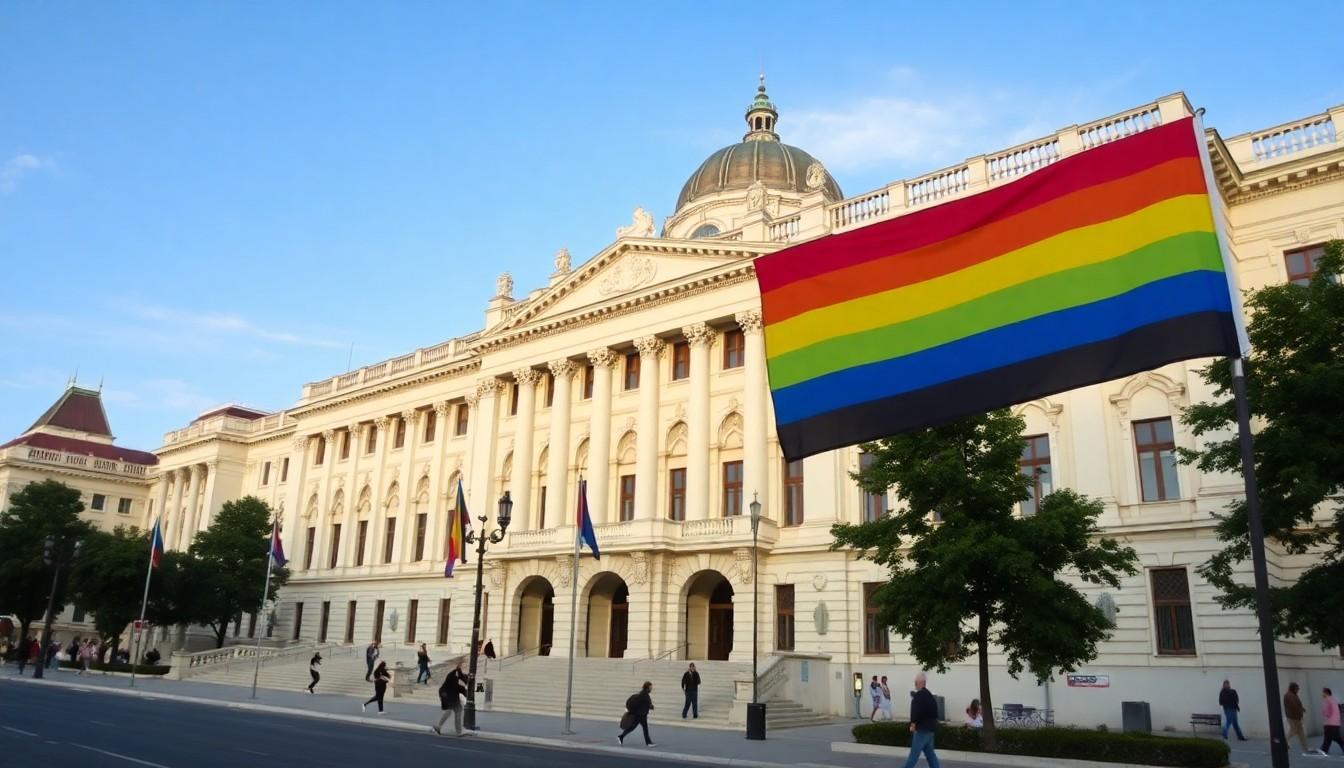
Hungary’s latest child-protection changes have reignited a fierce political and cultural argument, with the government presenting them as a response to an EU court ruling while critics fear they could loosen restrictions on LGBTQ content in schools and other educational settings.
Essential Takeaways
- The legal trigger: Hungary’s amendments followed a ruling by the EU’s top court concerning restrictions on LGBTQ content.
- The political fight: Government and opposition figures offer sharply different interpretations of what the changes mean.
- The central concern: Critics say schools could gain more room to show content discussing homosexuality or gender identity.
- The government’s defence: Supporters argue the revised wording protects all children from harmful pornographic material without singling out sexual orientations.
- Why it matters: The dispute sits at the intersection of children’s rights, education policy, free expression and EU law.
A court ruling has reopened Hungary’s culture war
Hungary’s revised child-protection law has become the latest flashpoint in the country’s long-running dispute over LGBTQ rights and education. The argument is no longer just about legal wording. It’s about who gets to define child safety, what schools may discuss and how far Brussels can shape national policy.
The European Union’s top court found that Hungary’s earlier restrictions breached core European principles and human-rights protections, according to Euronews, The Guardian and Al Jazeera. The ruling placed Budapest under pressure to change provisions that critics said treated LGBTQ themes as inherently harmful.
That legal backdrop matters because the amendment isn’t arriving in a political vacuum. It follows years of confrontation between Hungary’s government and EU institutions, making even technical changes feel like a much bigger ideological signal.
Why the wording is causing such a strong reaction
Supporters of the amendment say it removes discriminatory distinctions and focuses instead on protecting minors from harmful sexual or pornographic material. The government’s position is that children should be shielded from damaging content regardless of sexual orientation.
Opponents see something quite different. They argue that the revised rules could permit classroom material promoting or presenting homosexuality and gender transition in a more favourable light. Hungary’s governing Fidesz and KDNP politicians have accused the Tisza government of changing the law under pressure from Brussels.
International coverage has amplified that divide. Euronews reported that Hungary was moving to amend the controversial legislation after the court ruling, while Human Rights Watch described the original law as unlawful. The result is a familiar political pattern: one side calls the change a necessary correction, while the other treats it as a dangerous retreat.
The political messaging is almost as important as the law
Barbara Hegedus, a Fidesz politician, accused Prime Minister Peter Magyar of using a separate case involving babies left in hospital to divert attention from the child-protection amendments. She also questioned why foreign newspapers appeared to welcome what she described as the loosening of LGBTQ restrictions.
Magyar, meanwhile, has rejected the criticism. His explanation is that the changes follow what the European court required and strengthen protection by avoiding distinctions between sexual orientations. That argument places the government on more legally neutral ground, although its opponents say the practical effect could still be a wider opening for LGBTQ-related content in schools.
The clash shows how quickly a legal amendment can become campaign material. In Hungary, terms such as child protection, gender policy and Brussels pressure carry powerful emotional weight, so the public debate often moves faster than the legislation itself.
What parents and schools should watch
For families, the key question isn’t simply whether the law mentions LGBTQ content. It’s how ministries, schools and courts interpret the revised provisions in practice. Guidance for teachers, approved teaching materials and rules governing guest speakers could all matter as much as the wording passed by parliament.
Parents trying to understand the change should look for the final legal text, official education guidance and statements from school authorities rather than relying only on political headlines. Watch, too, for whether the rules distinguish between age-appropriate discussion and explicit sexual content. Those are very different things, but public arguments often blur them together.
Schools may also face a delicate balancing act. They’ll need to comply with national rules while handling ordinary questions about families, identity and relationships in a way that is age-appropriate and respectful. That’s not an easy brief, particularly when every lesson can become part of a national culture-war argument.
The wider European dispute is far from over
The EU court ruling has given critics of Hungary’s earlier policy a significant legal victory, but it hasn’t settled the political disagreement. The amendment may reduce some of the conflict with European institutions, yet it’s unlikely to satisfy campaigners who want the original restrictions withdrawn entirely.
Human Rights Watch and other rights organisations have argued that the law’s broader approach conflicts with equality and freedom-of-expression principles. Hungarian officials and conservative politicians, by contrast, continue to frame the issue around parental authority and protection from inappropriate material.
For readers outside Hungary, the episode offers a useful reminder that education laws rarely stay in the classroom. They can become symbols of national sovereignty, European integration and changing social values all at once. And when that happens, even a few altered clauses can produce an enormous political storm.
The real test will be what children encounter in classrooms, not just what politicians say on social media.
Source Reference Map
Story idea inspired by: [1]
Sources by paragraph:
- Paragraph 1: [2], [4]
- Paragraph 2: [3], [5]
- Paragraph 3: [6], [7]
- Paragraph 4: [2], [3]
- Paragraph 5: [4], [5]
- Paragraph 6: [6], [7]
- Paragraph 7: [2], [4]
- Paragraph 8: [3], [5]
- Paragraph 9: [6], [7]
- Paragraph 10: [2], [3]
- Paragraph 11: [4], [5]
- Paragraph 12: [6], [7]
- Paragraph 13: [2], [4]
- Paragraph 14: [3], [6]
- Paragraph 15: [5], [7]
- Paragraph 16: [2], [3]