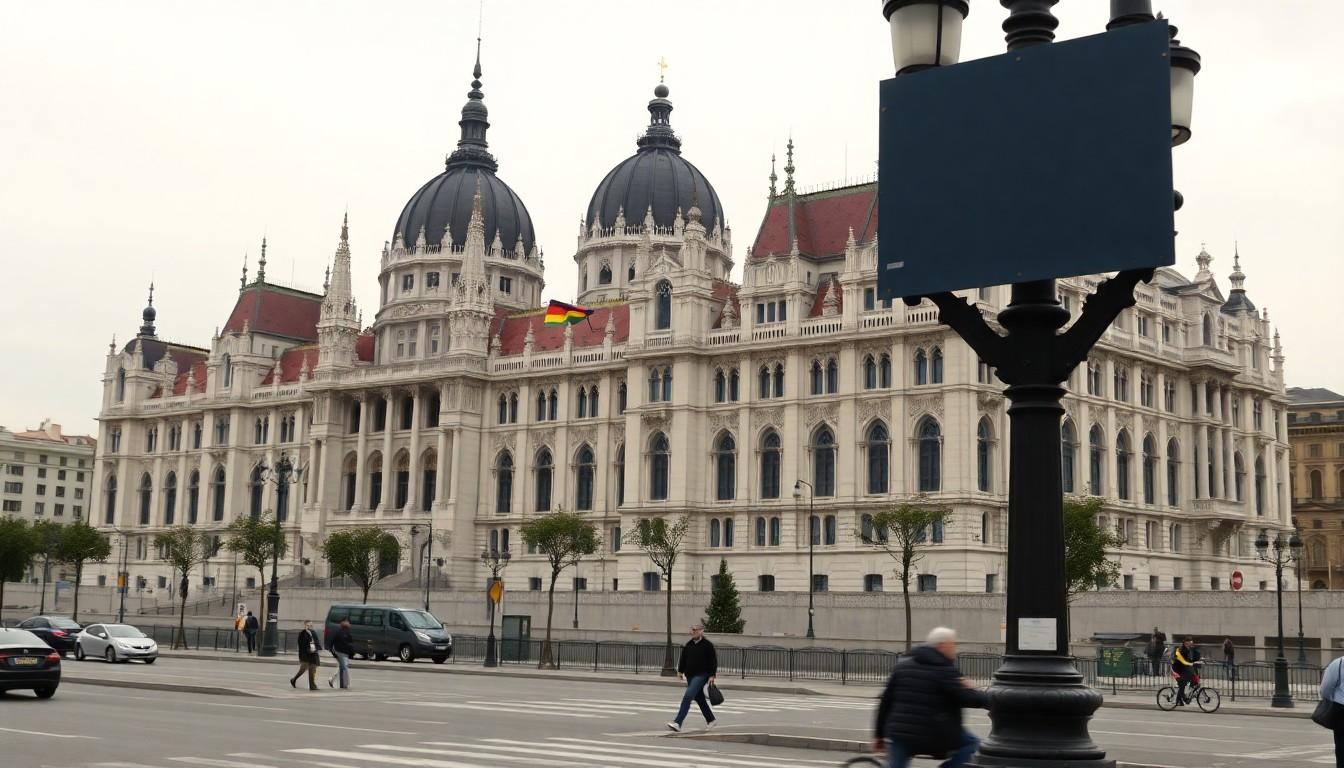
Hungarian lawmakers have voted to remove several anti-LGBTQ provisions from a child protection law introduced under Viktor Orban, marking a significant policy shift in Budapest. The changes drop references to homosexuality and gender transition, although other restrictions on LGBTQ+ families and public events remain in place.
Essential Takeaways
- Key provisions removed: References to homosexuality and gender transition have been taken out of the child protection legislation.
- Broader wording adopted: The revised law focuses on shielding children from material considered seriously harmful to their development.
- European pressure mattered: The EU’s top court previously ruled that the 2021 legislation breached European law.
- Not a complete reversal: Same-sex couples still face barriers to adoption, while Hungary’s constitution defines marriage as between a man and a woman.
- Pride remains contested: Large demonstrations have continued despite attempts to restrict LGBTQ+ events.
Hungary rolls back some of its most controversial LGBTQ+ rules
Hungary’s parliament has removed several LGBTQ+-specific passages from a child protection law that became one of Viktor Orban’s most contentious political measures. The legislation had restricted children’s access to material discussing homosexuality or gender transition, including in schools and public settings.
The revised text instead uses broader language about protecting children from content that could seriously damage their development. Euronews reported that the change removes explicit references to LGBTQ+ people, but leaves the state with wide room to decide what may be considered harmful.
That distinction matters. On paper, the amendment softens the law’s language; in practice, campaigners will be watching closely to see how officials apply it. A less pointed rule can still be used restrictively if enforcement remains broad.
The 2021 law put LGBTQ+ themes at the centre of a child-safety debate
The original legislation presented itself as a child protection measure, but its provisions linked LGBTQ+ content with material officials said minors should not see. AFP reported that the measures affected books, media, education and public events, creating uncertainty for publishers, teachers and organisers.
Critics argued that the law blurred the line between safeguarding children and suppressing information about LGBTQ+ lives. El Pais described the legislation as part of a wider political campaign that connected homosexuality with child abuse, a framing strongly rejected by human rights groups.
The European Court of Justice later found the law incompatible with EU rules. That ruling added legal pressure to a dispute that had already become a major symbol of Hungary’s confrontation with European institutions.
A legal change, but not a clean break
The amendment is important, yet it doesn't dismantle Hungary’s wider framework of LGBTQ+ restrictions. Same-sex couples still cannot adopt on equal terms, and the constitution continues to define marriage as a union between a man and a woman, according to ANSA.
Other laws and administrative measures also continue to shape how LGBTQ+ people can organise and appear in public life. Brussels Signal noted that campaigners have welcomed the removal of the disputed passages while warning that discrimination has not disappeared.
For families, schools and businesses, the practical question is what happens next. Clearer guidance will matter as much as the wording itself, particularly for educators and cultural organisations deciding whether material can be shown or discussed.
Pride shows how difficult the restrictions have been to enforce
The political battle has played out most visibly around Budapest Pride. Despite attempts to restrict the event, tens of thousands of people took part in 2025, with some reports putting the crowd at roughly 200,000. Authorities did not break up the gathering, and legal proceedings against organisers were later dropped.
That public response underlined a stubborn reality for the government: legislation can make an event harder to organise, but it cannot easily erase public support. XMatrix News reported that Pride continued to draw attention even as officials sought to limit LGBTQ+ demonstrations.
The contrast is striking. Hungary has tightened its legal language in some areas while public mobilisation has remained energetic. For many participants, Pride has become not only a celebration but also a highly visible test of civil liberties.
Child protection remains a politically sensitive issue
The shift comes as child welfare continues to dominate Hungarian political debate. The issue gained renewed attention after a presidential pardon linked to a former deputy director of an orphanage who had been convicted of helping conceal sexual abuse of children.
Human rights organisations have argued that genuine child protection should focus on abuse, neglect and the quality of state care, rather than treating LGBTQ+ information as inherently dangerous. The amendment may therefore be intended to separate those concerns more clearly, although campaigners want further reforms.
The government’s next challenge will be credibility. Removing explicit anti-LGBTQ+ language is a meaningful step, but observers are likely to judge the change by whether schools, courts and local authorities experience a real reduction in pressure. For now, Hungary has loosened one strand of the law without abandoning its broader conservative approach.
It's a notable retreat from the 2021 policy, but the wider rights debate is far from settled.
Source Reference Map
Story idea inspired by: [1]
Sources by paragraph:
- Paragraph 1: [2], [3]
- Paragraph 2: [4], [5]
- Paragraph 3: [6], [7]
- Paragraph 4: [2], [3]
- Paragraph 5: [4], [5]
- Paragraph 6: [6], [7]
- Paragraph 7: [2], [4]
- Paragraph 8: [5], [6]
- Paragraph 9: [3], [7]
- Paragraph 10: [2], [5]
- Paragraph 11: [4], [6]
- Paragraph 12: [3], [5]
- Paragraph 13: [2], [7]
- Paragraph 14: [4], [6]
- Paragraph 15: [3], [5]