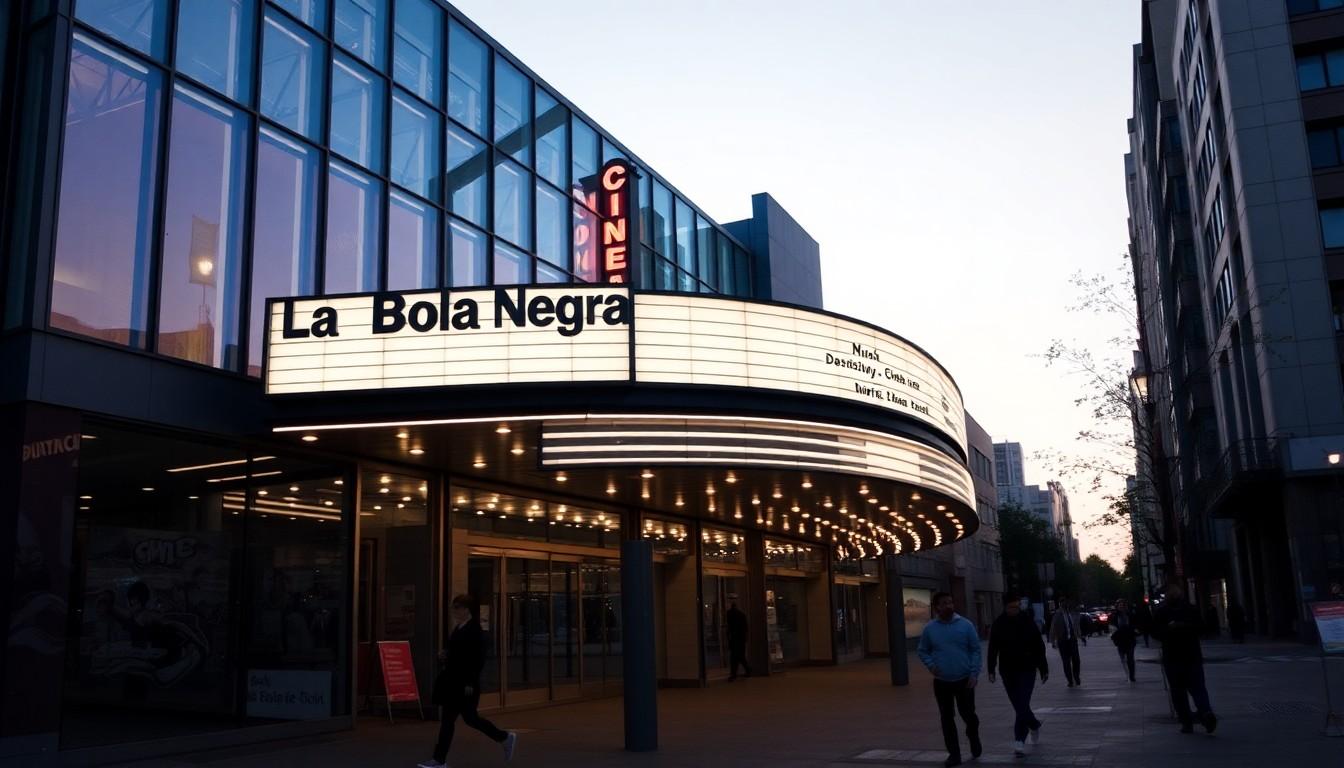
Viewers are discovering why Guitarricadelfuente is one of the most talked-about new faces in queer entertainment. With his acting debut in Netflix’s La Bola Negra, the Spanish singer-songwriter is moving from music into a bold, politically charged film that’s already drawing international attention.
Essential Takeaways
- A major screen debut: Guitarricadelfuente takes a leading role in La Bola Negra, directed by Los Javis.
- A queer Spanish story: The film explores desire, identity and family across different historical periods.
- Netflix is backing it heavily: The platform has placed the rising star at the centre of its promotional campaign.
- A crossover moment: His move into acting could introduce his music to a much wider global audience.
- Worth watching for: Expect striking visuals, emotional tension and the theatrical flair associated with Los Javis.
Guitarricadelfuente steps into the spotlight
Guitarricadelfuente has already built a devoted following through his atmospheric music, but La Bola Negra gives audiences a different way into his world. On screen, he brings a soft-edged intensity that feels made for a story where romance, shame and self-discovery sit uncomfortably close together.
Netflix’s Tudum describes the project as a major creative leap for the performer, whose career has until now been rooted primarily in songwriting and live performance. That shift matters because he isn’t arriving as a conventional pop star cameo. He’s being presented as one of the film’s emotional anchors.
There’s something pleasingly unexpected about the timing. Just as his music is reaching a broader audience, the film gives international viewers a reason to learn his name properly, rather than treating him as simply another emerging Spanish artist.
What makes La Bola Negra different?
La Bola Negra comes from Los Javis, the filmmaking duo behind some of Spain’s most distinctive recent LGBTQ+ projects. Their work tends to combine heightened style with vulnerable characters, and the new film appears to follow that same path, pairing lavish period detail with questions that remain painfully current.
Netflix’s official material places the story across multiple eras, giving the film room to examine how queer lives have been shaped by social pressure, family expectations and changing ideas of freedom. It’s a broad canvas, but the emotional details are likely to be the ones that stay with viewers.
The title itself suggests darkness and mystery, yet the film’s appeal seems to lie in its human scale. Behind the drama and visual polish are people trying to understand what they want, what they fear and whether there’s a place for them in the world.
Why the casting feels like a smart move
Casting a musician in a demanding dramatic role can be risky. Some performers bring natural charisma but struggle with quieter scenes, while others disappear behind the character. Guitarricadelfuente appears to offer a useful middle ground: he has the presence of a performer, but his music also suggests a reflective, emotionally open sensibility.
Netflix’s Tudum profile frames the project as a surprising career pivot, which is precisely why it’s attracting attention. Audiences are often curious when a familiar creative figure crosses disciplines, particularly when the new role feels connected to their existing work rather than bolted on for publicity.
For fans, the appeal is obvious. They get to see a favourite artist take a creative risk. For newcomers, the film could work as an introduction to both his acting and his music, a particularly powerful combination when the performance carries the same melancholy charge as a memorable song.
A wider moment for queer Spanish storytelling
The film arrives during a period when LGBTQ+ stories are travelling more easily across borders. Streaming platforms have made it possible for Spanish-language films and series to find viewers far beyond their original markets, while audiences are increasingly willing to follow performers between music, film and television.
Netflix’s official pages highlight the film’s ensemble and its connection to Spain’s wider creative scene. That context is important because La Bola Negra doesn’t appear to be selling queerness as a novelty. Instead, it treats queer history and desire as central dramatic material, with all the messiness that implies.
That could make the film especially significant for younger viewers. Representation feels most convincing when characters aren’t reduced to symbols or lessons. They can be romantic, selfish, frightened, funny and complicated, all at once.
What to expect from the Netflix release
The official Netflix listings and promotional coverage point to a film designed for atmosphere as much as plot. Viewers can expect a polished production, emotionally charged performances and the kind of visual confidence that rewards watching on the biggest screen available.
It’s also worth approaching the film with an open mind about Guitarricadelfuente’s performance. This isn’t simply an extension of a music video, and the most interesting moments may be the quiet ones, where he has to communicate uncertainty without the protective distance of a stage.
If La Bola Negra lands as strongly as its campaign suggests, it could establish him as more than a singer making an adventurous detour. It might be the beginning of a genuinely two-track career, and frankly, the entertainment world could use more artists willing to take that sort of leap.
Guitarricadelfuente’s La Bola Negra debut could be the start of something much bigger than a one-off acting role.
Source Reference Map
Story idea inspired by: [1]
Sources by paragraph:
- Paragraph 1: [4], [6]
- Paragraph 2: [5], [6]
- Paragraph 3: [4], [7]
- Paragraph 4: [5], [7]
- Paragraph 5: [4], [5]
- Paragraph 6: [4], [7]
- Paragraph 7: [6], [7]
- Paragraph 8: [5], [6]
- Paragraph 9: [4], [7]
- Paragraph 10: [3], [5]
- Paragraph 11: [3], [4]
- Paragraph 12: [6], [7]
- Paragraph 13: [3], [5]
- Paragraph 14: [4], [6]
- Paragraph 15: [3], [7]
- Paragraph 16: [5], [6]
- Paragraph 17: [4], [7]
- Paragraph 18: [3], [5]
- Paragraph 19: [4], [6]
- Paragraph 20: [5], [7]