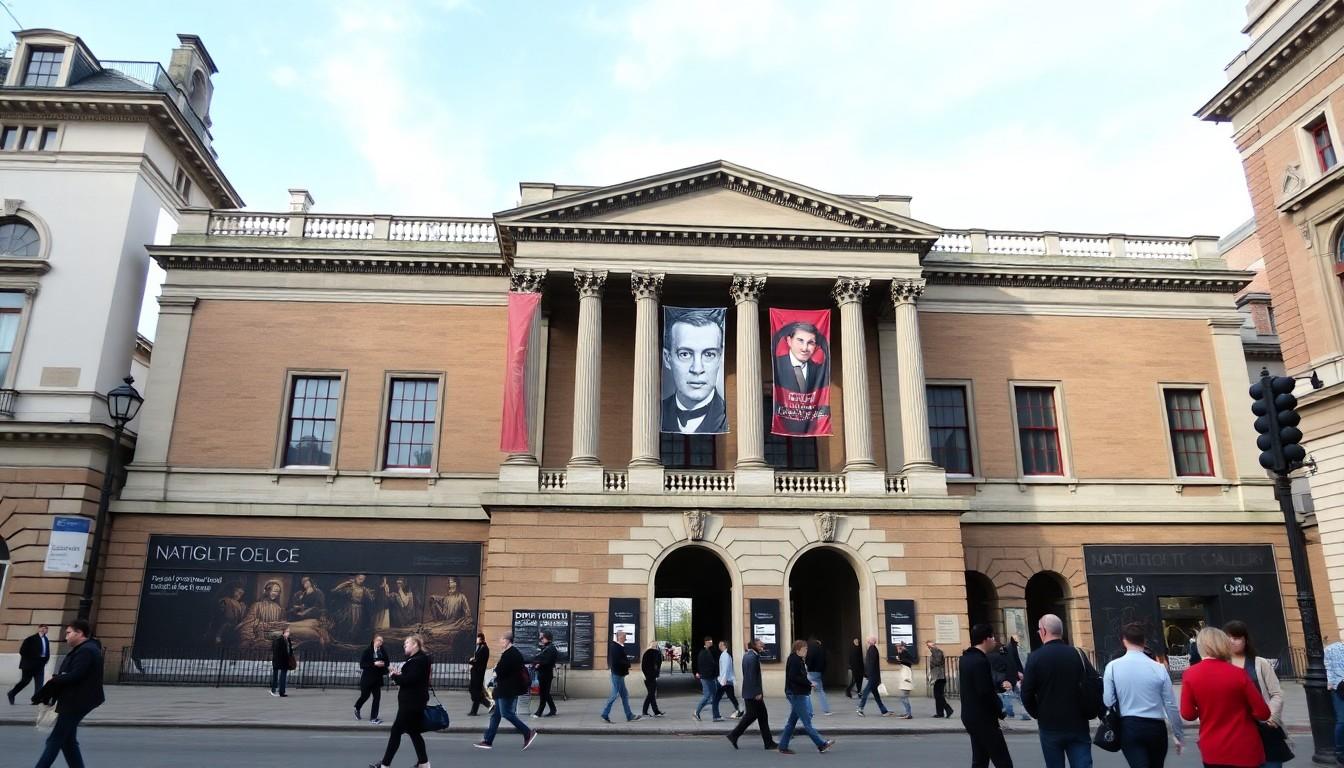
Visitors are stepping into Tim Walker’s Fairyland: Love and Legends at London’s National Portrait Gallery, where fantastical photography meets queer history, fashion and performance. The exhibition turns portraiture into a vivid, dreamlike celebration, offering art lovers and curious first-timers a moving reason to spend an afternoon with Walker’s gloriously theatrical imagination.
Essential Takeaways
- A major London exhibition: Fairyland: Love and Legends is presented at the National Portrait Gallery.
- Fantasy meets identity: Walker’s photographs use fairytale imagery to explore queer culture, self-expression and collective memory.
- Expect theatrical portraits: The show brings together fashion, celebrity, performance and carefully constructed fantasy.
- A career-spanning view: The exhibition places newer work alongside images reflecting Walker’s long visual journey.
- Take your time: The layered sets, costumes and references reward a slower, closer look.
Tim Walker’s fairytale world feels especially powerful now
The first impression is visual excess: elaborate styling, strange beauty and portraits that seem to have wandered out of a half-remembered dream. Yet beneath the feathers, mirrors and fantastical characters, Fairyland: Love and Legends carries a serious emotional charge.
The exhibition presents fantasy not as escapism alone, but as a way of making space for people and stories that have often been pushed to the margins. Designboom describes the project as a meditation on queer activism and portraiture, giving the spectacle a distinctly political undertow.
That balance is central to Walker’s appeal. His images can be soft, funny and almost childlike, then suddenly feel defiant. A ballroom-style pose or an extravagant costume becomes more than decoration; it becomes a declaration of presence.
From Vogue fantasy to a wider queer history
Walker’s influence has long been tied to fashion photography, but this exhibition makes clear that his work belongs to a broader cultural conversation. His staged portraits borrow from theatre, folklore and popular mythology, while the people in front of his camera bring those worlds into the present.
The National Portrait Gallery’s exhibition information places the show within Walker’s continuing interest in legends, characters and imaginative storytelling. That framing helps explain why the pictures feel connected, even when their subjects and visual languages vary wildly.
There’s also a welcome sense of generosity. Rather than presenting queer identity as a single experience, the exhibition opens out into many forms of expression, from glamorous and polished to playful, camp and deliberately eccentric. It’s history with glitter on it, but the glitter doesn’t hide the meaning.
Why these portraits look so unlike ordinary celebrity photography
Walker’s portraits rarely settle for a plain backdrop and a well-known face. Instead, his subjects are absorbed into a whole visual universe, surrounded by props, costumes, colour and art direction that can be as memorable as the sitter.
The result feels closer to a small film still or a stage production than a conventional magazine portrait. Even when the image is meticulously controlled, it retains a sense of mischief. You can almost imagine the set creaking, the fabric rustling and somebody just out of frame trying to keep an oversized prop upright.
That theatrical quality also changes how viewers look at celebrity. Familiar figures appear less fixed and more transformable, becoming characters within a shared mythology. It’s a useful reminder that portraiture isn’t only about recording what someone looks like; it can suggest who they might become.
What to look for during your visit
Start with the overall mood, then return to individual details. Walker’s photographs often contain tiny visual jokes, unexpected textures and references that reveal themselves only after the initial rush of colour has settled.
The exhibition is particularly rewarding for visitors interested in fashion photography, set design or styling. Look at how silhouettes, materials and gestures work together. A veil, jewel, painted surface or theatrical pose may carry as much narrative weight as the face itself.
If you’re visiting with someone else, compare the image that catches each of you first. One person may be drawn to a dramatic portrait, while another notices a quieter expression or an odd little object in the background. That disagreement is part of the fun.
A timely celebration of visibility
The exhibition’s emotional force comes from its timing as much as its artistry. The National Portrait Gallery describes Fairyland: Love and Legends as a major presentation of Walker’s work, while Designboom highlights its relationship to decades of queer activism and representation.
That combination gives the show a sense of occasion. It isn’t simply a collection of beautiful photographs; it’s an argument for visibility, imagination and the right to appear in public life on your own terms.
For many visitors, the most affecting moments may be the least bombastic ones: two people meeting each other’s gaze, a pose that feels tender rather than performative, or a character standing confidently in a world built around them. Sometimes the fairytale matters because it lets real life be seen more clearly.
Fairyland: Love and Legends is a reminder that portraiture can be extravagant, political and deeply human at the same time.
Source Reference Map
Story idea inspired by: [1]
Sources by paragraph:
- Paragraph 1: [2], [3]
- Paragraph 2: [5], [6]
- Paragraph 3: [3], [4]
- Paragraph 4: [5], [7]
- Paragraph 5: [2], [3]
- Paragraph 6: [4], [6]
- Paragraph 7: [5], [7]
- Paragraph 8: [2], [3]
- Paragraph 9: [4], [6]
- Paragraph 10: [5], [7]
- Paragraph 11: [2], [4]
- Paragraph 12: [3], [5]
- Paragraph 13: [6], [7]
- Paragraph 14: [2], [3]
- Paragraph 15: [4], [5]
- Paragraph 16: [6], [7]
- Paragraph 17: [2], [5]