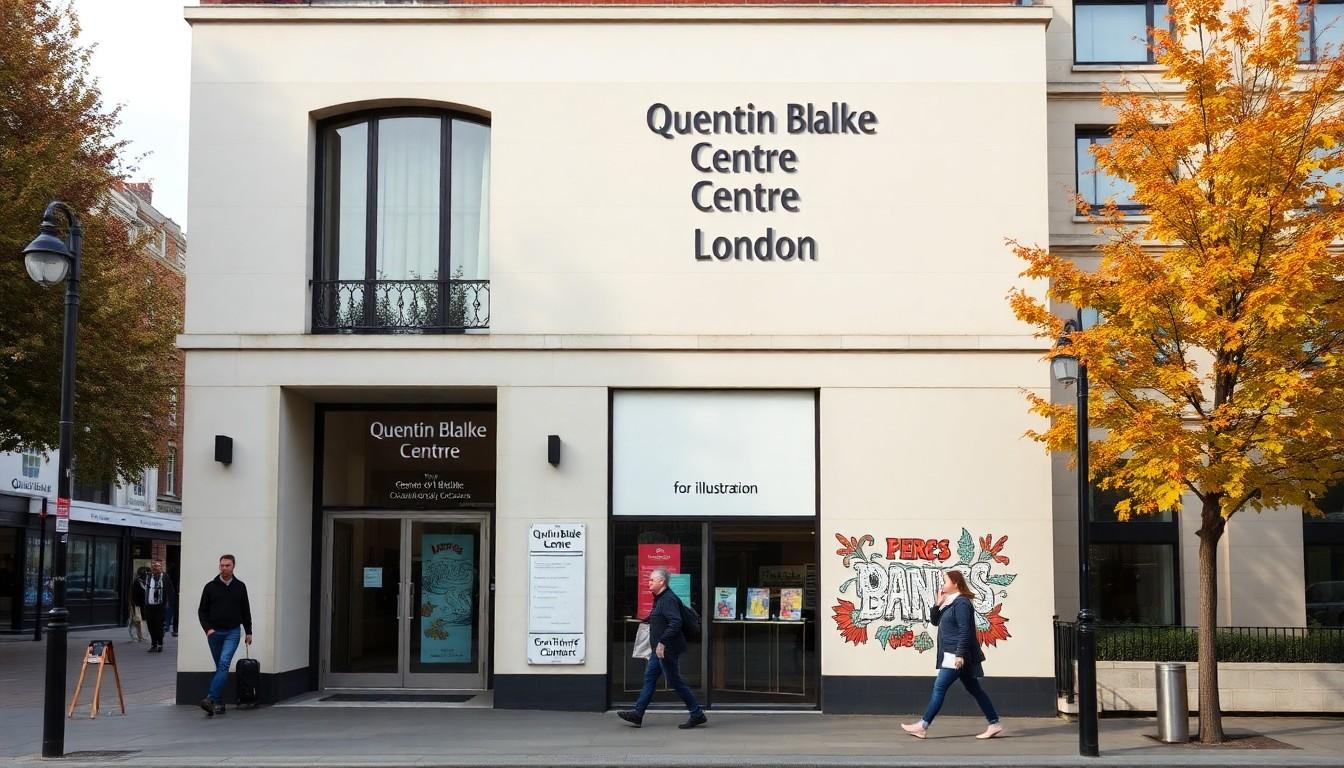
Visitors to London’s Quentin Blake Centre for Illustration have one final week to explore Queer as Comics, an ambitious exhibition tracing LGBTQIA+ storytelling from the 1940s to today. With talks, a documentary screening and a free Halloween comic fair, the closing programme offers plenty for readers, creators and curious newcomers.
Essential Takeaways
- Final viewing date: Queer as Comics closes on 1 November 2026.
- Halloween highlight: The free late-night comic fair runs on 31 October, with creators, live drawing, snacks and comic-making activities.
- Conversation worth catching: Intersecting Identities explores Asian diasporic and queer representation in sequential art.
- Film and discussion: No Straight Lines is followed by an online Q&A with producer Justin Hall.
- Practical detail: The Quentin Blake Centre is in Clerkenwell, London, and its exhibitions, gardens, cafe and shop make it easy to turn a visit into an afternoon out.
A final chance to see queer comics’ bigger story
Queer as Comics is more than a display of striking pages and memorable characters. The exhibition positions comics as a record of lives, arguments and communities that mainstream culture often ignored, with material spanning strips, graphic novels, zines and self-published work.
The Quentin Blake Centre says the show includes pieces rarely or never exhibited before, alongside work by creators including Tove Jansson, Kate Charlesworth, Rupert Kinnard, David Shenton, Alison Bechdel and Howard Cruse. It’s a broad, sometimes challenging survey, but that range is precisely what gives the exhibition its energy. (Sources: Quentin Blake Centre; Broken Frontier.)
There are content warnings for references to discrimination, violence, dysphoria, mental illness and sex. That honesty matters, particularly for an exhibition dealing with censorship, oppression and the ways artists have reclaimed control of their own stories. (Sources: Quentin Blake Centre; The Daily Cartoonist.)
Halloween gets a comic-book makeover
The liveliest event is likely to be Halloween Late: Comic Fair, which runs from 5.30pm on 31 October. Entry is free, and visitors can browse comics, graphic novels and small-press work from LGBTQIA+ creators while enjoying live projected drawing and hands-on comic-making activities.
The centre’s cafe will serve drinks and snacks, giving the evening a relaxed, social feel rather than the hush of a conventional gallery visit. Costumes are encouraged, too, so expect a little more theatrical flair than usual among the tables of illustrated stories. (Sources: Quentin Blake Centre; Broken Frontier.)
It’s a smart way to support independent artists directly. Readers can discover new work, ask creators about their process and leave with something more personal than a standard exhibition souvenir. For anyone looking for an alternative Halloween plan in London, this has a pleasingly low-pressure charm.
Identity takes centre stage in a special panel
On 28 October, Intersecting Identities will examine how Asian diasporic experience and queerness appear in comics and graphic novels. The discussion brings together Shazleen Khan, Adeline Kon and Dominique Duong, with Khan also marking the launch of the second volume of her BUUZA!! trilogy.
The panel is aimed at illustrators, students, comic-makers and readers interested in representation, but the subject should appeal well beyond those groups. Comics can make complex identity feel immediate, placing cultural memory, family expectations and personal discovery in the same visual space. (Sources: Quentin Blake Centre; Broken Frontier.)
A question-and-answer session and signing follow the conversation, with books and small-press titles available. So if you prefer events where the audience can continue the discussion rather than simply listen and leave, this is one to prioritise.
The closing screening looks back at pioneers
The exhibition’s final-day programme turns to documentary. No Straight Lines: The Rise of Queer Comics explores the work and lives of five influential LGBTQ cartoonists: Alison Bechdel, Jennifer Camper, Howard Cruse, Rupert Kinnard and Mary Wings.
Their stories cover censorship, AIDS activism, coming out, same-sex marriage, race, gender and disability. The film also shows how queer cartoonists built spaces for honest storytelling at a time when popular culture offered very few, often pushing back against institutional and social pressure. (Sources: The Daily Cartoonist; Broken Frontier.)
Producer Justin Hall will join the audience online from San Francisco for a post-screening discussion and Q&A. That extra context should make the afternoon particularly useful for visitors interested in comics history, documentary-making or the practical realities of creating work outside the mainstream.
Plan your visit around the full experience
Adults’ tickets for Queer as Comics start at £15, while members go free. The ticket includes access to the centre’s exhibitions, and the venue also offers public gardens, an illustration library, a cafe and a shop filled with distinctive illustrated gifts. (Sources: Quentin Blake Centre; The Daily Cartoonist.)
The centre is at 1 Myddelton Passage in Clerkenwell and opens Wednesday to Sunday, from 10am to 5pm. For the Halloween fair, book ahead if possible, especially if you want to combine the event with a final look around the exhibition.
A useful approach is to visit the galleries first, then return for the evening programme or allow time afterwards to browse the shop. The exhibition’s themes can be weighty, but the surrounding venue offers a softer landing: greenery, coffee and the quiet pleasure of looking closely at drawings.
Queer as Comics closes with a programme that feels less like a curtain drop and more like a handover to the creators still shaping the medium. It’s a timely reminder that comics aren’t just entertainment; they’re also memory, protest and community on the page.
Explore the final events while the exhibition is still in London.
Source Reference Map
Story idea inspired by: [1]
Sources by paragraph:
- Paragraph 1: [2], [3]
- Paragraph 2: [2], [6]
- Paragraph 3: [2], [3]
- Paragraph 4: [4], [5]
- Paragraph 5: [4], [5]
- Paragraph 6: [2], [3]
- Paragraph 7: [2], [5]
- Paragraph 8: [2], [3]
- Paragraph 9: [6], [5]
- Paragraph 10: [6], [3]
- Paragraph 11: [2], [6]
- Paragraph 12: [2], [7]
- Paragraph 13: [2], [6]
- Paragraph 14: [2], [4]
- Paragraph 15: [3], [5]