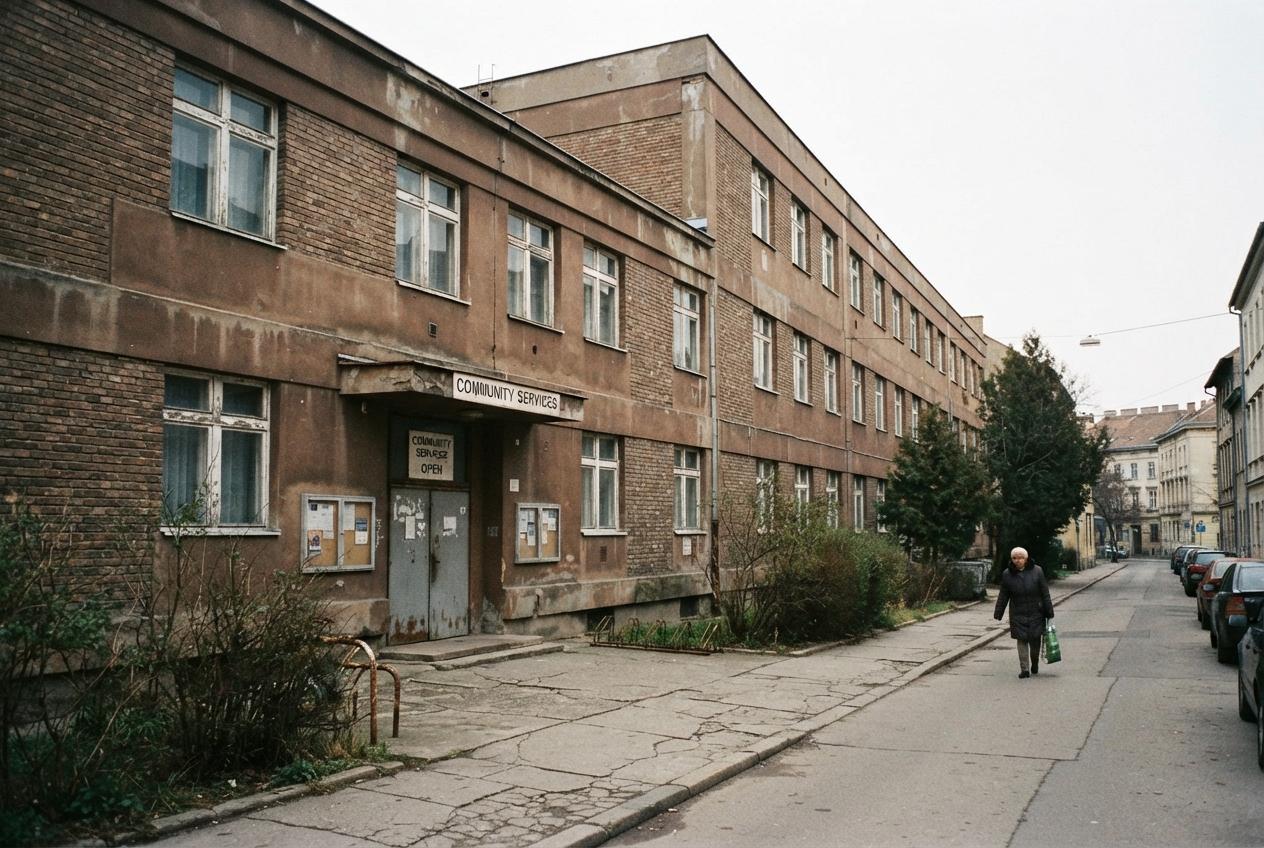
Readers are discovering The Refugee Chronicles, Evgeny Shtorn's vivid account of life as an LGBTQ+ refugee in Ireland. Blending sharp humour, uneasy encounters and intimate observation, the book turns the routines of direct provision into compelling literary testimony. Its new English translation also gives a wider audience a closer look at displacement, identity and survival.
Essential Takeaways
- A hybrid life story: The Refugee Chronicles draws on Shtorn's experiences as a Russian LGBTQ+ activist seeking safety in Ireland.
- A revealing setting: The book examines direct provision, including shared accommodation, restricted independence and bureaucratic uncertainty.
- A distinctive voice: Humour, attraction and discomfort sit alongside fear, creating a story that feels startlingly immediate.
- A significant translation: Alexandra Novitskaya's English version brings the work to readers beyond its original Russian-language audience.
- A timely publication: The book arrives as LGBTQ+ writing faces growing censorship and political pressure in Russia.
A refugee story told from the inside
The strongest feature of The Refugee Chronicles is its closeness. Shtorn doesn't describe displacement from a safe distance; he places the reader inside a late-night walk, a cramped laundry room and a shared room where every glance suddenly matters.
That intimacy reflects Shtorn's own route from Russia to Ireland. According to biographical accounts published by Wikipedia and GCN, his activism and research on LGBTQ+ rights made remaining in Russia increasingly dangerous, eventually leading him to seek international protection. The result is a book shaped by both personal vulnerability and a trained observer's eye. [2], [3]
The tone is often funny, even when the circumstances aren't. A night involving wine, gin and an improvised conversation between residents of an asylum accommodation centre gradually becomes a tense examination of sexuality, masculinity and trust. That tonal shift is one reason the story lingers.
Direct provision becomes the book's uneasy backdrop
For readers unfamiliar with Ireland's direct provision system, the book offers an unusually personal view. As GCN has reported in its coverage of Shtorn, asylum accommodation could mean dormitory-style living, limited financial support, no immediate right to work and a daily loss of privacy. [3], [6]
Those conditions are more than background detail. They shape the narrator's relationships, his sense of time and even the way he moves through the country. A walk back to accommodation after midnight isn't simply a journey; it's a reminder of distance, dependence and the strange social world created when people from very different places are housed together.
The setting also complicates easy ideas about solidarity. Residents may share uncertainty, but they don't automatically share language, culture or assumptions about sexuality. Shtorn captures that friction with a mixture of curiosity and apprehension, allowing awkwardness to remain awkward rather than tidying it into a lesson.
Humour, desire and danger share the same room
The excerpt's most striking quality is its refusal to separate the comic from the threatening. The narrator can admire the athletic swagger of his neighbours, teach them rude words and enjoy their company, while also recognising that a conversation about relationships could change the atmosphere in seconds.
That ambiguity gives the writing its pulse. The encounter with Otzen isn't presented as a simple clash between victim and aggressor. Instead, the two men test one another, each trying to understand what the other knows and what might be said aloud. GCN's wider coverage of Shtorn's work similarly places personal experience alongside questions of identity, migration and political repression. [6], [7]
It's a difficult balance, but an important one. Refugees aren't symbols without appetites, jokes or contradictions. Shtorn's narrator remains observant, flirtatious, vain, frightened and occasionally reckless. That messiness makes the account feel human rather than polished for easy consumption.
Why the translation matters
The Refugee Chronicles first appeared in Russian before being reworked and translated for an English-language readership. Irish Interest lists the 2026 Skein Press edition, translated by Alexandra Novitskaya, as a literary work rooted in Shtorn's experiences of exile and asylum. [4]
Translation matters here because the book's subject is already concerned with being misunderstood. Novitskaya's task isn't merely to carry information from one language to another; it also involves preserving the narrator's comic timing, social unease and sudden changes in emotional temperature.
There are small pleasures in the prose, from the sensory detail of alcohol and smoke to the absurdity of multilingual swearing lessons. Those details help the book travel. You don't need specialist knowledge of Russian politics or Irish asylum policy to recognise the basic human experience of trying to read a room when you don't know the rules.
A sharp choice for readers seeking political memoir
This is a strong recommendation for readers who enjoy literary memoir, queer writing, refugee narratives and translated fiction that refuses to behave like a policy report. The book's appeal lies in its scale: huge political forces are visible, but they arrive through beds, buses, laundry rooms, phone screens and uncomfortable conversations.
Retail listings from Irish Interest and CDON identify the book as a 2026 publication from Skein Press, making it a useful addition to current reading lists focused on LGBTQ+ literature and migration. [4], [5] Readers who buy it from an independent bookseller or review it afterwards can also help support small-press publishing, where unusual international voices often find their first English-language audience.
The most moving aspect may be the narrator's determination to remain fully himself while institutions and circumstances keep reducing him to a case number. That insistence gives The Refugee Chronicles its quiet force, long after the jokes have faded.
Read it for the story, stay for the uncomfortable questions.
Source Reference Map
Story idea inspired by: [1]
Sources by paragraph: