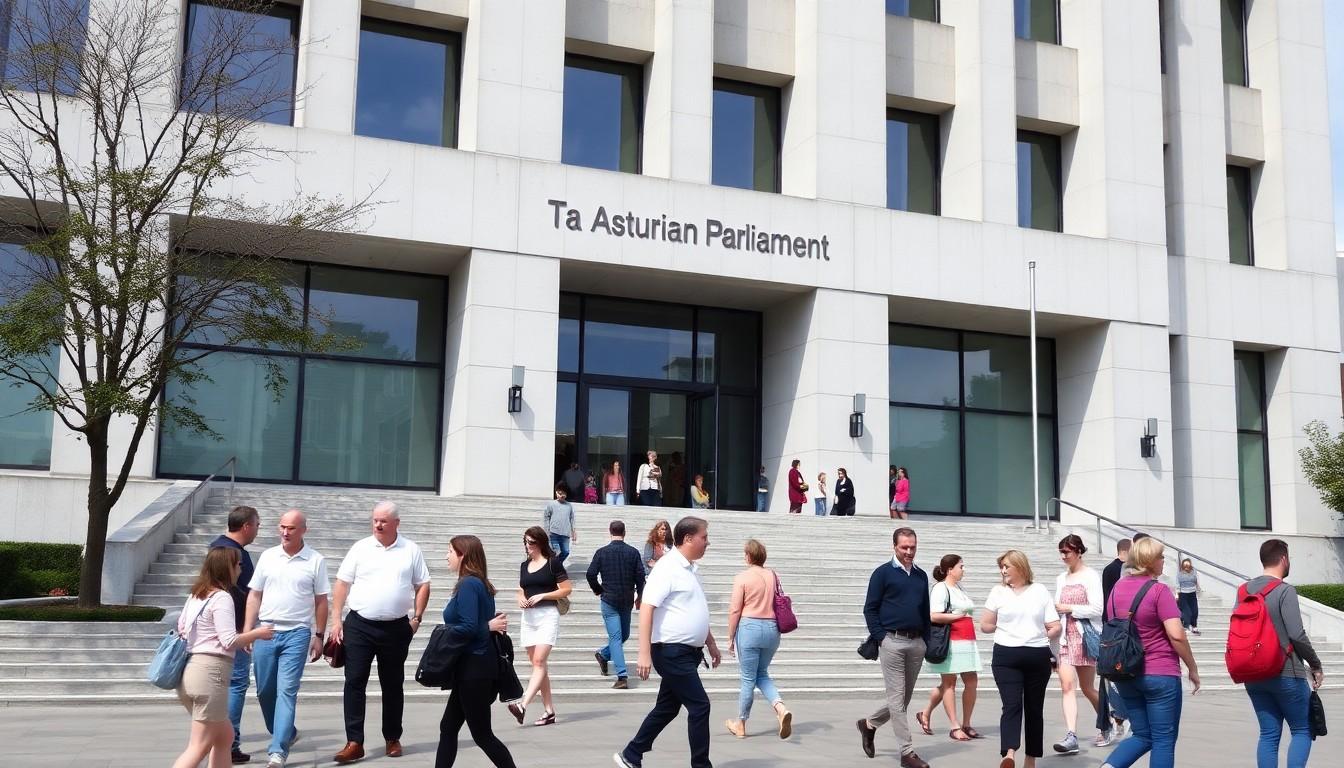
Asturias has approved a long-awaited LGTBI law, giving people across the principality new protections in education, healthcare and public life. The measure arrives after years of campaigning and leaves Castilla y Leon as Spain's only autonomous community without dedicated regional LGTBI or trans legislation, sharpening the debate over equal rights and implementation.
Essential Takeaways
- Broad parliamentary backing: Every group supported the law except Vox's four deputies.
- Protection against discrimination: The legislation creates a specific framework and penalties for unequal treatment based on sexual or gender diversity.
- Schools must act: Public and state-funded schools will need anti-bullying procedures and must respect pupils' chosen names and identities.
- Conversion practices banned: So-called conversion therapies are prohibited in Asturias's public and publicly funded health networks.
- Rural communities included: Measures aim to reduce "sexilio", when people leave their home area because of their sexual orientation or gender identity.
Asturias finally fills a long-standing legal gap
The vote closes a seven-year legislative journey and brings Asturias into line with the rest of Spain's autonomous communities, bar one. Regional broadcaster RTPA reported that the final approval followed earlier unanimous progress through the parliamentary process, although Vox was absent from one key vote.
That broad support matters politically, but it also reflects years of pressure from LGTBI organisations. Xega, one of Asturias's leading groups, said the region was no longer an anomaly, while trade union UGT has repeatedly called for regional laws to be backed by proper guarantees for enforcement.
For many people, the change is less about a dramatic new announcement than having clear rules in place. A law can sound dry on paper, but its impact is felt in quieter moments, such as whether a school knows how to respond to harassment or whether a public service treats someone with respect.
What the new LGTBI law changes
The legislation establishes protection against discrimination linked to sexual orientation, sexual identity and gender expression, alongside its own sanctions system. It also prohibits conversion practices in Asturias's public and publicly funded services, a provision highlighted in coverage from Europa Press and La Voz de Asturias.
Education is another central area. Schools must create protocols to address LGTBI-phobic bullying, while public and state-funded centres will be expected to respect a pupil's chosen name and identity. The law also includes training for public-sector staff, an important detail if the rights it sets out are to work beyond the statute book.
The measure creates a regional LGTBI participation council and adds equality criteria to public grants. Organisations seeking funding may need plans or strategies showing how they'll prevent discrimination, making inclusion part of the practical machinery of public spending.
Why rural Asturias is part of the story
Asturias isn't only its cities. The law specifically addresses rural areas and the risk of "sexilio", the departure of LGTBI people from their communities because they feel isolated or unsafe. That focus gives the legislation a distinctly local dimension, particularly in a region where distance and limited services can make support harder to reach.
RTPA's reporting on the law's approval underlines the regional significance of the measure, while UGT's position points to a wider concern: rights need to be available in practice, not simply recognised in principle. A policy that works in Oviedo but feels invisible in smaller towns would fall short of its promise.
The challenge will be delivery. That means trained staff, accessible advice, reliable complaints routes and enough money to reach villages as well as larger population centres. In other words, the less glamorous details may decide whether the law changes daily life.
A national milestone, but not the end of the debate
With Asturias included, Spain now has 20 regional laws covering LGTBI and trans rights, according to the reporting around the parliamentary approval. Castilla y Leon remains the only autonomous community without its own dedicated framework, after plans for legislation stalled during coalition negotiations involving the PP and Vox.
The contrast has made Asturias's vote especially prominent. La Voz de Asturias and Europa Press both reported that the PP ultimately backed the measure, while Vox opposed it and described it as indoctrination. That split shows how regional rights legislation remains a political flashpoint, even when most parties agree on the final text.
There are also concerns about attempts to weaken existing protections elsewhere. Recent disputes in Madrid and Valencia, as well as proposals promoted by Vox in several regional parliaments, suggest that approval is not necessarily the final chapter. Laws need defending, reviewing and properly funded if their protections are to remain meaningful.
Implementation will decide whether the law delivers
The most useful test now is straightforward: can people understand their rights, access support and see institutions respond when those rights are breached? Xega has warned that the law's success will depend on sufficient resources, rigorous implementation and coverage across every town and city in Asturias.
That is a familiar lesson in public policy. A clear legal ban is valuable, but it needs staff who know what to do, schools that have practical guidance and services that don't make people repeat their story at every turn. The human difference can be as simple as being believed the first time.
Asturias has taken a significant step, but the next phase will be less ceremonial and more demanding. The law now has to move from the regional parliament into classrooms, clinics, council offices and rural communities.
It's a landmark vote, but effective enforcement will be the real measure of progress.
Source Reference Map
Story idea inspired by: [1]
Sources by paragraph:
- Paragraph 1: [3], [4]
- Paragraph 2: [2], [5]
- Paragraph 3: [6], [7]
- Paragraph 4: [4], [7]
- Paragraph 5: [5], [6]
- Paragraph 6: [2], [4]
- Paragraph 7: [4], [5]
- Paragraph 8: [2], [3]
- Paragraph 9: [4], [7]
- Paragraph 10: [5], [7]
- Paragraph 11: [4], [6]
- Paragraph 12: [2], [3]
- Paragraph 13: [4], [5]
- Paragraph 14: [2], [4]
- Paragraph 15: [5], [6]
- Paragraph 16: [2], [4]