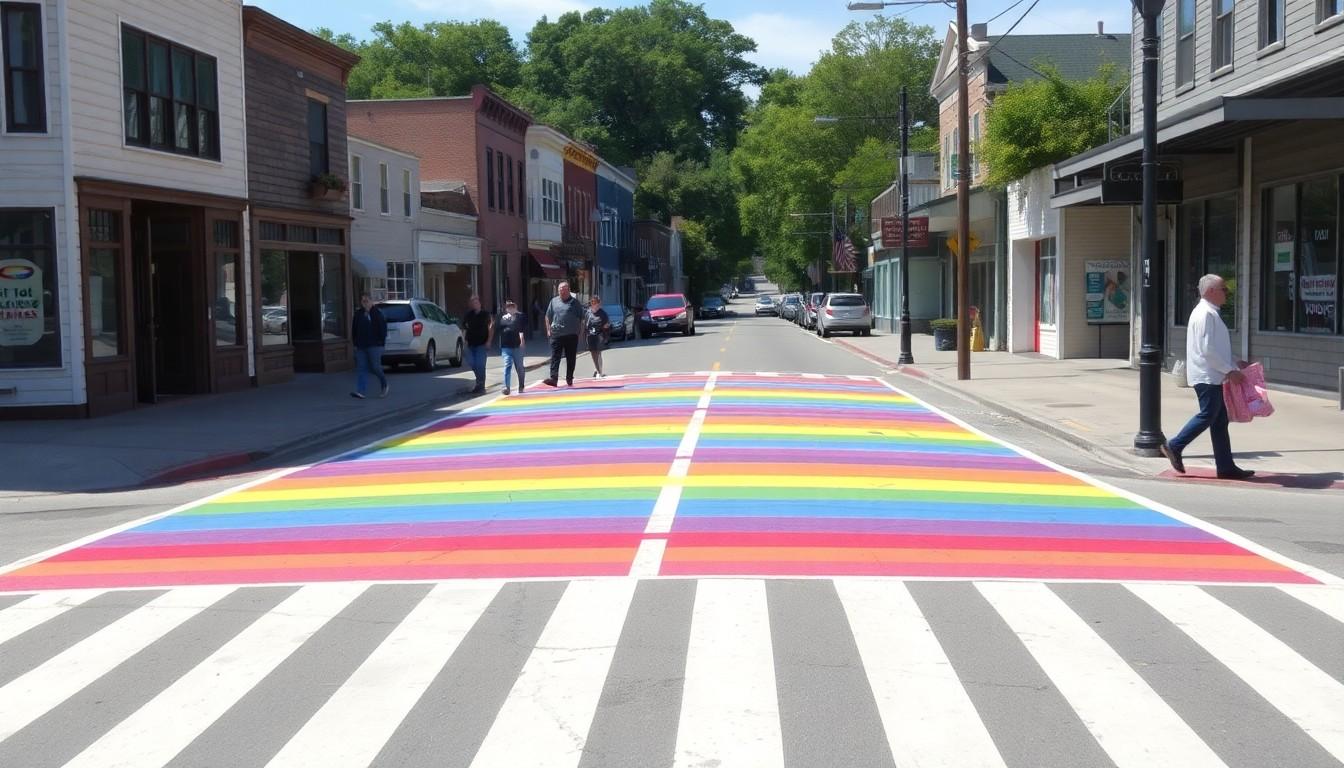
Residents in Swampscott, Massachusetts, are raising money to restore rainbow crosswalks recently painted over during roadway maintenance. The change has prompted an emotional local debate about visibility, town policy and what public spaces should say about LGBTQIA+ inclusion, while officials review how colourful markings are approved and maintained.
Essential Takeaways
- Two crossings were repainted: The rainbow designs were replaced with conventional black-and-white road markings.
- Residents have launched a fundraiser: A GoFundMe campaign is seeking $5,000 to restore the colourful crossings.
- The town calls it routine work: Officials say the repainting wasn't intended to signal any change in LGBTQIA+ support.
- Policy is under review: Swampscott plans to examine how privately funded roadway markings are approved and maintained.
- A public discussion is planned: Residents have been invited to share their views at a Select Board meeting.
Why the rainbow crosswalks mattered to residents
For many people in Swampscott, the painted crossings were more than decorative road markings. They offered a bright, visible sign that LGBTQIA+ residents, families and visitors were welcome in the seaside Massachusetts community.
That symbolic value is at the heart of the reaction. NBC Boston reported that residents were upset by how quickly the rainbow designs disappeared, with some describing the change as a loss of visibility rather than a simple maintenance job.
Public spaces often carry messages without saying a word. A rainbow crossing is still a place to cross the road, of course, but the colour adds a layer of recognition that a plain black-and-white stripe doesn't provide.
The town says it was routine maintenance
Swampscott officials said the two crossings were restriped as part of scheduled maintenance affecting selected roadway markings. The town also stressed that the rainbow paint had originally been donated and applied outside its normal roadwork programme.
Boston 25 News reported that officials maintained their commitment to an inclusive community, even as the repainting prompted criticism. That distinction, however, hasn't satisfied everyone, because the practical explanation and the emotional response are speaking slightly different languages.
For residents, the issue isn't only who paid for the paint or when the markings were due for renewal. It's also about whether a highly visible community symbol should be treated like an ordinary line on the road.
A fundraiser is trying to bring the colours back
A GoFundMe campaign has been set up to pay for restoration, with a $5,000 target. The appeal says the crosswalks helped people feel that the town supported and welcomed them, and that covering them removed an important expression of that support.
According to the fundraiser, the project is community-led rather than a town-financed initiative. That detail reflects a wider pattern in local civic life, where residents often step in to fund murals, gardens, signs and other public-facing projects they feel add character and meaning.
WCVB reported on the backlash from residents, highlighting the strength of feeling around the removal. Whether the fundraiser reaches its goal may now depend not only on donations, but also on what the town's policy review decides.
How much did the original project cost?
Local reporting has put the cost of repainting nine of Swampscott's ten pride crosswalks last year at just under $8,000. One crossing was estimated to cost the town around $800 to repaint at the time, according to reporting cited by Boston.com.
Those figures help explain why residents have turned to crowdfunding, but they also show why the dispute has become bigger than a single maintenance bill. Even a relatively modest public-art or streetscape project can become a recurring expense when weather, traffic and roadwork take their toll.
The question now is whether future installations should have a clear maintenance plan from the start. A rainbow crossing that looks vivid and cheerful when freshly painted can become a source of frustration if nobody knows who is responsible for renewing it.
What happens next in Swampscott?
Town officials are reviewing the policies and procedures governing roadway markings, including projects supported through private donations. They have also invited residents to participate in a discussion at the Select Board's 21 October meeting.
Mass Daily News reported that the repainting has fuelled wider debate about how the town handles its pride markings. A transparent process could help settle practical questions, such as approval, ownership, upkeep and replacement, while giving residents a clearer say before similar projects go ahead.
For now, the disagreement remains a reminder that local symbols can carry surprisingly heavy meaning. The paint may be thin, but the feelings beneath it are anything but.
A clear maintenance policy could help Swampscott keep both its roads and its welcome signs in good shape.
Source Reference Map
Story idea inspired by: [1]
Sources by paragraph: