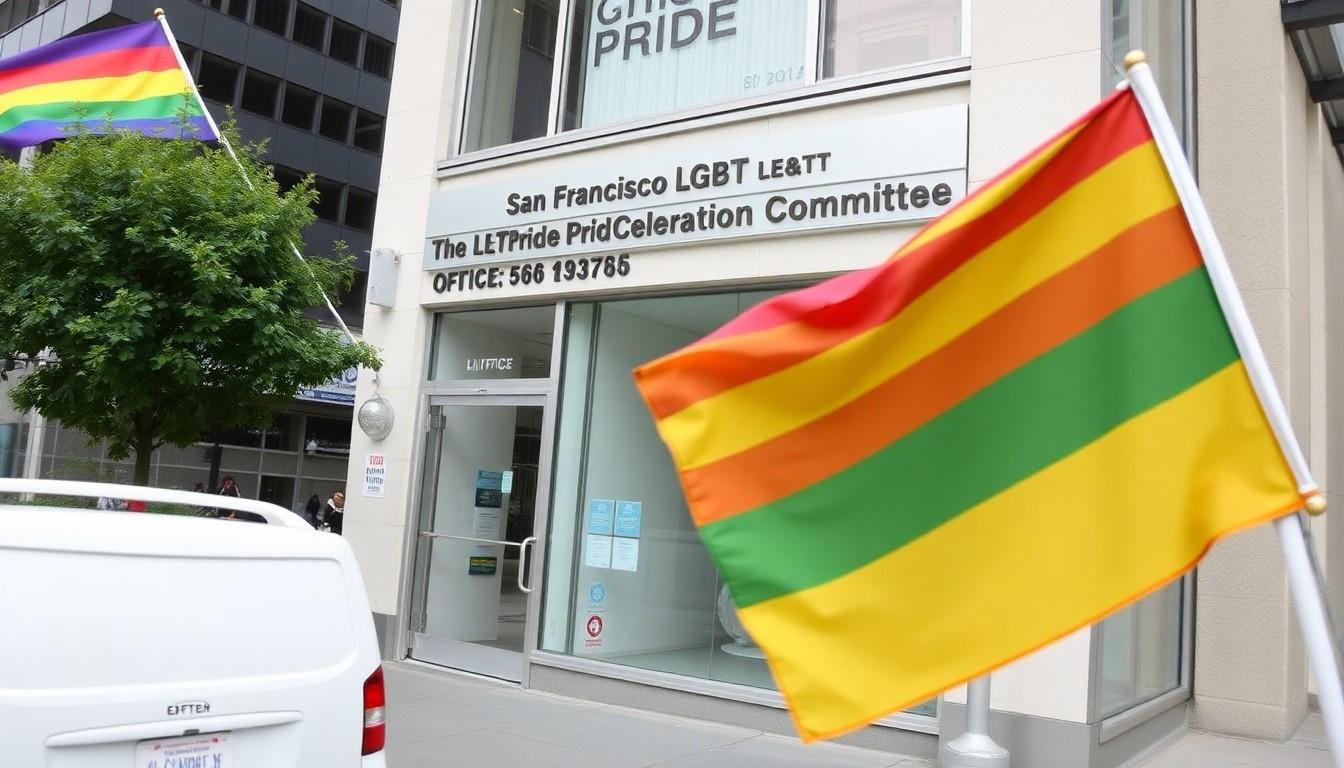
San Francisco Pride has welcomed Michelle Meow back as board president, bringing familiar leadership to an organisation balancing free public celebrations with rising costs. The appointment comes alongside a fresh fundraising push, a new slate of officers and wider questions about how Bay Area LGBTQ events can remain accessible, political and community-led.
Michelle Meow returns to a familiar Pride role
Michelle Meow has been chosen as president of the board overseeing the San Francisco LGBT Pride Celebration Committee, returning to a role she held from 2016 to 2018. The longtime host of The Michelle Meow Show brings both public visibility and previous experience at a moment when Pride is thinking beyond one weekend in June.
Joshua Smith, who previously served as president, has reached the end of his permitted term. The new leadership team includes Maceo Persson as vice president, Ronnie Jones as secretary and Orion Lam as treasurer, alongside a board representing lesbian, queer and transgender voices. The mix reflects the breadth of the communities San Francisco Pride serves. According to the San Francisco Bay Times, Bay Area LGBTQ leadership increasingly spans advocacy, civic life and cultural organising. [4]
A $500,000 appeal highlights the cost of free Pride
SF Pride says it has improved its financial performance from one year to the next, but keeping the main celebration free still requires substantial support. Attorney Anh Phong has pledged $100,000, while the organisation's online campaign has raised nearly $103,000 towards a $500,000 target.
That gap matters because a free event removes one of the most obvious ways organisers can recover costs. City support is expected to increase from 2027, but the organisation says it needs help now, particularly as it expands year-round work such as its Community Partners Program. Earlier reporting and arts coverage have also underlined how Pride has evolved from a parade into a large civic and cultural operation, with an increasingly complicated financial footprint. [5], [6]
For potential donors, the appeal is straightforward: contributions help protect public access while supporting grants and community activity outside the main festival. It isn't the flashiest part of Pride planning, but it may be the work that keeps the celebration connected to everyday life.
Why representation on the board matters
The new board includes transgender men and women, queer members, a paramedic, an educator and a representative from the Transgender District. That range of experience gives the organisation practical insight into issues that can otherwise get lost beneath flags, stages and headline acts.
It also speaks to a long-running debate about what Pride should be. Some attendees want a joyful, open celebration, while others expect a sharper political response to attacks on LGBTQ rights. The San Francisco Chronicle has previously reported on calls for Pride to retain a stronger political voice, showing that the tension isn't new. [6]
The challenge is making both sides feel welcome. A successful Pride can be festive without becoming hollow, and politically engaged without losing the warmth that brings people back each year.
The Dyke March moves into a new chapter
M Rocket is stepping down as project director of the San Francisco Dyke March after helping revive the event following its pandemic-era pause. During their tenure, the team raised more than $120,000, established a membership scheme, trademarked the name and created the first advisory committee elections.
The 2026 march also showed how quickly costs can reshape community traditions. Rather than hiring Mission Dolores Park for Pink Saturday, organisers held a rally near 18th and Dolores streets before the march, citing city fees and related expenses. Coverage of the event by the San Francisco Chronicle captured the march's continuing importance as both a celebration and a visible act of protest. [7]
Rocket's departure leaves an obvious question about succession, but the work completed so far gives the project a stronger base. For participants, the real test will be whether the march can preserve its grassroots energy while building a sustainable structure behind the scenes.
More Bay Area LGBTQ events are keeping the calendar busy
The region's LGBTQ calendar extends well beyond Pride weekend. BAYMEC's annual brunch in San Jose will bring together political candidates, community leaders and supporters from across San Mateo, Santa Clara, Santa Cruz and Monterey counties, with the theme "Progress Never Stops."
Meanwhile, the UCSF Alliance Health Project's Art for AIDS auction will raise money for mental health and wellness services for HIV-affected and LGBTQ community members. The online auction will feature more than 150 donated artworks, with an in-person launch offering a preview of selected pieces.
Together, these events show the ecosystem around Pride: elections, fundraising, art, health and direct community support. Pride may be the loudest moment, but the quieter work is what helps communities stay resilient throughout the year.
It's a busy season for Bay Area LGBTQ organising, and the next chapter will depend on both strong leadership and sustained community backing.
Source Reference Map
Story idea inspired by: [1]
Sources by paragraph: