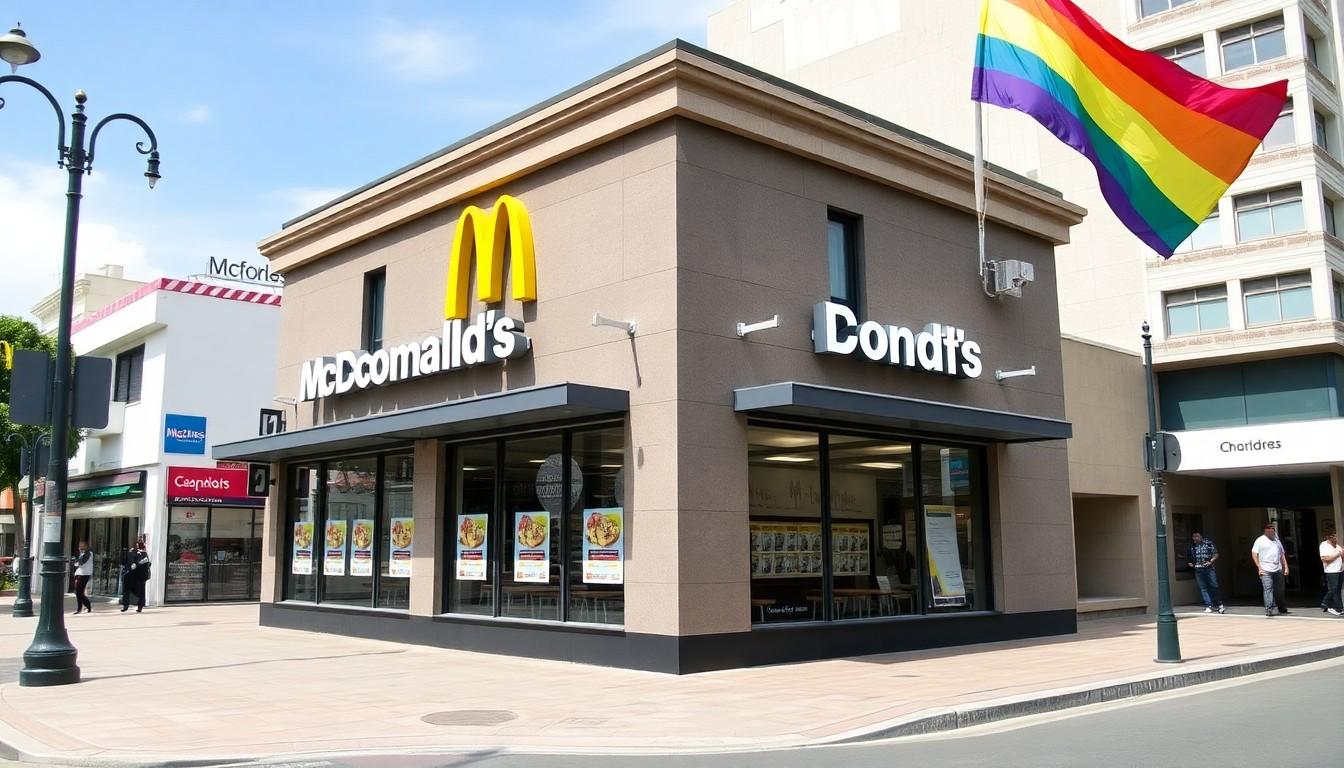
A video recorded at a McDonald's in Miraflores, Lima, has sparked concern after diners reported homophobic remarks and an apparent death threat. The incident matters because Peru's criminal law and local rules protect people from discrimination, while authorities must establish what happened, who was targeted and whether the restaurant responded appropriately.
Essential Takeaways
- Possible criminal conduct: Peru's Penal Code covers discrimination linked to sexual orientation and gender identity.
- Threats require separate scrutiny: An apparent threat may amount to coercion, depending on its target and purpose.
- Religious belief isn't a licence to threaten: Freedom of religion and expression must coexist with dignity, equality and personal safety.
- Miraflores has its own rules: Municipal regulations allow complaints, inspections and penalties where a business is responsible for discriminatory conduct.
- Evidence will be crucial: Video files, witness accounts, staff statements and security footage could shape any investigation.
A lunchtime confrontation has become a public test
A disturbing scene recorded inside a fast-food restaurant in Miraflores has put homophobic abuse and public safety back in the spotlight. According to La Mula, two diners, Reinaldo Rivas and Cristhian Palomino, reported being targeted while eating at the McDonald's near the Óvalo Gutiérrez. Witnesses later shared footage showing a man making an apparent throat-cutting gesture and speaking about killing someone.
The same recording appears to include hostile comments about gay people, framed through the speaker's religious beliefs. That combination matters. Offensive opinions and a possible threat aren't automatically the same legal issue, but when intimidation and discriminatory language appear together, investigators have several questions to answer.
The footage also reportedly shows restaurant workers intervening. For the customers involved, that response may have been a crucial moment of reassurance in an otherwise frightening setting. For authorities, it could help establish the sequence of events and whether the business took reasonable steps to protect those present.
What Peru's discrimination law says
Article 323 of Peru's Penal Code addresses discrimination and incitement to discrimination. It covers conduct that distinguishes, excludes, restricts or favours a person or group in a way that undermines their rights, including where the alleged reason is sexual orientation or gender identity.
The standard penalty can include two to three years in prison or community service. The law provides for a higher range, alongside disqualification, where aggravating circumstances apply, including physical or mental violence. Legal analysis reported by La Mula suggests that the alleged threat could be important when prosecutors assess whether the conduct went beyond offensive speech.
That doesn't mean a criminal conviction follows automatically. Prosecutors would need to establish who was targeted, whether the remarks related to a real or perceived sexual orientation, and whether the conduct actually restricted or damaged a legally protected right. Context, tone, proximity and the effect on the alleged victims could all matter.
A threat may be investigated separately
The alleged death threat deserves its own legal examination rather than being treated simply as part of the discriminatory language. Article 151 of the Penal Code covers coercion, where a person uses violence or threats to force someone to do something the law doesn't require, or prevents them from doing something it permits.
That distinction is practical. A frightening statement isn't necessarily coercion unless it was directed at a particular person and used to influence their conduct. Prosecutors would therefore need to determine who the speaker was addressing, what he wanted them to do or stop doing, and whether the gesture and words created a legally relevant threat.
The video could be an important starting point, but it won't answer every question. Original files, timestamps, witness testimony and the restaurant's internal records may help clarify whether the clip captures the full exchange or only part of it. Social media can bring attention to an incident quickly, but formal investigation still depends on verification.
Religious expression has limits where safety is concerned
Peru's Constitution protects equality before the law and rejects discrimination, while also recognising personal dignity as a fundamental principle. Freedom of religion and expression are protected too, but those rights don't provide a blanket defence for threatening, harassing or intimidating another person.
Someone may express a religious objection to certain conduct or identities. The legal concern begins when those views are accompanied by threats, targeted hostility or actions that undermine another person's freedom, dignity or safety. In other words, the issue isn't simply whether a belief sounds offensive. It's how that belief is expressed and what it does in the real world.
That balance is especially important in public places, where people shouldn't have to calculate whether an ordinary meal might turn into a confrontation. The strongest protection is not silence, but a clear line between protected opinion and conduct that may cause harm.
Miraflores can inspect the business, but responsibility isn't automatic
Miraflores has Ordinance No. 437, which prohibits discriminatory practices within the district and includes sexual orientation among the protected grounds. The local framework allows complaints to be made in person or through municipal channels, by the affected person or by someone acting on their behalf.
The ordinance also provides for inspections and penalties in cases involving a business's discriminatory conduct. Reported sanctions can include a fine of five tax units and a temporary seven-day closure for a first offence, with tougher consequences for repeat breaches. But the presence of an abusive customer doesn't, by itself, prove that the restaurant committed an administrative violation.
Municipal officials would need to establish whether the establishment, its employees, security staff or contractors acted improperly, refused service, tolerated discriminatory treatment or failed to respond in a way covered by the rules. Reviewing CCTV, interviewing staff and checking what happened after the confrontation should help separate the customer's alleged conduct from any possible responsibility on the part of the business.
Why prosecutors and witnesses still matter
The Ministry of Public Prosecution can investigate suspected public offences, including where a video circulating online provides information suggesting that a crime may have occurred. La Mula's legal analysis notes that authorities would still need to authenticate the recording, identify those involved and collect statements from witnesses and restaurant workers.
A previous Lima court case shows why careful classification matters. In 2023, a conviction recognised aggravated discrimination based on sexual orientation after a young man was assaulted by security staff at a Miraflores nightclub. That case also illustrated how an incident initially described as a mutual fight could later be examined through the lens of discriminatory motive.
For people who witnessed the McDonald's incident, preserving the original footage and recording what they saw while memories are fresh could be useful. Anyone affected can seek advice about reporting the matter to the police, prosecutors or the municipality, rather than relying solely on online attention.
A clear investigation can protect victims, test the evidence fairly and show where public spaces must draw the line.
Source Reference Map
Story idea inspired by: [1]
Sources by paragraph:
- Paragraph 1: ,
- Paragraph 2: ,
- Paragraph 3: ,
- Paragraph 4: ,
- Paragraph 5: ,
- Paragraph 6: ,
- Paragraph 7: ,
- Paragraph 8: ,
- Paragraph 9: ,
- Paragraph 10: ,
- Paragraph 11: ,
- Paragraph 12: ,
- Paragraph 13: ,
- Paragraph 14: ,
- Paragraph 15: ,
- Paragraph 16: ,