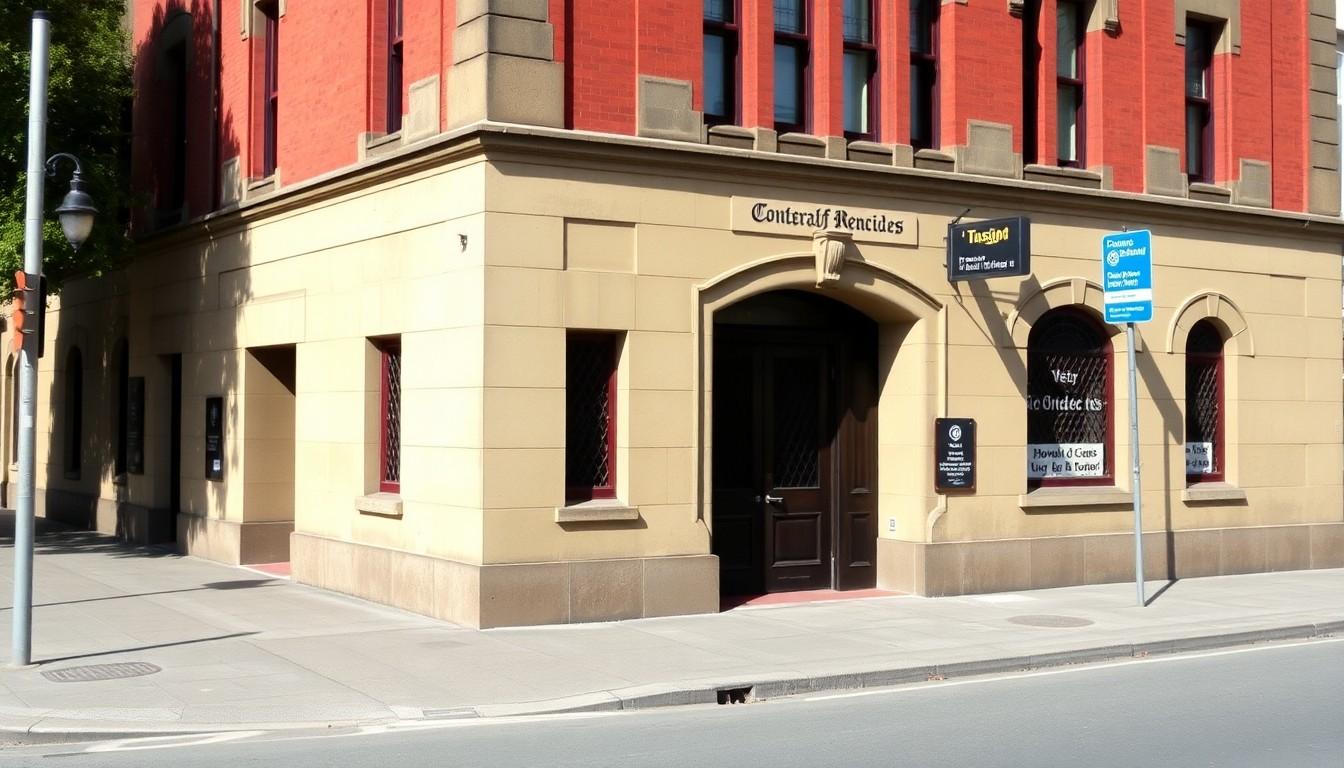
Readers exploring queer history in Aotearoa New Zealand can find a vivid mix of theatre, law reform and community-building in three October milestones. Together, they show how creative expression, political challenge and practical support have helped rainbow communities claim space, visibility and belonging across generations.
Essential Takeaways
- A theatrical original: Paul Jenden became a distinctive Wellington theatre-maker, blending comedy, dance, music and queer wit.
- A reform-era debate: A 1967 Christchurch meeting questioned whether the state should criminalise consenting relationships between men.
- A community hub: Aunty Dana's Op Shop opened in 2017 to support Gender Minorities Aotearoa and create a welcoming space.
- A national collection: Te Papa holds significant rainbow heritage, from the New Zealand AIDS Memorial Quilt to personal taonga.
Three October dates that still resonate
October's queer history isn't just a list of anniversaries. It's a story of people making room for themselves, whether on a stage, in a courtroom debate or behind the counter of a community op shop.
The milestones span more than six decades, from the arrival of a future theatre innovator in 1955 to a Wellington support space opening in 2017. Taken together, they show how progress is rarely one dramatic leap. More often, it grows through persistent creative work and small, generous acts of solidarity.
Paul Jenden brought queer energy to the stage
Born in Wellington on 5 October 1955, Paul Jenden began writing and directing remarkably young. His career later carried him overseas before he returned to New Zealand and established himself as one of the capital's most recognisable creative figures.
Jenden's work mixed theatrical forms with a playful, distinctly queer sensibility. His 1993 production Fairy Stories reworked familiar tales with topical jokes and ideas around sexuality and gender identity, giving audiences something bright, mischievous and knowingly unconventional.
Costume was another part of his signature. He often created designs himself and received repeated recognition at the Chapman Tripp Theatre Awards, while collaborations with composer Gareth Farr and work on Roger Hall's pantomimes broadened his impact. Playmarket's profile of Jenden reflects the breadth of a career rooted in imagination and stagecraft.
The 1967 Christchurch meeting asked a difficult question
On 11 October 1967, about 30 people met in Christchurch to discuss laws that criminalised sexual activity between men. The gathering was organised by the local Howard League for Penal Reform and came during an increasingly public argument about whether those laws could be justified.
Peter Alpers, chairing the meeting, challenged the idea that criminal law should punish private conduct between consenting adults where no one else was harmed. The discussion followed a Supreme Court decision involving two men and came against a backdrop of hostile public rhetoric, making the meeting a notably clear act of resistance.
Historic newspaper material preserved through Papers Past and research on the Canterbury branch of the Howard League help place the event in its legal and political setting. It may sound measured by today's standards, but asking who the law should protect, and whom it should leave alone, was a powerful intervention at the time.
Aunty Dana's Op Shop turned support into action
On 28 October 2017, Aunty Dana's Op Shop opened in central Wellington, raising money for Gender Minorities Aotearoa and offering a supportive place for transgender, gender-diverse and intersex people.
Named after transgender activist Dana de Milo, the shop did more than sell clothing and accessories. It created a practical point of connection, where visitors could find resources, conversation and the reassuring feeling that they weren't expected to explain every part of themselves.
That matters because community spaces can be useful in wonderfully ordinary ways. A jacket, a friendly chat or a noticeboard referral might not look like a historic intervention, but for someone feeling isolated, those details can make a day feel softer and safer.
Why preserving rainbow history matters
The story also lives in objects. Te Papa Tongarewa has spent decades building a national collection connected with rainbow communities, including the New Zealand AIDS Memorial Quilt and personal taonga associated with Carmen Rupe.
The collection reaches into sport, design, photography and fine art. It includes uniforms from the Amazons, described as Aotearoa's first lesbian softball club, a rugby ball signed by the Krazy Knights, the country's first gay rugby team, and work linked to artists and designers including Brian Brake, Lindah Lepou and Frances Hodgkins.
For anyone wanting to explore further, Te Papa's LGBTQI+ collection offers a useful starting point. Museums can sometimes feel hushed and distant, but these objects carry the texture of lived experience: team identity, personal courage, creative flair and the marks communities leave behind.
History is made in public and personal spaces
These October milestones connect culture, campaigning and care. Jenden used performance to unsettle expectations, reform advocates questioned the reach of the criminal law, and Aunty Dana's created a tangible place where support could be found.
That combination is worth remembering. Queer history isn't only held in major legislation or famous speeches. It also survives in theatre programmes, donated clothing, sports uniforms, shopfronts and the people who decide that a welcoming space should exist.
Explore these stories as reminders that visibility is built, shared and preserved.
Source Reference Map
Story idea inspired by: [1]
Sources by paragraph:
- Paragraph 1: [2], [6]
- Paragraph 2: [2], [5]
- Paragraph 3: [3], [4]
- Paragraph 4: [3], [4]
- Paragraph 5: [2], [6]
- Paragraph 6: [2], [5]
- Paragraph 7: [3], [4]
- Paragraph 8: [3], [4]
- Paragraph 9: [5], [6]
- Paragraph 10: [5], [6]
- Paragraph 11: [5], [7]
- Paragraph 12: [2], [3]
- Paragraph 13: [3], [4]
- Paragraph 14: [5], [7]
- Paragraph 15: [5], [7]
- Paragraph 16: [2], [3]
- Paragraph 17: [3], [5]
- Paragraph 18: [2], [4]