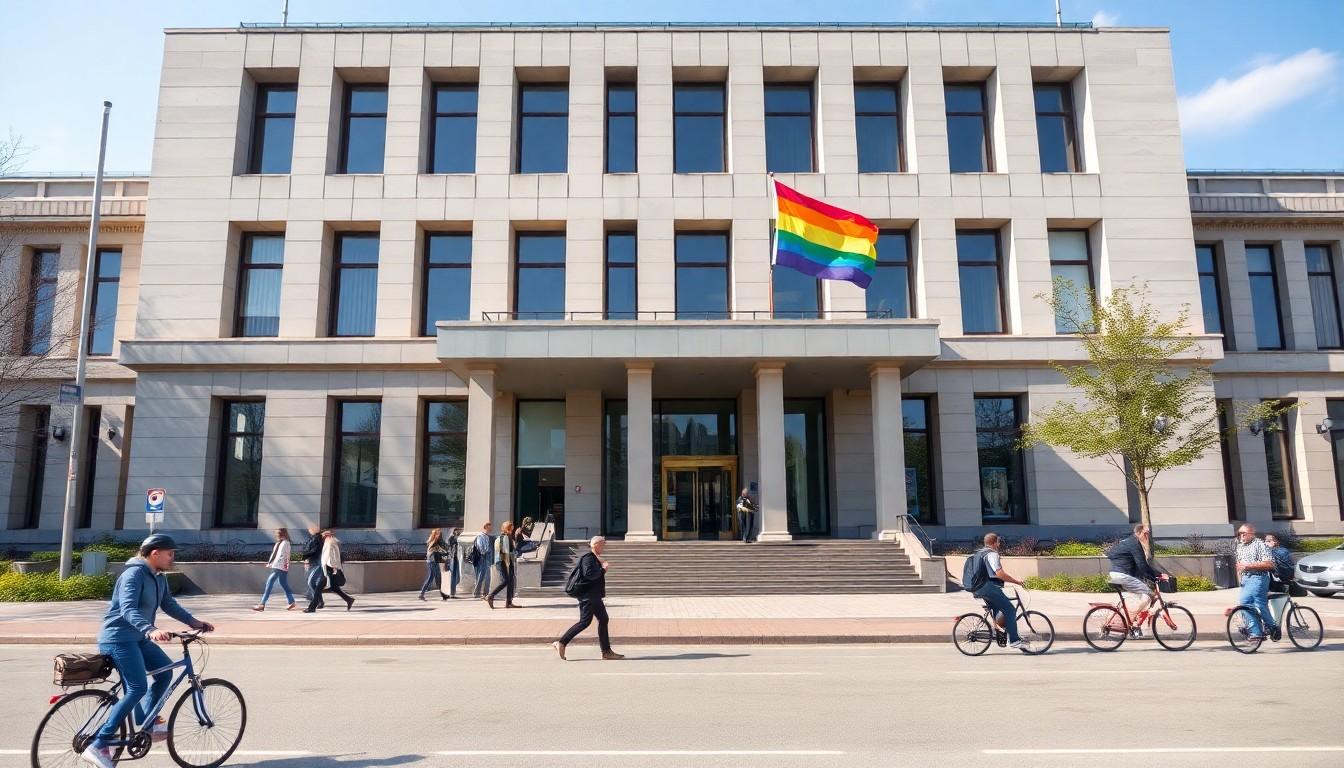
Hungary's parliament has removed key anti-LGBTQ restrictions from its child protection law, easing rules on books, media and advertising accessible to minors. The move follows an EU court ruling and marks a notable shift under Prime Minister Peter Magyar, although wider disputes over LGBTQ rights and equality remain unresolved.
Essential Takeaways
- Parliamentary vote: The reform passed by 139 votes to 51.
- What changes: Blanket restrictions on LGBTQ content for minors have been removed.
- Bookshop impact: LGBTQ-themed books will no longer automatically need plastic wrapping.
- EU reaction: Brussels called the reform an important sign of commitment to shared European values.
- Limits remain: Material considered seriously harmful to a child's development can still be prohibited.
Hungary rolls back its toughest LGBTQ content rules
Hungary's parliament has approved a significant change to the country's child protection legislation, removing a broad ban on LGBTQ-related depictions and messages accessible to minors. The vote passed comfortably, despite opposition from Viktor Orban's Fidesz party.
The old rules affected films, books, advertising and other media, creating an atmosphere in which LGBTQ themes were treated as inherently unsuitable for children. For publishers and booksellers, the practical result could be particularly visible: LGBTQ books will no longer automatically need to be hidden behind opaque plastic wrapping. European reporting has highlighted the change as one of the clearest signs yet of a policy reset in Budapest. [2], [7]
Why the law became such a flashpoint
The disputed measures were introduced in 2021 as amendments to legislation officially presented as a response to child sexual abuse and paedophilia. Critics argued that the law unfairly linked homosexuality and transgender identity with threats to children, while LGBTQ organisations and European leaders condemned it as stigmatising.
The European Court of Justice later found that the restrictions breached EU law and fundamental rights. The Guardian reported that the ruling placed fresh pressure on Hungary to remove the measures rather than defend them as a matter of national child protection policy. [3], [4]
That legal finding matters because EU membership comes with shared standards on dignity, equality and freedom of expression. In other words, this was not simply a domestic argument about which books should sit on a shelf. It became a test of whether a member state could use child-protection rules to restrict an entire group’s visibility.
A new government signals a different direction
The reform is the first obvious indication that Hungary's approach to LGBTQ rights may be changing since Peter Magyar became prime minister. His government has presented the amendment as an effort to bring national law into line with European requirements, while insisting that safeguarding children remains its central purpose.
Magyar has also stressed that the reform doesn't amount to a full restoration of LGBTQ rights. That distinction is important. The amendment removes some of the most sweeping content restrictions, but it doesn't erase other measures introduced during Orban's years in power, including limits affecting public LGBTQ events and constitutional provisions concerning sex and gender. [2], [6]
For many campaigners, that means the vote is welcome but incomplete. A law can stop requiring a book to be wrapped in plastic without resolving deeper questions about equality, family life and public representation.
What the new rules mean for books and media
Under the revised framework, material isn't prohibited simply because it depicts homosexuality or transgender identity. Instead, the test focuses on whether content could seriously damage a child's physical, intellectual, emotional or moral development.
That wording gives authorities a narrower basis for intervention, but it may still leave room for disagreement over what counts as serious harm. Parents, teachers, publishers and retailers could all interpret the boundary differently, particularly when dealing with younger readers or age-rated material. Euronews reported that the amendment followed the EU court's demand for Hungary to bring its rules into compliance. [2], [3]
For shoppers, the most immediate difference may be an ordinary one: books that were previously sealed or made difficult to browse should become easier to find and handle. It's a small retail change with a larger symbolic effect, because visibility often determines whether a subject feels ordinary or forbidden.
The wider LGBTQ rights debate is far from settled
The vote has been welcomed by the European Commission, which described it as an important sign of Hungary's commitment to common EU values. Commissioners Hadja Lahbib and Michael McGrath said LGBTQ rights are fundamental rights within the European Union. [5], [6]
Still, campaigners are likely to watch how the new wording is enforced, rather than relying on the parliamentary vote alone. Hungary's recent record includes several measures that have restricted LGBTQ expression and public events, so one legislative reversal doesn't instantly change the wider political climate.
The outlook, then, is cautiously hopeful. The reform removes one of the most visible barriers to LGBTQ representation in children's media, but lasting change will depend on whether courts, regulators, schools and shops apply the new rules consistently.
It's a meaningful step away from blanket censorship, but Hungary's equality debate is still very much alive.
Source Reference Map
Story idea inspired by: [1]
Sources by paragraph: