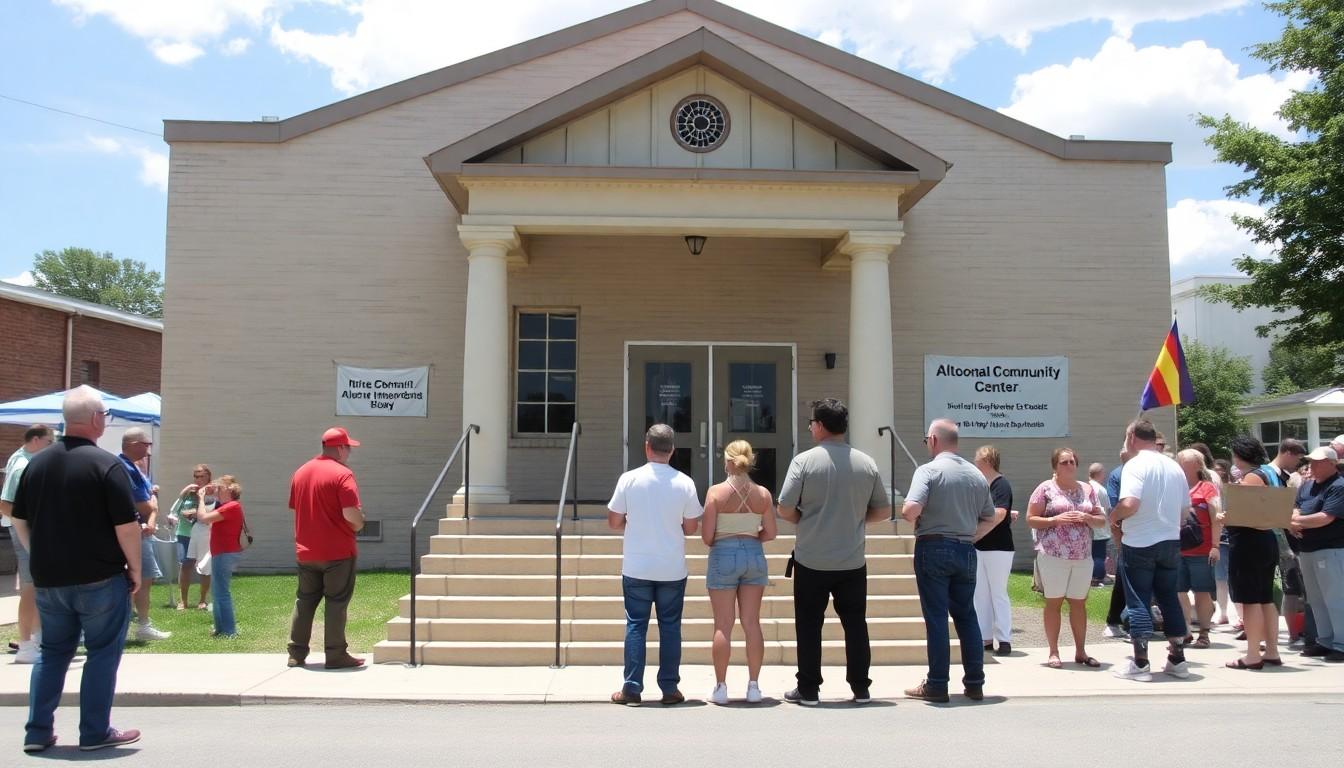
A small group of Catholics praying the Rosary near an LGBT Pride event in Altoona, Pennsylvania, reported heckling and provocative behaviour, highlighting the increasingly tense debate around public religious witness, protest and free expression.
Essential Takeaways
- Small prayer gathering: Fewer than ten Catholics attended the Altoona event to recite the Rosary.
- Heckling reported: The group said attendees shouted at them, waved flags and mocked their prayers.
- Public witness: Organisers described the gathering as an act of reparation, prayer and religious expression.
- Wider pattern: Similar confrontations have been reported at Rosary gatherings near Pride and drag events.
- A sensitive setting: Public demonstrations around sexuality, faith and children can quickly become emotionally charged.
A quiet prayer meeting becomes a flashpoint
The scene in Altoona was striking for its contrast: a handful of people standing with Rosary beads while a colourful public festival unfolded nearby. According to LifeSiteNews, the Catholics faced shouting, taunts and provocative dancing while reciting the Sorrowful Mysteries.
The group had travelled from across Pennsylvania, with one participant coming from Maryland. Their stated purpose was religious rather than political, although their presence beside a Pride parade inevitably placed them at the centre of a broader cultural argument.
LifeSiteNews also reported that one participant wore a sandwich board criticising what he described as the sexualisation of children. That message, unsurprisingly, became a particular focus of confrontation.
Why these encounters keep attracting attention
This wasn't an isolated incident. LifeSiteNews has previously reported heckling directed at Catholics praying publicly in Ireland, as well as clashes involving Rosary gatherings near Pride-related events in the United States.
Other reports have involved prayer outside drag performances and near a Catholic university. Together, they suggest that public prayer is increasingly being used by some Catholics as a visible form of opposition to gender ideology, same-sex relationships and events they believe conflict with Church teaching.
For supporters, that visibility is the point. They argue that private conviction means little if believers never express it in public. Critics, meanwhile, may see the gatherings as deliberately confrontational, particularly when they take place near family events or use language about moral danger.
Organisers frame the protest as an act of charity
The Altoona organiser told LifeSiteNews that public prayer should happen where the perceived wrongdoing is taking place. He described the gathering as an attempt to pray for conversion and offer a visible Catholic witness.
Another participant, a Catholic school teacher, said his motivation was not hatred but concern for people's spiritual welfare. He presented the action as a form of self-sacrificing love, while acknowledging that such witness can involve challenging language.
That distinction matters, even if many observers won't accept it. A person can sincerely believe they're acting out of charity while those watching experience the message as condemnation. Public protest has always carried that tension, and religious demonstrations are no exception.
The line between witness and confrontation
The central practical question is how such groups conduct themselves. Prayer in a public place is protected expression, but so is peaceful participation in a parade or festival. The atmosphere can sour quickly when signs, shouting or mocking gestures turn a religious gathering into a face-off.
Similar reports from LifeSiteNews describe Catholics being ridiculed while praying outside Pride-related events, including one confrontation involving a drag performance. Another report concerned a men's group that was restricted from praying near a cathedral during a Pride parade, illustrating that disputes can involve church authorities as well as activists.
For anyone planning a public prayer gathering, calm behaviour, clear distance from entrances and parade routes, and compliance with local rules are sensible safeguards. It's also wise to avoid photographing individuals without permission, especially children, and to remember that a legally permitted protest can still have real effects on people nearby.
A debate with no easy exit
The Altoona incident reflects a much larger argument about who gets to define public space. Catholics involved in these events say they are defending truth and calling people to repentance. Pride supporters generally see the same activity as hostile opposition to their identity and community.
Neither side is likely to find the other's language persuasive. That makes tone, restraint and physical safety especially important. A Rosary can be deeply meaningful to the people holding it, but in a charged setting its presence can also become a symbol in a much bigger cultural battle.
For now, similar gatherings are likely to continue wherever Pride events, drag shows and Catholic institutions overlap. The challenge will be whether public witness can remain peaceful without becoming another performance of outrage.
It's a small group, but the argument around it is anything but small.
Source Reference Map
Story idea inspired by: [1]
Sources by paragraph: