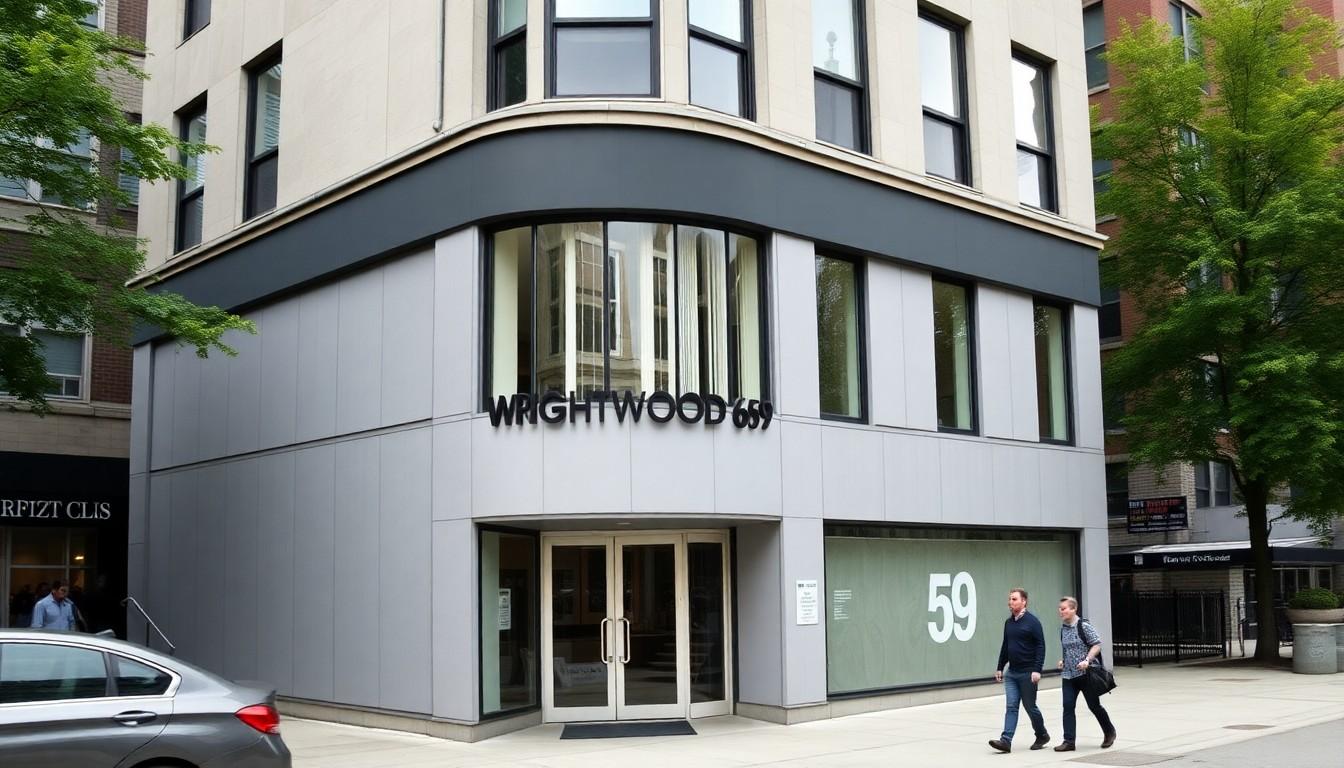
Visitors to Chicago's Wrightwood 659 encountered The First Homosexuals, a sweeping exhibition tracing queer identity in visual culture from prehistory to the 1930s. Curated by art historian Jonathan David Katz, the show matters because it puts sexuality at the centre of art history, rather than treating it as a footnote.
Essential Takeaways
- A broad historical lens: The exhibition follows same-sex desire and homosexual identity across centuries of visual culture.
- A Chicago showcase: Wrightwood 659 provided the space and resources for an ambitious, multi-floor presentation.
- More than representation: The show asks how museums decide whose lives and relationships deserve attention.
- A contested subject: Reviews and reporting describe the exhibition as both scholarly and politically urgent.
- A continuing project: Katz is developing further exhibitions exploring queer, trans and post-colonial histories.
A major exhibition with a deceptively simple question
The First Homosexuals begins with a question that sounds straightforward but quickly becomes complex: when, exactly, did homosexual identity emerge? Rather than presenting a neat timeline, the exhibition examines how artists, societies and institutions have represented same-gender desire over time.
At Wrightwood 659, the subject occupied three floors, giving the material room to breathe. The Chicago Sun-Times reported on the exhibition's scale and historical ambition, while Newcity described it as an attempt to reshape the familiar story of art history rather than simply add a few overlooked names.
That distinction matters. A display about queer artists can be tucked neatly into a museum's diversity programme, but Katz's approach is more disruptive. It suggests that sexuality isn't an optional interpretive layer. In many cases, it changes how the work itself should be understood.
Jonathan David Katz has spent decades challenging the canon
Katz's route into scholarship was shaped by activism and frustration with academic silence. According to Observer, he turned towards art history after recognising universities as powerful gatekeepers of cultural knowledge, even as they frequently excluded queer lives and perspectives.
His work has often met resistance. Institutions have questioned the legitimacy of queer subjects, while exhibitions dealing with male nudity, same-sex desire or politically uncomfortable histories have encountered practical objections that can look innocuous on paper. The pattern is familiar: censorship rarely arrives wearing a label.
The exhibition's importance therefore goes beyond its contents. It also reflects a long campaign to make museums acknowledge that the established canon was never neutral. As coverage from the Washington Post and Out has suggested, The First Homosexuals is as much about institutional power as it is about individual artworks.
Why the museum setting changes the conversation
Katz has argued that exhibitions can reach audiences in ways academic writing often can't. A book may influence specialists, but a gallery wall can place a previously ignored story directly in front of school groups, casual visitors and people encountering the subject for the first time.
That public setting gives the exhibition an emotional charge. Viewers aren't only reading about queer history; they're standing among objects that museums and scholars have sometimes separated from their sexual, social or political context. The effect can be quiet but powerful, especially for visitors who have rarely seen their own lives reflected in authoritative cultural spaces.
Wrightwood 659 was a particularly fitting venue. Its programme has regularly focused on work that large museums have treated as peripheral, including queer, feminist, Asian and Latin American art. The organisation's symposium around The First Homosexuals also underlined the exhibition's role as a forum for discussion, rather than a finished statement.
The biggest challenge is defining the past without flattening it
There is a danger in applying modern labels too casually. People in ancient or early modern societies didn't necessarily understand desire, gender or identity using today's vocabulary. A responsible exhibition must therefore avoid pretending that every historical example fits perfectly into a contemporary category.
The First Homosexuals appears to address that tension by focusing on the formation of identity, not simply searching for historical equivalents of modern gay life. Reviews in the Chicago Sun-Times, Newcity and the Washington Post point to the exhibition's broad chronological reach and its interest in how meanings change across cultures.
That approach is especially useful for anyone exploring queer art history for the first time. Look for the questions behind the labels: who made the work, who saw it, what relationships shaped it and what later institutions chose to preserve or ignore? Your eyes may notice the image first, but the surrounding power structure often tells the more revealing story.
From queer history to a wider view of gender
Katz's next projects extend this argument towards trans history and global perspectives. He has linked queer and trans experience while challenging the idea that gender has always been understood as a fixed binary. That makes the future of this curatorial work feel especially relevant as museums face renewed political pressure over gender and sexuality.
The conversation also connects with The First Homosexuals' central insight: categories aren't timeless facts floating above history. They are shaped by language, religion, law, colonialism, medicine and institutions. Art doesn't merely reflect those forces; it can expose how they were built.
For museums, that presents a choice. They can continue treating queer and trans art as specialist territory, or they can accept that these histories are woven through the mainstream story. Katz's argument is refreshingly direct: without them, the picture of modern art is incomplete.
The First Homosexuals doesn't offer a quick answer to every question it raises, and that's part of its value. It leaves visitors with a richer, less comfortable history of how identity has been made visible, hidden and reinterpreted.
Explore queer art history with curiosity, context and an open mind.
Source Reference Map
Story idea inspired by: [1]
Sources by paragraph:
- Paragraph 1: [2], [3]
- Paragraph 2: [5], [6]
- Paragraph 3: [7], [4]
- Paragraph 4: [3], [5]
- Paragraph 5: [1], [6]
- Paragraph 6: [2], [7]
- Paragraph 7: [4], [5]
- Paragraph 8: [2], [3]
- Paragraph 9: [6], [7]
- Paragraph 10: [1], [4]
- Paragraph 11: [1], [6]
- Paragraph 12: [3], [7]
- Paragraph 13: [2], [5]
- Paragraph 14: [1], [4]
- Paragraph 15: [6], [7]
- Paragraph 16: [1], [3]
- Paragraph 17: [2], [5]