London’s VI Festival of Queer Spanish Culture brings 17 events to venues across the capital from 2 to 26 November 2026. With film, books, music, performance and queer archives on the programme, it offers Spanish-speaking and English-speaking audiences a lively way to explore identity, memory and dissent.
Essential Takeaways
- Dates: The festival runs from Monday 2 November to Thursday 26 November 2026.
- What’s on: Expect cinema, literature, electronic pop, flamenco, theatre, research panels and poetry.
- Where to go: Events take place at Rio Cinema, The Divine, Gay’s the Word, Common Press Books and other London venues.
- Language access: Many events are in Spanish, while others are in English or offer translations.
- Big theme: Queer memory runs through the programme, from trans histories to Lorca’s homoerotic poetry.
A month of queer Spanish culture arrives in London
London’s queer cultural calendar is about to get a particularly rich Spanish-language addition. The VI London Festival of Queer Spanish Culture will stretch across almost four weeks, bringing artists, writers, performers and researchers together in venues from Hackney to central London.
The programme has grown well beyond its literary beginnings. There’s a pleasingly tactile mix of cinema screens, bookshop conversations, live music, dance, performance and archive-led discussion, so audiences can move from a quiet page to a noisy club set without leaving the festival’s central questions behind.
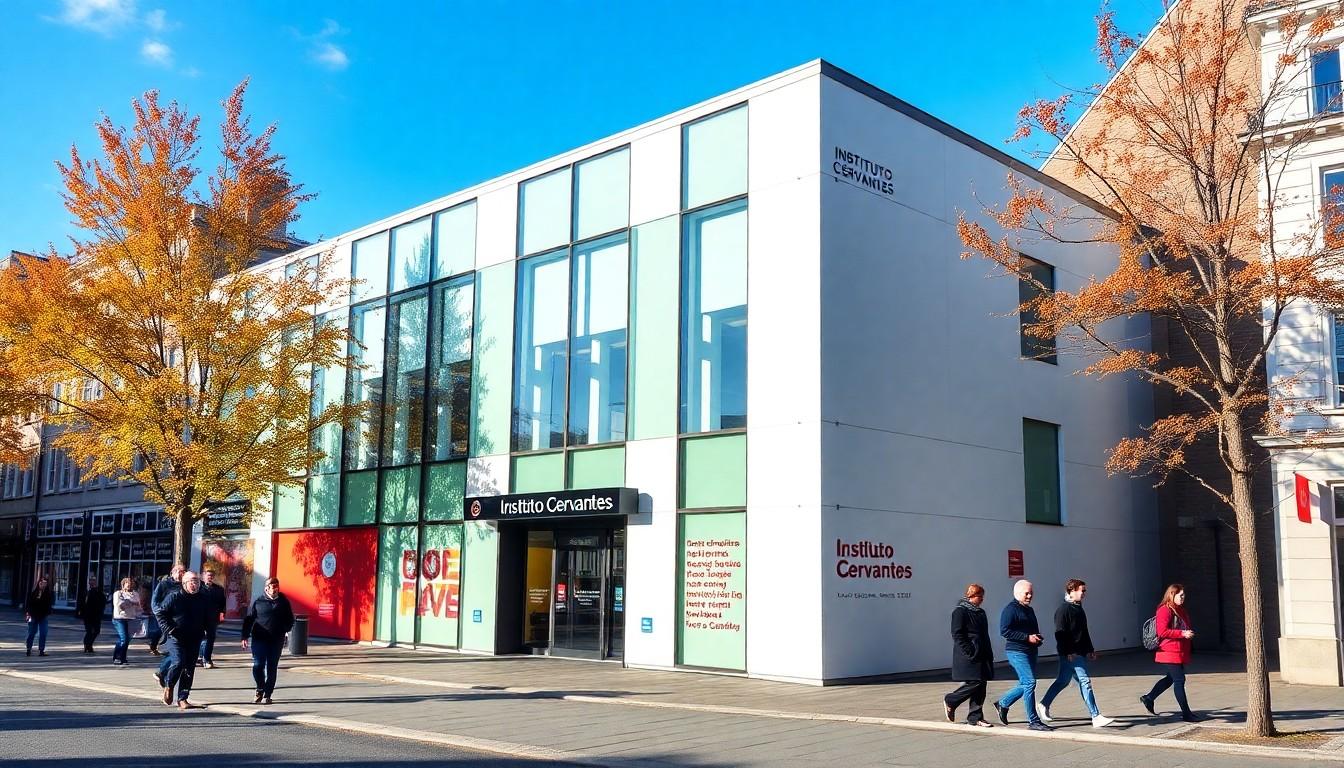
Organised by Romancero Books CIC, the festival is supported by the Spanish Embassy in London and Instituto Cervantes London. According to the festival programme, its events will be presented in Spanish, English or with translation, making it more accessible to curious newcomers as well as fluent Spanish speakers.
Lorca’s legacy gives the festival its pulse
Federico García Lorca sits at the centre of this year’s programme, which marks 90 years since the poet’s assassination. Rather than treating him as a safely polished literary monument, the festival looks towards his sexuality, dissent and unfinished legacy.
The opening night on 2 November begins with the UK premiere of La Bola Negra at Rio Cinema. Directed by Javier Calvo and Javier Ambrossi, the film links three men across different periods through desire, pain, sexuality and inheritance, drawing on one of Lorca’s unfinished plays.
Lorca returns in Patricia Langa’s Tribute to Lorca, a performance combining dance, flamenco, poetry and lip-sync. Later in the month, Juana la Lorca turns his image into a mischievous, genre-blurring story of a Roma drag artist from Granada’s Sacromonte. It sounds deliberately unruly, which feels entirely appropriate.
Books, pop and performance share the spotlight
The festival’s contemporary strand is just as broad. Writer and poet Sara Torres will discuss her novel The Seduction at The Common Press Bookshop on 6 November, exploring desire between women through a relationship full of intimacy and uncertainty.
The following evening, Spanish electronic pop duo Hidrogenesse will perform at The Divine. Carlos Ballesteros and Genís Segarra have been making music together since 1997, and their appearance offers London audiences a rare chance to hear one of Spain’s most distinctive independent acts live.
There’s also dance-theatre from Carmen Rojas and Karelis Zambrano, whose Las almejas que hablan uses movement, humour and audiovisual work to challenge conventional ideas about gender, sexuality and family. For visitors choosing between events, this is the sort of production likely to feel less like a lecture and more like an experience.
Queer archives bring overlooked lives into view
Historical memory is another major thread. The Uncovering Trans Histories roundtable brings researchers from Spain and the UK together to discuss gender practices, ballroom culture, drag kings and trans and travesti histories across the Iberian Peninsula and Latin America.
The festival also turns to lesbian and bisexual lives in early twentieth-century Madrid. Paula Villanueva’s study of the Círculo Sáfico places figures including Elena Fortún, Rosa Chacel, Victoria Kent, Carmen Conde and Victorina Durán within a social and creative network that has too often been left at the margins.
A programme of Latin American short films, Será inmortal, extends that archival conversation through testimony, ritual, persecution and resistance. The films come from countries including Argentina, Chile, Cuba, Mexico, Puerto Rico and Uruguay, showing how cinema can preserve stories that official collections have ignored.
How to choose the right events
If you’re visiting for the first time, start with the language notes and venue details before booking. Some events are fully in Spanish, while others are in English or include translation, so the festival is easier to navigate when you know what sort of evening you’re after.
For a cinematic entry point, La Bola Negra and the later screening of David Pablos’s En el camino offer a strong route into the festival’s themes. Readers may prefer the Torres conversation or the joint presentation of Elogio del cruising and El Círculo Sáfico, while live-performance fans have flamenco, dance-theatre and Julio Ruiz’s Un tiro te peguen to consider.
One practical tip: allow extra travel time. The venues are spread across London, and the appeal lies partly in that movement between bookshops, cinemas, galleries and nightlife spaces. It’s a festival best enjoyed with a little breathing room rather than a frantic dash from one postcode to the next.
The closing days turn towards poetry and desire
The festival concludes with an English-language reading of Lorca’s Sonnets of Dark Love at Gay’s the Word on 26 November. Poets including Leo Boix, Adriann Ramirez and Peter Scalpello will revisit the intensely homoerotic sequence, whose publication history reflects the long hesitation around openly acknowledging Lorca’s homosexuality.
That final event gives the festival a fitting emotional shape. Across nearly a month, its programme moves between the personal and political, the archive and the stage, the remembered past and the messy present.
There’s no single way into the VI London Festival of Queer Spanish Culture. You can arrive for a film, stay for a conversation and leave with a book, a new artist to follow or a question that lingers on the journey home.
Explore the programme and choose the events that speak to you.
Source Reference Map
Story idea inspired by: [1]
Sources by paragraph:
- Paragraph 1: [2], [4]
- Paragraph 2: [3], [5]
- Paragraph 3: [4], [5]
- Paragraph 4: [2], [6]
- Paragraph 5: [2], [7]
- Paragraph 6: [3], [4]
- Paragraph 7: [2], [5]
- Paragraph 8: [4], [6]
- Paragraph 9: [2], [7]
- Paragraph 10: [3], [5]
- Paragraph 11: [4], [6]
- Paragraph 12: [2], [3]
- Paragraph 13: [5], [7]
- Paragraph 14: [2], [6]
- Paragraph 15: [4], [6]
- Paragraph 16: [2], [7]