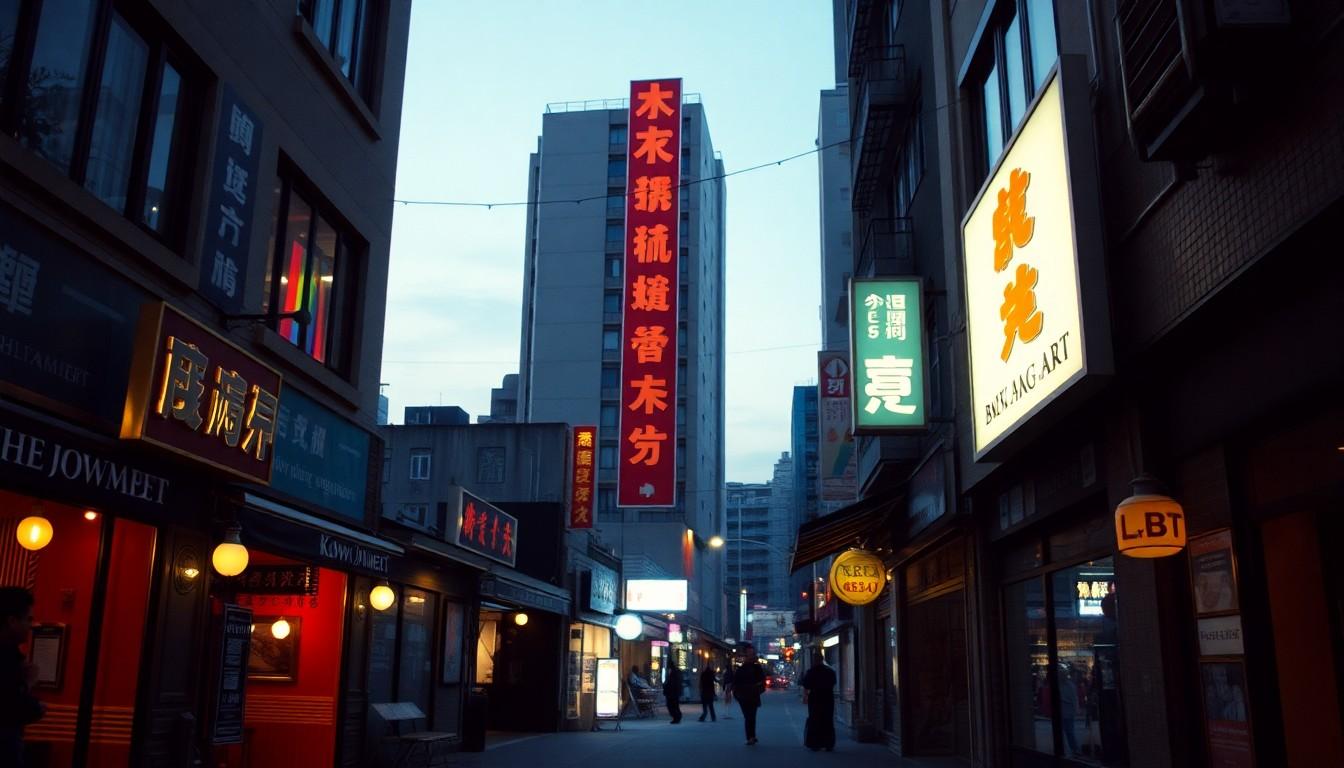
A police search of LGBTQ+ venues in Taipei has prompted fresh questions about warrants, privacy and minority rights. The case matters because it sits at the uneasy meeting point of criminal investigation, public-order policing and intimate personal life, with legal experts asking whether enforcement went further than necessary.
Essential Takeaways
- The key legal distinction: Administrative policing aims to prevent harm, while judicial policing investigates suspected crimes.
- Warrants matter: Searches and arrests should generally follow Taiwan’s criminal procedure rules and respect proportionality.
- Privacy is central: LGBTQ+ venues can be public businesses while still functioning as safer, semi-private spaces for minority communities.
- Discrimination remains a concern: Taiwan’s protections against unequal treatment are developing, but gaps remain.
- Consent can change the analysis: Recent legal reasoning has questioned whether consensual conduct among a defined group is truly “public”.
What happened inside Taipei’s LGBTQ+ venues?
On 3 October 2026, police entered several LGBTQ+ venues around Taipei’s Ximen district, including Commander D, according to The News Lens. Customers later described the search and the removal of the venue’s operator and some patrons to a police station, prompting a sharp public debate.
The immediate dispute isn't simply whether officers can enter a bar. It’s what legal power they were using when they did so. That distinction may sound technical, but it determines which safeguards apply, whether a warrant was needed and how far officers could go.
As legal commentary from Taiwan Law Bot explains, police powers are commonly divided between administrative functions and judicial functions. The former covers public-order work such as checks and inspections, while the latter involves investigating a specific suspected offence and can include searches, seizures and arrests.
Administrative policing or criminal investigation?
Administrative policing is designed to prevent danger or maintain public order. Judicial policing, by contrast, is tied to suspected criminal conduct and must operate within Taiwan’s Code of Criminal Procedure, according to Taiwan’s legal framework and Ministry of Justice materials.
That difference is especially important where officers move from looking around a venue to taking people away for questioning. Once a search or detention is being used to gather evidence in a criminal case, describing it as a routine inspection shouldn't allow authorities to sidestep the stricter rules.
The Ministry of Justice’s published legal provisions form part of the wider procedural framework governing criminal investigations. In practice, that means police action should be legally grounded, necessary for the purpose in hand and no broader than required.
Why warrants, dignity and proportionality matter
Criminal investigations involve a difficult bargain. The state needs tools to collect evidence, but those tools can intrude into homes, businesses, possessions, privacy and reputation. A warrant, where required, helps ensure that an independent authority has examined the proposed intrusion before it happens.
Operational guidance for prosecutors and police also stresses that searches, arrests and seizures should not exceed what is necessary. Officers are expected to consider the person’s physical wellbeing and reputation, particularly in cases likely to attract public attention.
That principle matters even more in a venue where patrons may fear exposure, stigma or unwanted disclosure. A search can be over in an hour, but the embarrassment, anxiety and potential damage to someone’s private life may last considerably longer.
Public venue, private refuge
LGBTQ+ bars occupy an unusual legal and social space. Customers may enter openly by paying or joining, yet the venue can still offer a form of shelter from the judgement faced outside. In other words, it’s public in the commercial sense but often intimate in the social one.
The News Lens commentary places this tension alongside Taiwan’s constitutional protection of privacy, dignity, equality and sexual autonomy. It also notes that courts have recognised sexual orientation as a deeply personal characteristic linked to a history of exclusion and discrimination.
That context doesn't make any venue immune from investigation. It does, however, mean authorities should be alert to the risk that apparently neutral enforcement may fall especially heavily on a minority community. Taiwan has introduced human-rights protections through domestic legislation implementing international conventions, but broader anti-discrimination safeguards remain incomplete, according to the analysis.
Is Taiwan’s public-decency law keeping pace?
The case also revives debate about Taiwan’s offences involving public decency and sexual conduct. The relevant provisions sit across the Criminal Code and the Social Order Maintenance Act, legal sources show, but their interpretation has shifted as society has moved away from enforcing majority morality simply because it is the majority view.
The News Lens article points to the ideas of intimate citizenship and sexual citizenship, which treat people’s control over their sexual and intimate lives as part of full civic equality. That approach sits alongside constitutional values such as personality rights, privacy and human dignity.
Recent legal reasoning has also suggested that conduct voluntarily accepted by a defined group sharing a space may not satisfy the requirement that an act be “public”, particularly where age restrictions and other legal limits have been respected. That doesn't settle the Commander D dispute, but it shows why the details matter: who was present, whether participation was voluntary, what the officers were investigating and how the law was interpreted.
What should customers and venue owners know?
Anyone affected by a search should try to record the basic facts as soon as possible: the time, officers’ identities where available, whether a warrant was shown, what areas were searched and whether property was taken. Keep copies of notices, inventories and any summonses, and seek advice from a qualified lawyer before making detailed statements.
Venue operators should also consider a clear plan for staff, including where licences and business records are kept, how CCTV is preserved and who contacts legal advisers. Customers may wish to avoid posting identifiable images or personal details online while the facts remain disputed.
The larger lesson is less dramatic but more important. Effective policing and minority rights aren't opposites; lawful procedure is what allows both public safety and personal dignity to coexist. For communities that have historically been pushed into the shadows, even a routine-looking operation can feel anything but routine.
The safest enforcement is transparent, proportionate and respectful from the moment officers arrive.
Source Reference Map
Story idea inspired by: [1]
Sources by paragraph:
- Paragraph 1: [2], [4]
- Paragraph 2: [3], [6]
- Paragraph 3: [2], [7]
- Paragraph 4: [6], [3]
- Paragraph 5: [2], [4]
- Paragraph 6: [1], [6]
- Paragraph 7: [1], [2]
- Paragraph 8: [1], [6]
- Paragraph 9: [1], [3]
- Paragraph 10: [1], [6]
- Paragraph 11: [1], [2]
- Paragraph 12: [1], [6]
- Paragraph 13: [1], [2]
- Paragraph 14: [1], [3]
- Paragraph 15: [2], [6]
- Paragraph 16: [1], [6]
- Paragraph 17: [1], [2]
- Paragraph 18: [1], [3]
- Paragraph 19: [1], [6]
- Paragraph 20: [2], [6]
- Paragraph 21: [1], [2]
- Paragraph 22: [1], [6]
- Paragraph 23: [1], [2]