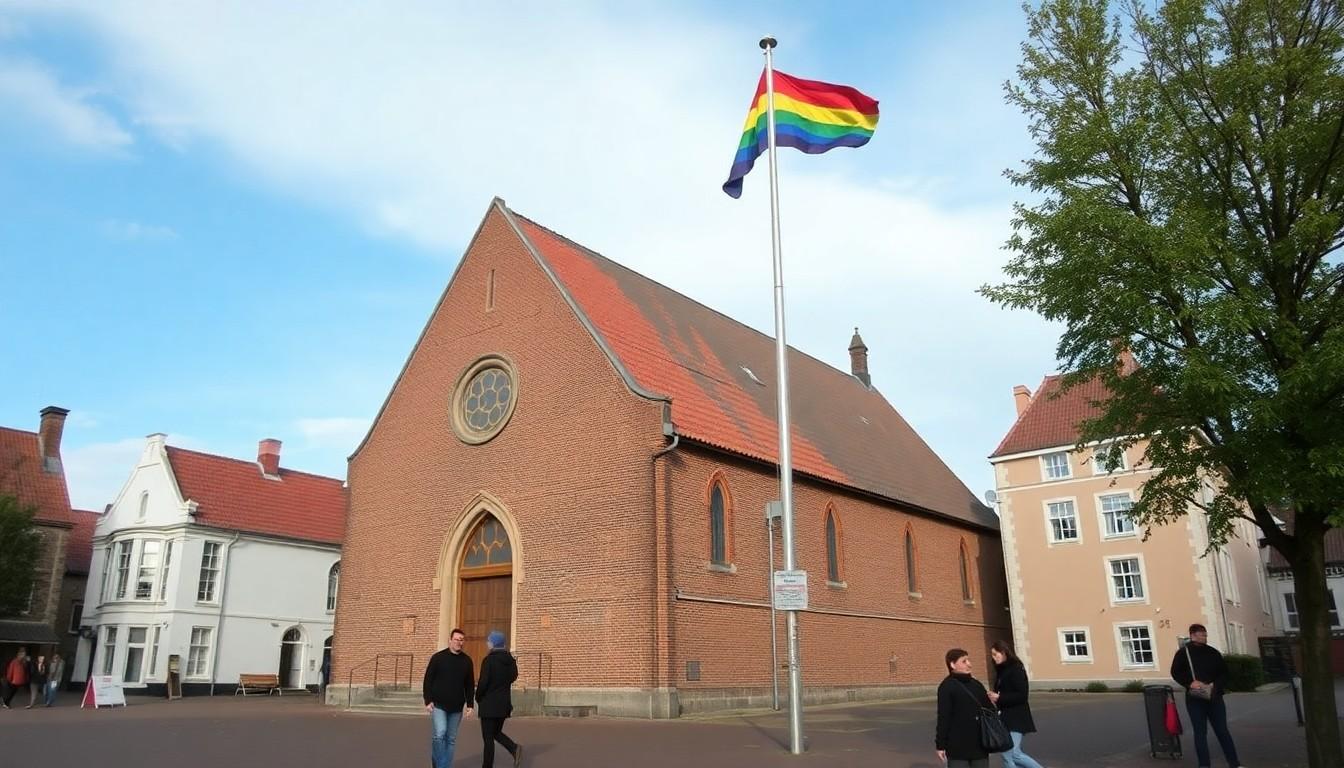
Residents in Oldebroek, in the Netherlands, are challenging a council decision to stop displaying the rainbow flag and end local LGBTQ+ policy. The dispute has turned a familiar symbol of inclusion into a sharp test of political power, religious conviction and whether public spaces should visibly welcome everyone.
Essential Takeaways
- The decision: Oldebroek’s new coalition moved to end its LGBTQ+ policy and stop flying the rainbow flag on municipal buildings.
- The local response: Residents organised protests and used a newspaper advert to challenge the move.
- A wider argument: The dispute reflects growing tension between far-right politics, religious conservatism and LGBTQ+ visibility.
- A symbolic alternative: A church in nearby Wezep displayed the flag, despite objections about Sunday observance.
- Why it matters: Public symbols can reassure minorities that local institutions recognise and support them.
A small flag, a very large argument
A rainbow flag can look almost weightless in the wind, but in Oldebroek it has become politically heavy. The Dutch municipality's decision to remove it from public life has prompted residents to question what inclusion means when a new coalition can quietly dismantle it.
According to NL Times, the coalition ended the municipality's rainbow-flag display after objections from residents. Other reports from QMeet and regional outlets say the council also moved to scrap its LGBTQ+ policy, making the dispute about more than one flag fluttering outside a town hall.
That distinction matters. A flag is visible and emotionally charged, while policy can be buried in meeting papers. Together, though, they send a clear message about which residents a council chooses to recognise.
How Oldebroek became a national talking point
The controversy developed after Tom de Nooijer, a local politician associated with the coalition, proposed ending the municipality's LGBTQ+ policy. Coverage by QMeet and regional Dutch reports linked the decision to arguments that rainbow symbolism and related policies conflict with the coalition's interpretation of Christian values.
For LGBTQ+ residents, that reasoning can feel less like neutrality and more like withdrawal. When a council stops flying a rainbow flag and abandons specific inclusion measures, the practical effect may be difficult to measure immediately, but the public signal is unmistakable.
Meanwhile, the decision attracted attention beyond Oldebroek. That is partly because local government is where national culture wars become tangible. A debate that sounds abstract in parliament can become painfully personal when it concerns the building where residents pay taxes, seek help or attend civic meetings.
Residents refuse to let the issue disappear
The backlash has been organised rather than merely online. NL Times reported that residents placed a newspaper advertisement, while QMeet described community mobilisation following the coalition's decision. The protests show that the move hasn't passed unnoticed, even in a municipality where the ruling group may have believed it reflected local priorities.
There was also a striking act of solidarity nearby. A church in Wezep displayed the rainbow flag, with reports noting that it was raised before Sunday in response to concerns about religious rest. The gesture gave the symbol a new setting: not just a government building, but a place of worship making room for a different interpretation of Christian welcome.
The reported theft of that flag added an uglier edge to the row. It is a reminder that symbols of equality can attract both support and hostility, particularly when politicians turn them into cultural dividing lines.
Why public visibility still counts
Critics sometimes dismiss rainbow flags as performative, arguing that equality should be measured through services and laws rather than banners. There is some truth in that. A flag cannot replace safe schools, fair treatment or reliable support for people facing discrimination.
But visibility still has practical value. It tells a teenager, a parent or a newly arrived resident that they aren't expected to hide to fit in. It can also reassure people that public institutions understand LGBTQ+ citizens as part of the community, rather than as a problem to be managed.
That is why the Oldebroek decision has resonated. As coverage from NL Times and QMeet suggests, the dispute isn't simply about decoration. It's about whether local government should actively communicate belonging or retreat behind a narrow version of neutrality.
The next test is what comes after the flag
The most important question now is whether Oldebroek's policy change remains symbolic or affects services, partnerships and support for LGBTQ+ residents. Removing a flag is immediate and highly visible; dismantling a policy framework can have longer-term consequences, even if those changes attract less attention.
The episode also offers a useful warning for other councils. When inclusion measures are treated as optional extras, they can become vulnerable whenever political alliances shift. Community groups, churches and residents may then find themselves carrying the responsibility that public institutions have stepped away from.
For supporters of the rainbow flag, the dispute is understandably exhausting. Yet the response in Oldebroek suggests that silence isn't inevitable. Sometimes a community's clearest answer is simply to put the symbol somewhere it can still be seen.
It's a small flag, but Oldebroek shows why its meaning remains hard to ignore.
Source Reference Map
Story idea inspired by: [1]
Sources by paragraph: