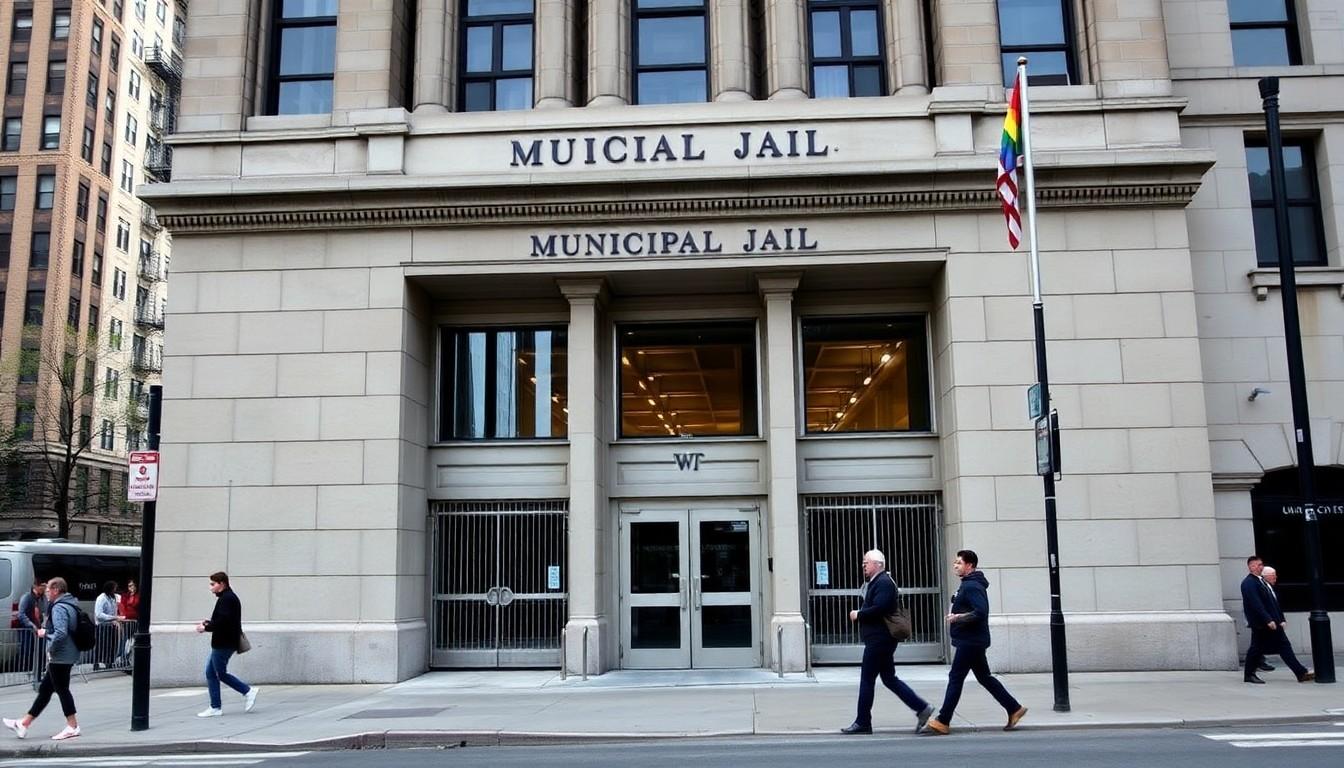
City lawmakers are revisiting how New York’s jails handle mental-health appointments and housing decisions affecting transgender people in custody. The push comes as missed medical visits, psychiatric needs and deaths behind bars sharpen calls for stronger oversight, clearer records and more accountable care across the city’s jail system.
Essential Takeaways
- Missed appointments: Just 56% of 6,259 scheduled mental-health appointments were completed in June 2026.
- Growing need: More than half of people held at Rikers Island have a diagnosed mental-health condition.
- Proposed safeguards: One bill would require better coordination when lockdowns disrupt medical care.
- Trans safety oversight: Another measure would give a specialist task force a more permanent monitoring role.
- Why it matters: Documented deaths and missed medication doses show the human cost of administrative failures.
A stark measure of care behind bars
The clearest warning is a number that’s difficult to ignore. In June 2026, New York City’s jails completed only 56% of 6,259 scheduled mental-health appointments, according to testimony and materials presented to the City Council. For someone waiting behind a locked cell door, a missed appointment isn’t a minor diary clash. It can mean delayed medication, a lost chance to speak to a clinician or a worsening crisis.
The wider picture is just as serious. City officials have said roughly 6,700 people were in custody in June, with around 60% receiving or being assessed for mental-health services. At Rikers Island, severe psychiatric needs are particularly widespread, placing extra pressure on transport, escorts, housing and day-to-day supervision. Council hearing records and criminal-justice oversight materials underline how closely these systems are connected. (According to the New York City Council Committee on Criminal Justice and hearing records.)
That pressure doesn’t excuse missed care, but it helps explain why lawmakers are focusing on basic coordination. A health appointment can exist on paper while remaining unreachable in practice.
Why lockdowns can interrupt treatment
The proposed legislation would require correctional officials and healthcare providers to communicate when a person is confined to a cell and unable to attend an appointment. If a visit is missed, clinical staff would assess when it should be rescheduled, while the jail system would continue medical escorts where feasible and record occasions when confinement blocked access. (The Board of Correction’s regulations and task-force work provide relevant oversight context.)
That sounds like administrative housekeeping, but it’s a crucial distinction. A missed appointment should trigger a clinical decision, not disappear into a spreadsheet. Better records could also reveal whether disruption is occasional or part of a repeated pattern affecting particular units or patients.
Earlier oversight has already raised concerns about prolonged cell confinement and its effect on medical and mental-health access. The issue is especially pressing for people with serious conditions, who may need regular medication reviews, crisis intervention or specialist support rather than a routine rescheduling note. (According to testimony submitted to the Council’s criminal-justice committee.)
The human cost of missed care
Behind the statistics are cases in which warning signs were recorded but not acted on quickly enough. Official reviews have examined people who arrived in custody with psychiatric histories, were placed on suicide watch or missed repeated mental-health consultations and medication doses.
One case involved Erick Tavira, a 28-year-old man with schizophrenia who spent 494 days at Rikers Island before his death in 2022. A state investigation found that he missed 11 mental-health appointments and 129 medication doses during his detention, describing the repeated gaps as a failure in care. Such findings make the debate feel less like a policy seminar and more like a question of whether the system can reliably do the basics. (The criminal-justice oversight hearing materials and related testimony address these concerns.)
The Council’s attention has also been drawn to the use of involuntary isolation in psychiatric observation units and weaknesses in how those restrictions were documented. For families, the paperwork matters because it can show who knew what, when a decision was made and whether anyone checked that care continued.
Trans people need more than a housing label
For transgender, non-binary and intersex people in custody, placement decisions can carry immediate safety consequences. Officials may need to weigh a person’s identity, medical needs, stated safety concerns and the risks of placing them in a particular unit. That’s far more complex than assigning a bed on a standard roster.
A separate proposal would extend the work of a specialist task force and move towards more permanent oversight. It would require correctional and health representatives to answer questions about policy changes and involuntary transfers, giving the group a clearer route to scrutinise decisions. The measure wouldn’t guarantee a particular placement, but it could make the reasoning behind decisions more visible. (The Board of Correction and Legal Aid New York outline the relevant protections and oversight concerns.)
That matters because transparency is not the same as perfection. A review mechanism can’t undo harm, but it can make it harder for disputed decisions to vanish without explanation.
What happens next for New York’s jail reforms?
The two measures are being debated against a backdrop of deaths in custody and longstanding criticism of Rikers Island. Council committees are gathering testimony from officials, advocates and people affected by the system, while the city’s correctional agencies face questions about staffing, training, transport and specialist housing.
The practical test will be implementation. A new reporting requirement is only useful if staff complete it, clinicians review the information and managers respond when patterns emerge. The same goes for trans-safety oversight: meetings must lead to answers, not simply another layer of official minutes. (New York City Council committee information and hearing records describe the current oversight process.)
For families and people in custody, the desired reform is refreshingly straightforward: don’t let a locked door cancel healthcare, and don’t make vulnerable people navigate housing decisions without meaningful scrutiny. It’s a small sentence, but a demanding standard.
Better records and stronger oversight could make every medical visit, placement decision and warning sign harder to overlook.
Source Reference Map
Story idea inspired by: [1]
Sources by paragraph:
- Paragraph 1: [2], [4]
- Paragraph 2: [3], [5]
- Paragraph 3: [4], [5]
- Paragraph 4: [6], [4]
- Paragraph 5: [2], [4]
- Paragraph 6: [3], [6]
- Paragraph 7: [2], [4]
- Paragraph 8: [3], [4]
- Paragraph 9: [6], [7]
- Paragraph 10: [6], [7]
- Paragraph 11: [5], [4]
- Paragraph 12: [2], [3]
- Paragraph 13: [4], [5]
- Paragraph 14: [2], [6]
- Paragraph 15: [5], [7]