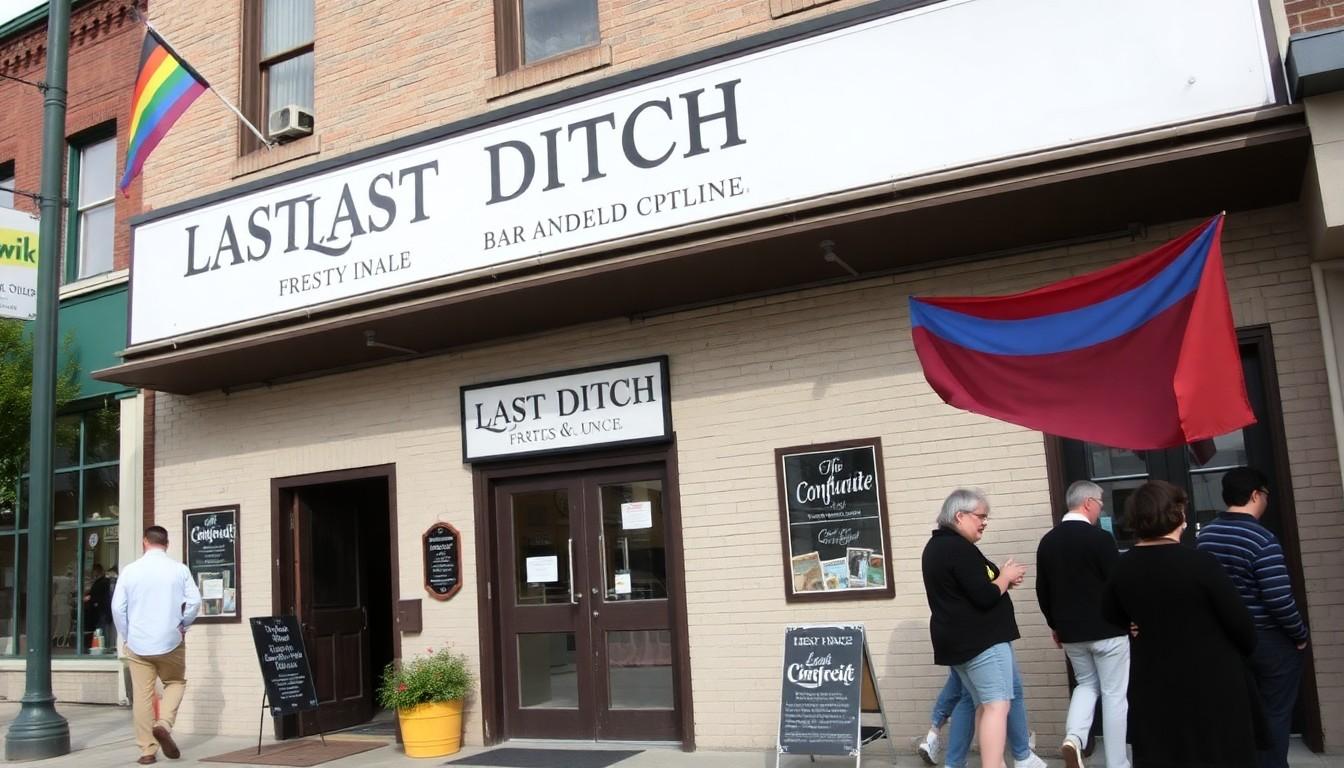
Visitors returned to Greenfield’s Last Ditch Bar and Arts Venue after its mask policy sparked an online storm, finding a subdued karaoke night, determined regulars and a community still trying to protect one of its few dedicated queer spaces.
A quiet karaoke night after a very loud week
The basement venue in Greenfield, Massachusetts, was hardly overflowing when karaoke began. Drinks moved across the bar, streamers sagged behind the stage and a handful of people settled in for the evening, but the atmosphere felt more cautious than celebratory.
Then a singer in a blue N95 mask took the microphone and launched into “House of the Rising Sun”. The applause came from a small crowd, yet the room’s warmth was unmistakable. According to the Boston Globe, the moment captured the bar’s appeal: imperfect, intimate and willing to make space for people who don't always find it elsewhere.
The controversy began after Last Ditch announced a weekly mask-optional night, following concerns about its financial survival and mounting debt. LGBTQ Nation reported that the change triggered intense criticism from supporters who saw masking as central to the venue’s identity and safety.
How one policy became an internet spectacle
A local decision quickly travelled far beyond western Massachusetts. Coverage was amplified across social media and picked up by prominent conservative commentators, turning a small venue’s internal dispute into a national talking point.
That attention brought mockery as well as sympathy. Know Your Meme documented the online spread of the controversy, while Boston Spirit Magazine described the episode as a fresh example of how quickly a niche community issue can become mass internet entertainment.
For the people inside Last Ditch, that exposure was unsettling. A venue known primarily to regulars was suddenly being discussed by people who had never visited, and sometimes couldn't even identify where it was. The fluorescent lavender sign outside remained local and tangible; online, the bar became a symbol.
Why the space matters to regulars
Last Ditch occupies a complicated but important place in the local queer scene. Regulars described it as a community hub that has survived under different names and through recurring financial difficulties, but still offers something increasingly rare: a dedicated place to meet, perform and relax without explaining yourself.
One patron, using the name Jim and they/them pronouns, told the Boston Globe that the venue was a “safe little corner”. Their comments pointed to the emotional arithmetic behind the argument: a struggling business can have real shortcomings and still be worth saving.
The room’s details made that history visible. Zines about queer liberation, rapid testing and LGBTQ history sat alongside a colouring book about butch lesbians from earlier decades. It wasn't sleek or polished, but it felt lived in, which is often the quality people remember.
The difficult balance between safety and survival
The dispute has no easy answer. Mask requirements can help some customers feel protected, particularly those at higher risk from respiratory illness, but strict policies may also limit attendance and put additional pressure on a small venue already operating on thin margins.
Hoodline reported that Last Ditch faced fierce backlash after easing its rule, while Urania Institute highlighted the wider tensions around access, public health and queer community spaces. Those questions don't disappear simply because the debate has become exhausting.
For venues considering similar changes, clarity matters. Explaining why a policy is changing, offering clearly designated masked events and listening to customers without turning every disagreement into a public battle could help. It won't satisfy everyone, but it may make the conversation less combustible.
Support arrived alongside the criticism
Despite the hostility, people connected with Last Ditch said the response included substantial encouragement. A volunteer told the Boston Globe that support had, in her view, outweighed the hate, with some conversations proving more constructive than expected.
That doesn't erase the damage caused by sudden global attention. Small venues rarely have the staff, money or communications machinery to manage a national controversy while also keeping the lights on and the karaoke queue moving.
Still, there was resilience in the room. Singers took turns, people applauded, and regulars kept showing up. Sometimes community is less about perfect agreement than deciding that the door should stay open.
It's a small venue, but the argument around it has become much bigger than one night of karaoke.
Source Reference Map
Story idea inspired by: [1]
Sources by paragraph: