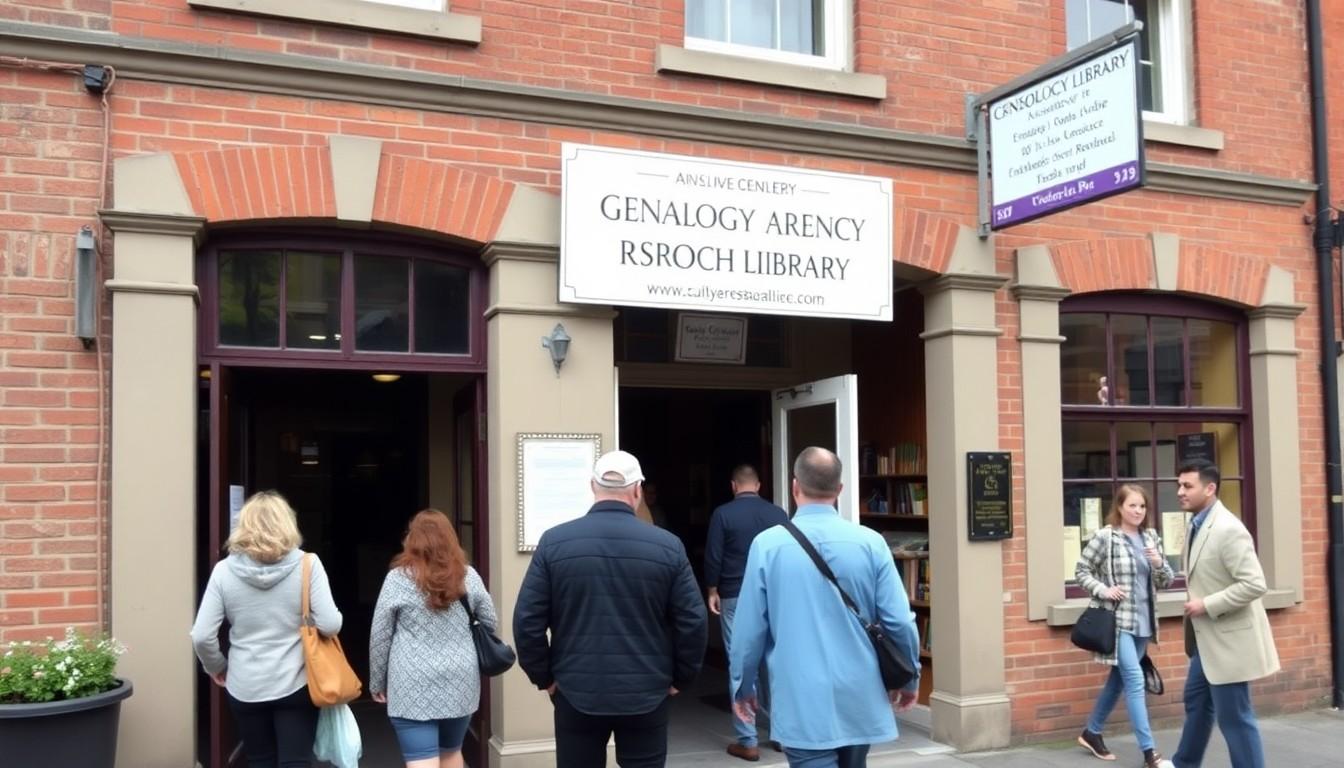
Genealogists are looking beyond surnames and marriage certificates to recover LGBTQ chosen family with care. As National Coming Out Day prompts reflection on identity and visibility, old addresses, wills, letters and photographs can reveal deep bonds that official records often ignored, while thoughtful researchers avoid imposing modern labels on people who never used them.
Essential Takeaways
- Chosen family matters: Close friends and household companions could provide the emotional and practical support usually associated with relatives.
- Read records sideways: Wills, probate files, addresses, photographs and obituaries may reveal important relationships without naming them directly.
- Separate fact from interpretation: A shared home or inheritance can show commitment, but it doesn't automatically establish someone's sexual identity.
- Look for firsthand evidence: Letters and diaries offer a person's own voice, while censuses and obituaries are often secondhand or shaped by family convention.
- Protect living people: Seek consent before publishing sensitive discoveries on a public family tree.
The family tree is often too tidy
A family tree can make the past look remarkably orderly: parents, children, marriages, surnames, neatly connected branches. Real lives were rarely so cooperative. For LGBTQ ancestors, some of the most meaningful relationships may sit just outside the conventional family structure, particularly when legal recognition was unavailable or unsafe.
Chosen family describes people treated as kin without a blood or marital connection. The term is especially useful in LGBTQ history, where trusted friends, housemates and community members could provide care, companionship and practical support. National Coming Out Day, observed in the United States on 11 October, offers a timely reminder that visibility has never been evenly shared. The Human Rights Campaign has described the occasion as a celebration of courage and authenticity, but genealogy also asks who remained unseen.
That makes this work personal as well as historical. A “friend” in an obituary may have been a lifelong companion, while a bachelor uncle's housemate may have been the person who knew him best. The evidence may be quiet, but it isn't necessarily insignificant.
The clues are usually hiding in plain sight
Official records rarely explain the emotional meaning of a relationship. Instead, researchers need to assemble a picture from small details. Repeated appearances at the same address, shared property, unusual probate decisions, family photographs and the people present at moments of illness or death can all help.
A will can be particularly revealing. If someone leaves a home or most of their estate to a close friend rather than to relatives, that decision deserves attention. It still doesn't prove a particular identity or relationship, but it shows whom the person chose to support when the law gave them the opportunity to say so.
Obituaries can be just as interesting for what they omit. If a companion is absent while distant relatives are carefully listed, that gap may reflect family discomfort, social convention or deliberate editing. According to accounts of chosen family, these bonds can function as kinship in everyday life even when institutions fail to recognise them. That tension between lived experience and public paperwork is often where the story begins.
Why one record is never enough
Suppose two women shared a home for decades, and one later left the property to the other. The address proves co-residence. The will demonstrates trust and material commitment. Neither, on its own, tells you how the women understood their relationship.
This is where good genealogy resists the temptation to leap towards a satisfying conclusion. Compare the legal record with personal material: letters, diaries, inscriptions, postcards or recorded family memories. A person's own words won't always provide a modern label, but they may describe affection, dependence or domestic partnership in language that feels more truthful than an official form.
Community archives can add useful context, too. LGBTQ collections and periodicals may not mention your ancestor by name, but they can illuminate the social world around them, including the euphemisms, risks and forms of support available at the time. Background matters when a letter uses a phrase that seems vague to modern eyes.
Use precise language, not borrowed certainty
Modern terminology can help researchers understand the past, but it can also flatten it. An ancestor may have loved someone of the same sex without identifying with a label now familiar to us. They may have understood the relationship through friendship, household partnership, devotion or simply private affection.
A careful research note might say, “Lived with the same companion for 37 years,” or, “Named this person as sole heir.” Those are strong, verifiable statements. By contrast, a definitive identity label based only on a census or shared address risks claiming more than the evidence can support.
The broader concept of chosen family is useful here because it focuses on function and connection rather than forcing a conclusion about identity. The Gaygency's glossary describes chosen family as relationships built through care and mutual belonging rather than biology alone. In practical terms, that means you can honour an important bond while leaving room for uncertainty.
Privacy belongs in the research plan
Family history becomes complicated when living relatives enter the picture. A story that feels like a respectful act of recovery to one person may feel like an unwanted disclosure to another, especially if it involves a private letter, a family rumour or a relationship never discussed openly.
Before uploading a tree, ask who could be affected. Get consent where possible, remove sensitive details about living people and think carefully before sharing scans of personal correspondence. Public genealogy platforms make copying easy, and once a detail spreads across several trees, retrieving it is nearly impossible.
The safest approach is also the most honest: document what you know, explain what remains uncertain and keep private material private unless the people involved are comfortable. That doesn't erase the relationship. It gives the evidence room to speak for itself.
Let the records restore, rather than rewrite
The most rewarding discoveries may not be dramatic. A name in a probate file, a familiar face in a photograph or a companion mentioned repeatedly in family papers can return someone to a story from which they were quietly removed.
National Coming Out Day is often framed around public disclosure, but genealogy offers another kind of recognition. It can acknowledge the people who provided love, shelter and loyalty even when official family structures left them out. As the history of chosen family shows, belonging has never depended entirely on paperwork.
A respectful family tree doesn't need to solve every mystery. Sometimes it simply needs to stop editing people out.
Document the relationship carefully, protect living relatives and let the evidence lead.
Source Reference Map
Story idea inspired by: [1]
Sources by paragraph:
- Paragraph 1: [2], [4]
- Paragraph 2: [3], [5]
- Paragraph 3: [6], [7]
- Paragraph 4: [3], [5]
- Paragraph 5: [2], [4]
- Paragraph 6: [3], [5]
- Paragraph 7: [2], [6]
- Paragraph 8: [3], [5]
- Paragraph 9: [4], [7]
- Paragraph 10: [2], [6]
- Paragraph 11: [3], [5]
- Paragraph 12: [4], [7]
- Paragraph 13: [2], [6]
- Paragraph 14: [3], [5]
- Paragraph 15: [4], [7]
- Paragraph 16: [2], [3]