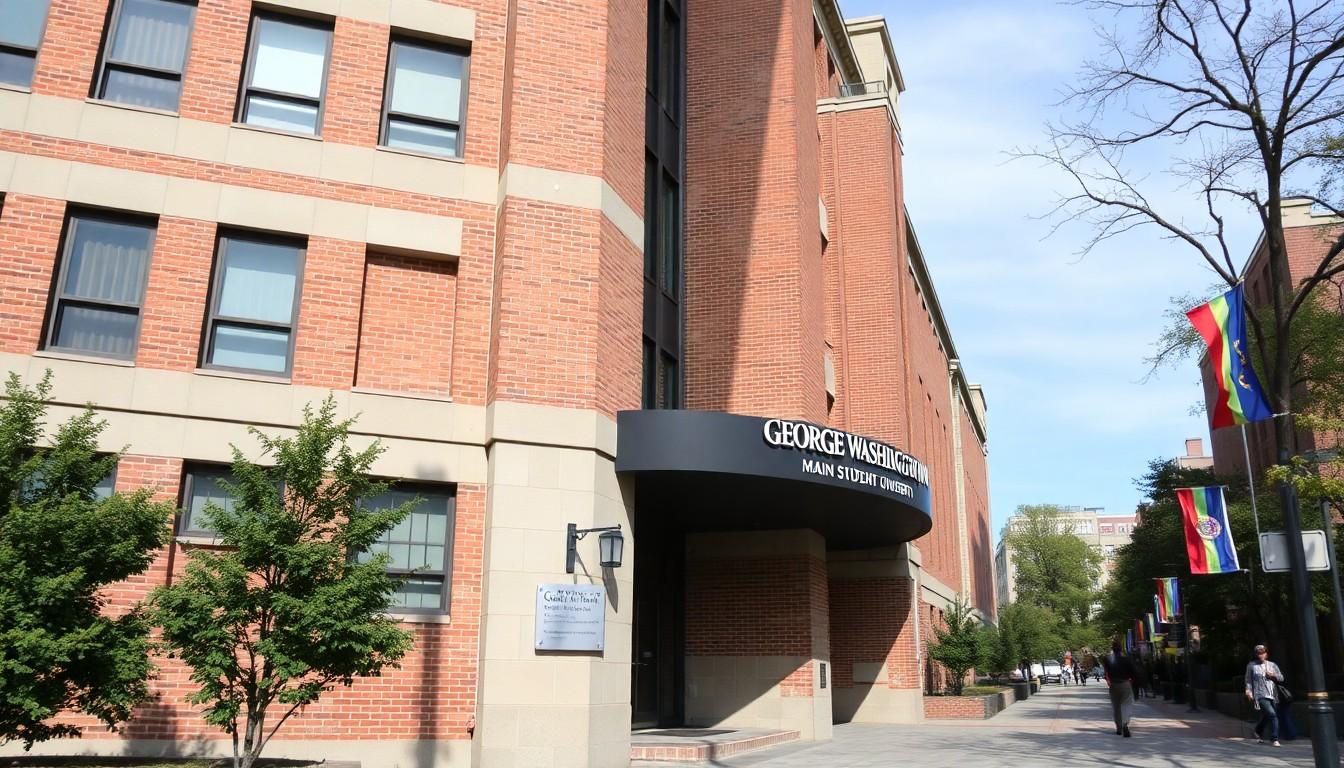
Students at George Washington University have created a new LGBTQ+ caucus within student government, saying it will represent queer students and watch for possible changes to their protections. The move comes amid wider US debates over LGBTQ+ rights, although campus critics say the university’s day-to-day culture may matter more than federal policy headlines.
Essential Takeaways
- New student body: GW’s Student Government Association has approved an LGBTQ+ caucus.
- Purpose: Support queer students and monitor university decisions that could affect them.
- No protection rollback cited: A bill co-sponsor acknowledged that GW hasn’t removed existing safeguards.
- Students want a stronger voice: Some said LGBTQ+ groups have felt overlooked by student government.
- Concerns remain on campus: Critics pointed to alleged anti-LGBTQ+ comments and gaps in event representation.
A new voice inside student government
The most immediate change at George Washington University is organisational rather than legal. Its Student Government Association has approved a dedicated LGBTQ+ caucus, intended to give queer students a clearer route into campus decision-making. The move reflects a familiar student-politics instinct: if a group feels unheard, create a formal seat at the table. According to The College Fix, the proposal was framed as a response to what its supporters describe as continuing federal pressure on LGBTQ+ rights. [7]
Supporters also want the caucus to keep an eye on university policy. The Hatchet reported that members believe it could monitor the institution for any future retreat from protections or support. That doesn't mean GW has announced a rollback. In fact, senator Cole Bowie reportedly acknowledged that the university hasn't rescinded protections, making the caucus more of a watching brief than an emergency response. [7]
Why national politics has entered the campus debate
The proposal arrives against a noisy national backdrop. The ACLU's legislative tracker groups a range of state-level proposals under headings including healthcare, speech, education and sex-based rights, while describing many of them as attacks on LGBTQ+ protections. Its examples include restrictions affecting transgender minors, pronoun rules, school policies and participation in sports. [2], [3], [4], [5]
Those categories are politically contested, and the sources do not establish a single federal action directly changing policy at GW. Still, national disputes often travel quickly into university life. Students see decisions in state legislatures, courtrooms and Washington, then ask whether their own institution will defend its existing position. That helps explain why a campus caucus can feel relevant even when no local rule has changed. [2], [4]
Students say representation has been patchy
The case for the caucus is also rooted in student experience. Co-sponsor Jivan Ramesh said LGBTQ+ students can be marginalised in university and student-government decisions, while Bowie argued that a formal body would show queer students that their concerns are being actively defended. Those arguments turn the proposal from a symbolic badge into a practical attempt to improve consultation. [7]
The conversation hasn't been entirely celebratory, however. Jet Inglis, president of Delta Lambda Phi, reportedly expressed reservations after a student-government Pride event was said to have left out some LGBTQ+ organisations, including the Black Queer Alliance and Transgender and Non-binary Students of GW. A new caucus will therefore be judged not simply by its name, but by whom it actually hears. [7]
Will a caucus change campus culture?
A committee can pass motions, raise concerns and request meetings, but it can't fix a chilly atmosphere on its own. Cassandane Smith, an outreach secretary for Transgender and Non-binary Students of GW, reportedly described alleged anti-LGBTQ+ comments as a more pressing issue than national political messaging. If students regularly encounter hostile remarks, representation needs to reach beyond minutes and resolutions. [7]
That makes the caucus's remit unusually broad. It may need to track formal policy while also pushing for better event planning, clearer communication and a faster response to complaints. The ACLU's wider material shows how quickly rights debates can stretch across education, speech and public life, but campus trust is built through smaller, more visible actions. [3], [6]
What students will be watching next
The caucus is likely to have its greatest impact if it becomes a reliable bridge between student groups and university administrators. That means publishing priorities, consulting organisations that have previously felt overlooked and reporting back on what happens after concerns are raised. A clear paper trail would also help students distinguish genuine policy changes from social-media speculation. [7]
Its staying power may depend on whether future SGA members keep it active. Bowie suggested that GW's sizeable queer student population could sustain interest, but student organisations often wax and wane with each election cycle. For now, the caucus is a visible signal that LGBTQ+ representation belongs in ordinary campus governance, not just annual awareness events. [7]
A formal voice is useful, but students will measure it by what changes beyond the meeting room.
Source Reference Map
Story idea inspired by: [1]
Sources by paragraph: