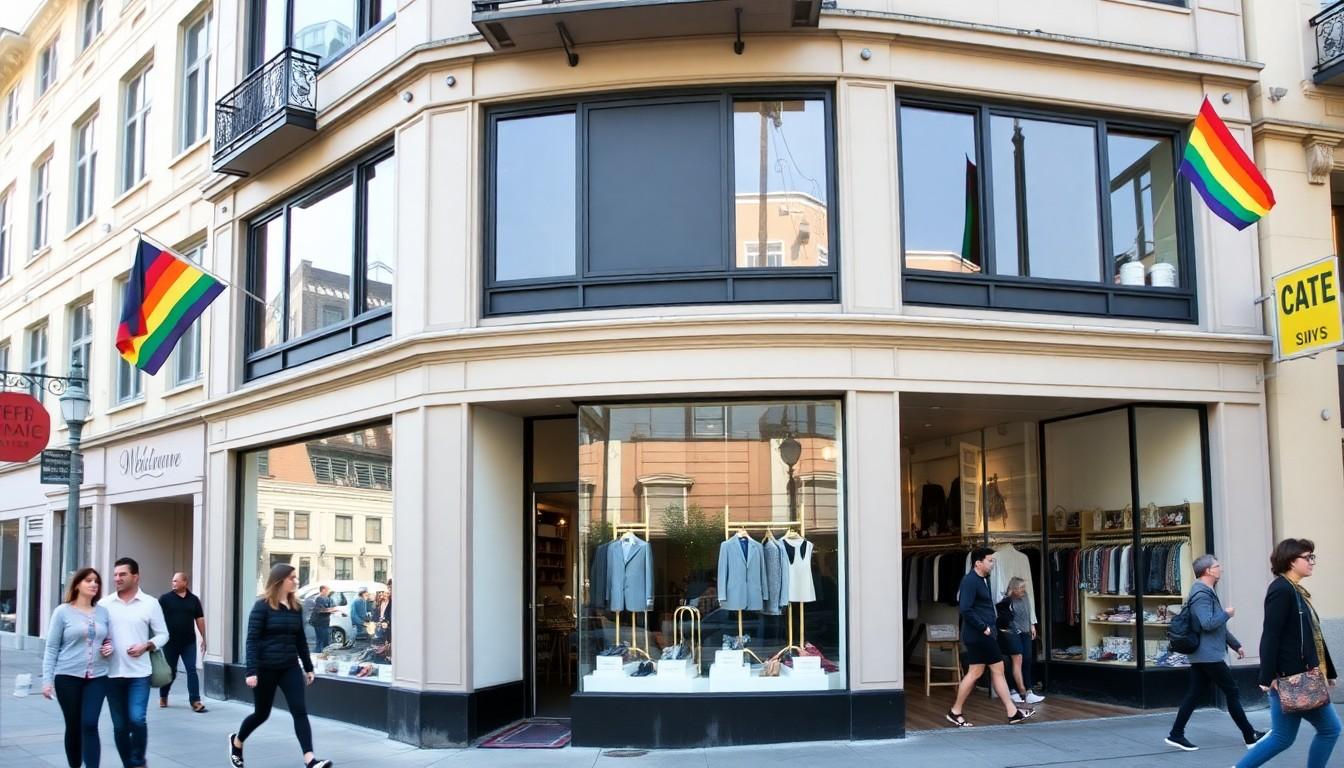
Fashion lovers are heading to Sui Generis in San Francisco’s Castro district, where a gay-owned designer consignment boutique is preparing to celebrate two decades of distinctive style. Its mix of vintage finds, luxury labels, personal styling and online discovery has helped turn second-hand shopping into something far more polished than a dusty rummage.
Essential Takeaways
- Two decades in business: Miguel Lopez and Gabriel Yanez opened Sui Generis in 2006 and have grown it from a tiny Church Street shop into a larger Market Street destination.
- Luxury without the full-price sting: The boutique sells pre-owned designer clothing and accessories, giving shoppers access to sought-after labels for a fraction of their original cost.
- A sizeable online edit: The store’s digital operation features thousands of designer pieces, with tools and alerts designed to make harder-to-find labels easier to track.
- More than a shop: Sui Generis combines consignment with styling, authentication information and a strong sense of queer community.
- Anniversary plans: A gala and free in-store celebration are scheduled for 16 and 17 October 2026 in San Francisco.
From a tiny shop to a Castro fashion fixture
There’s something satisfying about finding a beautifully made garment with a past. At Sui Generis, that feeling is central to the experience, whether the piece is an unusual vintage jacket, a sharply cut designer suit or an accessory that still looks almost untouched.
Lopez and Yanez launched the business in 2006, initially operating from a modest Church Street storefront. The early focus was vintage clothing, but the pair soon began blending archival finds with high-end contemporary fashion and experimenting with consignment. Business listings from San Francisco continue to identify the shop as a destination for designer resale and second-hand fashion.
The move to Market Street marked a turning point. More room allowed Sui Generis to develop a fuller consignment model, expand its selection and create a boutique atmosphere that felt considered rather than chaotic. That distinction matters, especially for shoppers who enjoy the thrill of second-hand fashion but don't fancy elbowing through overstuffed rails.
Why Sui Generis feels different from ordinary thrift shopping
The store’s appeal lies in curation. Instead of asking customers to sift through an unpredictable jumble, Sui Generis presents fashion as an edited collection, with staff knowledge and styling advice helping shoppers understand what might work for them.
That approach reflects the owners’ backgrounds. Lopez brings experience in luxury retail and an engineering education, while Yanez has a photography background and a strong interest in fashion’s visual language. Together, those perspectives create a shop that pays attention to construction, proportion and presentation, not just brand names.
The boutique’s online presence extends that same idea. Its website and shopping platform make it possible to browse designer clothing and accessories beyond the Castro, while the business’s contact and directory listings provide a route for customers and consignors to connect with the store.
Designer resale is getting smarter
Shopping for pre-owned luxury used to involve patience, instinct and a fair amount of guesswork. Now, specialist retailers are making it easier to search by label, follow new arrivals and learn more about the history of individual pieces.
Sui Generis has responded with a digital operation that includes a large inventory, online photography and detailed product descriptions. Shoppers looking for labels such as Chanel, Yohji Yamamoto, Comme des Garçons or Maison Margiela can use alerts and regular browsing rather than relying on a lucky walk-in discovery.
That’s a useful shift for collectors and casual shoppers alike. If you're searching for a particular designer consignment item, save your favourite labels, check measurements carefully and act quickly when something promising appears. The best resale pieces rarely hang around for long.
How to shop second-hand luxury with confidence
Start with fit, not the label. A famous name can be tempting, but a beautifully cut garment that suits your proportions will earn far more wear than an impressive piece that stays in the wardrobe.
Next, inspect the details. Look at fabric, stitching, hardware, lining and signs of alteration. Online, pay close attention to measurements rather than relying on a familiar size, as sizing can vary dramatically between designers and decades.
Authentication is another important consideration. Sui Generis has developed public information explaining designer eras, labels, tags and date codes, which gives shoppers a useful starting point when researching a garment. It won't replace expert assessment for a particularly expensive purchase, but it can make the process feel less opaque.
A business shaped by its community
Sui Generis is also a story about migration, partnership and belonging. Lopez and Yanez arrived in San Francisco from Mexico after building experience in clothing businesses and flea markets, and they chose the Castro because it felt like home.
Over the years, the neighbourhood and the wider city have changed. Recessions, the pandemic, shifting demographics and the rise of online shopping have all tested independent retailers. Rather than treating the internet as a rival, the owners used quieter periods to build a stronger digital catalogue and consolidate the business under one roof.
That balance between place and platform feels particularly important now. A customer can discover a jacket online, but the store still offers the human pleasures of conversation, styling advice and seeing a garment properly in person. For a queer-owned business with deep local roots, that welcoming atmosphere is part of the product.
The 20th anniversary will be a proper celebration
Sui Generis plans to mark its birthday with two events in October 2026. A gala at The Academy SF will feature drag performer Juanita MORE!, a photography timeline and an archival pop-up shop, while the following day will bring a free community celebration at the Market Street store.
The anniversary is more than a marketing milestone. It recognises the work involved in keeping an independent, community-focused fashion business alive through major changes in retail and the city itself.
For shoppers, it’s also a timely reminder that the most interesting wardrobes aren't always built from brand-new pieces. Sometimes the winning find is already out there, waiting for someone with a good eye, a little patience and perhaps a nose for something special.
It's a small reminder that great style often comes with a history.
Source Reference Map
Story idea inspired by: [1]
Sources by paragraph:
- Paragraph 1: [2], [5]
- Paragraph 2: [3], [6]
- Paragraph 3: [4], [7]
- Paragraph 4: [2], [5]
- Paragraph 5: [3], [6]
- Paragraph 6: [4], [7]
- Paragraph 7: [2], [5]
- Paragraph 8: [3], [6]
- Paragraph 9: [4], [7]
- Paragraph 10: [2], [5]
- Paragraph 11: [3], [6]
- Paragraph 12: [4], [7]
- Paragraph 13: [2], [5]
- Paragraph 14: [3], [6]
- Paragraph 15: [4], [7]
- Paragraph 16: [2], [5]