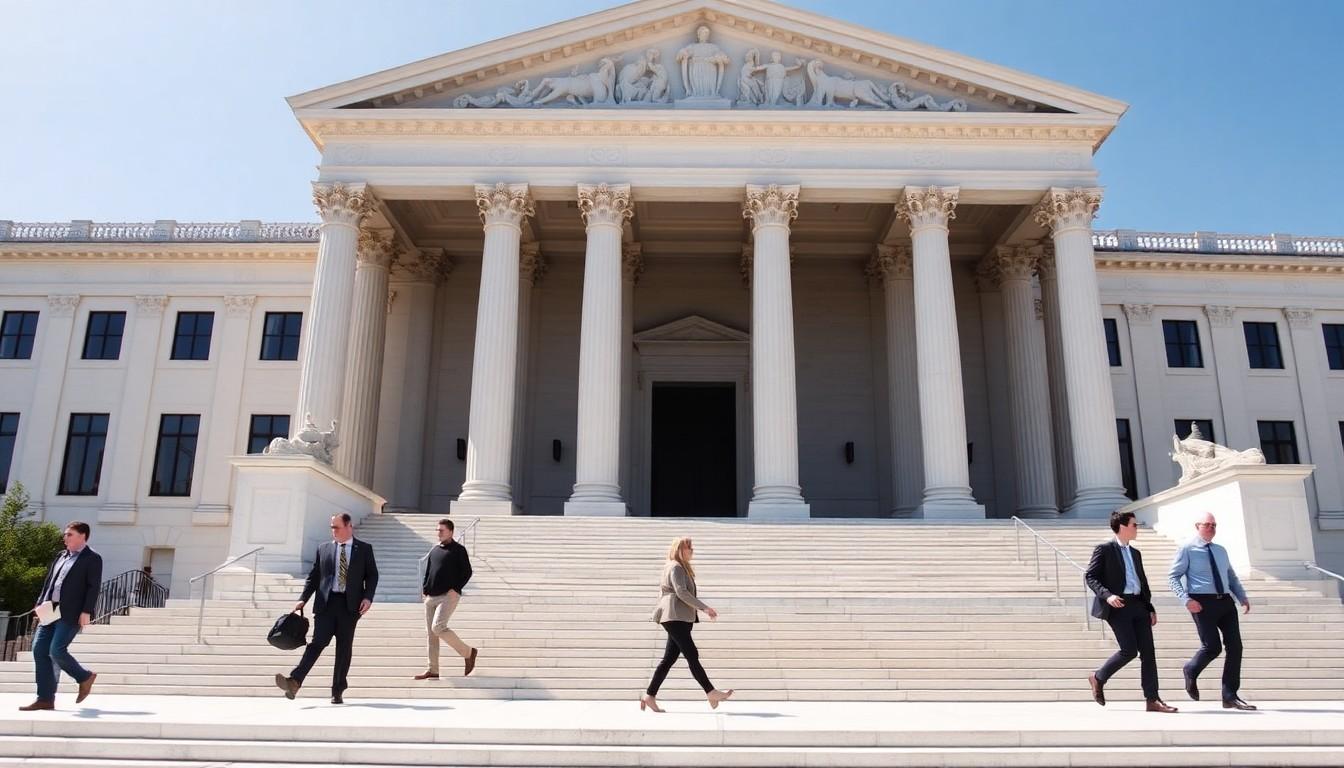
A new book by US Supreme Court Justice Samuel Alito has reignited debate over same-sex marriage, religious freedom and the legal balance between them. His argument is drawing fierce criticism from LGBTQ+ advocates, who say marriage equality has expanded freedom rather than weakened it.
Essential Takeaways
- Alito’s position: The justice says the legalisation of same-sex marriage marked a major turning point against religious liberty.
- The legal backdrop: Alito dissented from the 2015 Obergefell ruling, which recognised marriage rights for same-sex couples nationwide.
- Court record: In several cases, the Supreme Court has backed religious objections involving wedding services, healthcare and education.
- LGBTQ+ concerns: Advocates fear that marriage rights could face renewed legal pressure, despite Obergefell remaining binding law.
- The wider argument: The dispute is really about where personal belief ends and equal access begins.
A familiar culture-war argument returns
Samuel Alito's comments have reopened one of America's most persistent legal arguments: can religious freedom protect private belief without allowing discrimination in public life?
In a collection of speeches titled So Ordered, the conservative Supreme Court justice describes the 2015 Obergefell decision as a decisive moment in what he sees as the country's retreat from religious liberty. His remarks, first delivered at the Catholic University of America, reflect a judicial philosophy that places religious objections at the centre of the modern culture war.
According to ABC News, seven of the book's 19 speeches were delivered to Catholic organisations. That context matters, because Alito's argument isn't presented as a narrow disagreement about one ruling. Instead, he frames marriage equality as part of a broader shift in public morality. [2], [3]
Why Obergefell remains the flashpoint
Obergefell v. Hodges established that same-sex couples have a constitutional right to marry across the United States. Alito dissented, warning that treating opposition to same-sex marriage as equivalent to bigotry could push religious believers away from public life.
That warning has become a recurring theme in his speeches. Alito argues that people with sincerely held religious beliefs have increasingly been treated as social outcasts, particularly when their beliefs clash with LGBTQ+ equality rules.
For supporters of marriage equality, however, the picture looks very different. They see Obergefell as a basic civil-rights decision that stopped states from denying couples the legal, financial and family protections attached to marriage. As LGBTQ Nation has noted, the disagreement is not simply theological. It affects employment, healthcare, education and access to services. [4], [6]
The Supreme Court has often backed religious objections
There is an awkward tension at the heart of Alito's criticism. While he says support for religious liberty has collapsed, the Supreme Court has repeatedly ruled in favour of people and institutions claiming religious objections.
Those cases have included disputes over wedding-related services for same-sex couples, employer-funded healthcare, publicly supported school programmes and foster-care arrangements. The court has also protected a Catholic agency that declined to place children with same-sex couples and struck down Colorado's ban on conversion therapy for minors on free-speech grounds.
That doesn't mean every religious-liberty claim has succeeded, or that the legal questions are settled. But the record makes the phrase "religious liberty has cratered" sound, at the very least, open to challenge. As ABC News reported, Alito was part of the majority in nearly all the examples cited in his speeches. [2], [3]
What could happen to same-sex marriage next?
Alito has said he opposes Obergefell, but he hasn't publicly called for the ruling to be overturned. That distinction matters, particularly after fellow conservative Justice Clarence Thomas argued that the court should revisit the precedent.
Still, anxiety is high among LGBTQ+ Americans. The Human Rights Campaign says 85% of LGBTQ+ voters fear the Supreme Court could reverse marriage protections, while more than half of US states retain old bans that are unenforceable under Obergefell but remain on the books.
For couples, those dormant laws can feel less like historical clutter and more like a warning sign. The legal right may be secure today, yet the political debate around it remains remarkably loud. [1], [4]
The debate is now bigger than weddings
Kelley Robinson, president of the Human Rights Campaign, rejected Alito's account, saying marriage equality had made the country freer. Her response also linked the marriage debate with wider battles over LGBTQ+ children, workplace rights and family wellbeing.
That connection is important. The argument now reaches far beyond who can obtain a marriage licence. It covers whether businesses must provide services, whether employers can exclude particular medical care, and how schools and public bodies handle conflicts between religious belief and equality law.
In practice, the coming legal fights are likely to be less about whether same-sex couples may marry and more about what happens when marriage equality meets a person's job, business, public funding or professional duties. The Supreme Court's next decisions could shape that boundary for years. [4], [6]
Marriage equality remains the law, but the argument over its limits is far from over.
Source Reference Map
Story idea inspired by: [1]
Sources by paragraph: