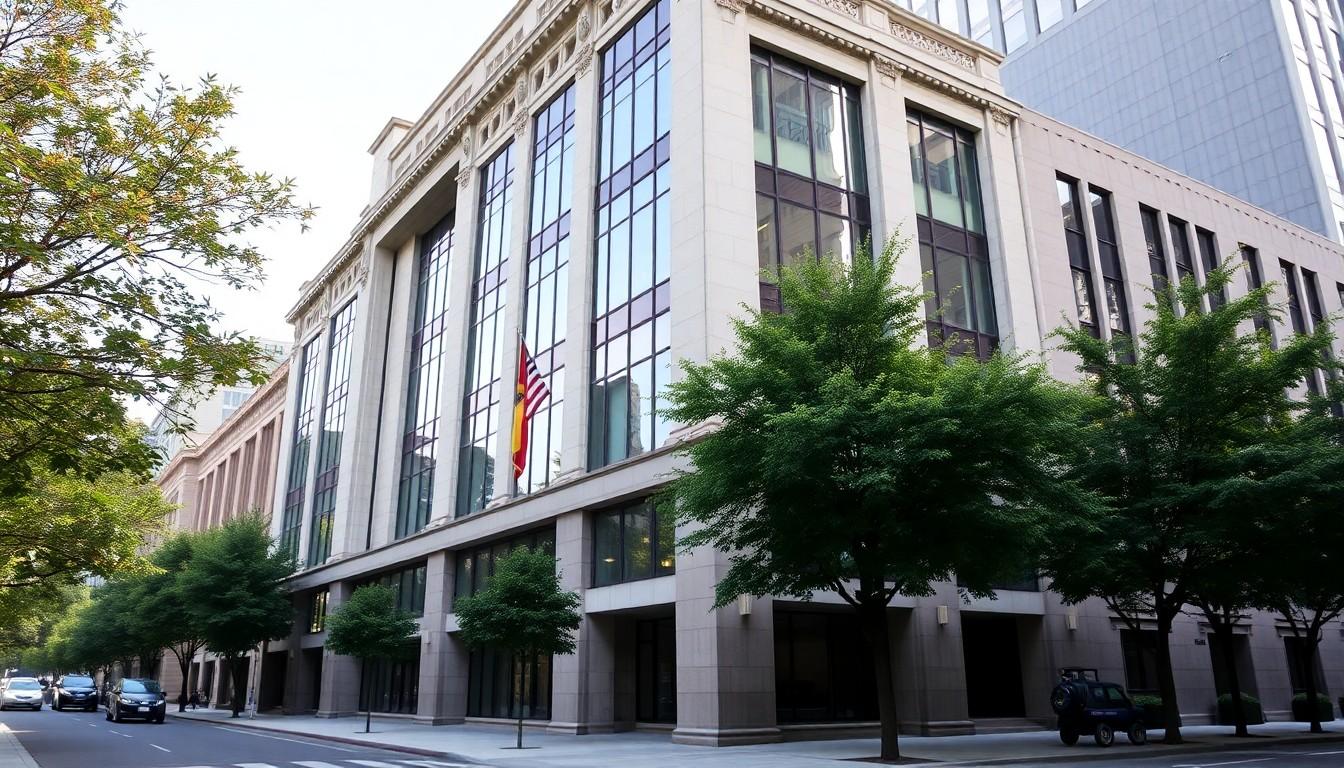
San Francisco’s Alice B. Toklas LGBTQ Democratic Club has helped turn community organising into public service, with members moving into elected office, civic commissions, government jobs and the judiciary. Its long list of leaders shows how political clubs can become practical training grounds for representation and change.
A political club with a remarkable civic reach
The most striking detail is the sheer range of roles connected to the Alice B. Toklas LGBTQ Democratic Club. Former leaders and active members have served on city commissions, advised mayors, shaped regional policy and won seats in local and state government.
That reach matters because political influence isn't measured only in election victories. It also appears in quieter rooms, where commissioners debate housing, transport, public safety, libraries, human rights and the environment. The club's record reflects that broader version of public leadership, according to the San Francisco Bay Times.
Its history also carries a strong sensory contrast: grassroots politics can feel noisy, personal and exhausting, yet much of its lasting impact happens through steady committee work and long meetings. That's where movements often become institutions.
From local organising to elected office
Several figures linked to the club went on to prominent elected positions. Mark Leno served in the San Francisco Board of Supervisors, the California State Assembly and the California State Senate, while Scott Wiener followed a similar local-to-state route through District 8 and Sacramento.
Susan Leal, Carole Migden, Bevan Dufty and Leslie Katz also built careers across San Francisco government and wider public institutions. Their paths show how local political networks can create momentum, particularly for candidates whose communities have historically had limited access to power.
The club's influence wasn't confined to one political generation. Its earlier leaders, including Jim Foster, Phyllis Lyon and Del Martin, helped establish a tradition in which LGBTQ+ advocacy and Democratic organising sat alongside practical civic engagement. The club's own history describes that role as a pipeline into public service.
Why commissions and boards matter too
Elected office gets the headlines, but appointed posts can be just as consequential. Members associated with the club have served on the Police Commission, Human Rights Commission, Arts Commission, Airport Commission, Library Commission, Health Commission and Commission on the Status of Women.
Jo Daly made history when she became the first openly LGBTQ police commissioner in a major US city, while Theresa Sparks later became the first transgender president of San Francisco's Police Commission. Susan Christian, Andrea Shorter and Julius Turman are among the other leaders whose work connected club politics with public safety, civil rights and justice.
These roles aren't glamorous. They involve policy papers, public comment and sometimes bruising scrutiny. Still, they offer a direct route to influence, especially when a community needs someone in the room who understands its lived reality.
A broader definition of LGBTQ+ leadership
The club's legacy is also notable for its breadth. Its associated leaders include lawyers, political strategists, civil servants, judges, labour advocates, policy advisers and campaign organisers, rather than only career politicians.
Bentrish Satarzadeh's appointment to the Alameda County Superior Court, for example, illustrates how LGBTQ+ civic leadership can extend into the judiciary. Zoe Dunning's military background and advocacy work, meanwhile, point to another strand of public service that combines professional authority with community organising.
According to the club's platform and public statements, its work is rooted in policy as well as representation. That distinction is important. A group can campaign for candidates, but its deeper value may be the ideas, relationships and practical experience it carries into government.
What today's organisers can learn
For anyone interested in LGBTQ+ political organising, the club offers a useful case study. Joining a local organisation, volunteering on a campaign or serving on a neighbourhood body can provide a first step towards a larger civic role. The route isn't always quick, but it builds contacts and confidence in a way that polished campaign launches rarely can.
The Alice B. Toklas LGBTQ Democratic Club also shows why continuity matters. Leaders leave office, organisations change and political priorities shift, yet a durable club can preserve institutional memory and keep introducing new people to public life.
That may be the most valuable lesson of all. Representation isn't created in a single election night; it grows through repeated participation, patient coalition-building and the willingness to do the less visible work. For a community seeking a stronger voice, that's a sturdy foundation.
Small meetings can lead to big changes when people keep showing up.
Source Reference Map
Story idea inspired by: [1]
Sources by paragraph:
- Paragraph 1: [2], [4]
- Paragraph 2: [3], [4]
- Paragraph 3: [2], [6]
- Paragraph 4: [2], [3]
- Paragraph 5: [2], [4]
- Paragraph 6: [2], [6]
- Paragraph 7: [2], [7]
- Paragraph 8: [2], [3]
- Paragraph 9: [2], [4]
- Paragraph 10: [4], [5]
- Paragraph 11: [5], [6]
- Paragraph 12: [3], [7]
- Paragraph 13: [4], [6]
- Paragraph 14: [5], [7]